Episode 201 - October 30, 2026
Chris GarabedianGraig SuvannavejhSam FazeliBrian SkorneyYaron Werber
Pharma buyers remain active in early-stage assets and China, though term sheets do not guarantee Q4 closings.Amvuttra sales fell to $81 million from $129 million in Q2 as Alnylam cut franchise guidance for a second time this year.AI may reduce data-gathering costs, but a 10,000-patient cardiovascular study still takes five years and $300 million.

Mark Cuban on Why AI Could Turn Solo Founders Into Trillionaires
Mark CubanJulie YooErik Torenberg
Cost Plus Drugs grew from 111 generics in January 2022 to roughly 4,000 SKUs at a fixed 15% markup, with its public API giving buyers a price benchmark.Pre-signing AI review of Dallas’s 1,335-page PBM contract could uncover overcharges; savings may reach millions for organizations above 1,500 employees or members, depending on existing overcharging.Manufacturing pods target roughly 200 annual sales within two years, though 1,000 ANDA applications alone would cost $365 million plus other fees, before manufacturing investment.
An Eval for AI Scientists That Knows the Answer Key - Ian Quigley, Leash Bio
Leash Bio makes agent decisions auditable across 90,000 rollouts, with 100-molecule budgets to find the best binder in a premeasured landscape.Astra 6 leads, and stronger models’ clearest edge is leaving poor chemical neighborhoods sooner, though why remains unknown.Leash plans to try for maybe 20 environments daily by early 2026 or 2027, but transfer to new biology remains unproven.
Episode 200 - October 23, 2026
Daphne ZoharBrad LoncarChris GarabedianSam FazeliEric SchmidtJosh SchimmerMatt GlineAli Mortazavi
Moderna’s selloff puts a near-$100 billion valuation against $2.2–2.3 billion in annual revenue and established melanoma competition, though Loncar says the data strengthened the medical and commercial case.Tango’s PRMT5 inhibitor delivered an 82% response rate and 88% non-progression at nine months in heavily pretreated pancreatic cancer, but its shares fell; the MTAP-deleted opportunity may cover 30–40% of patients.
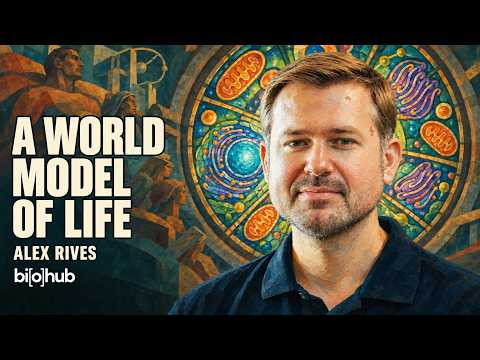
A World Model of Life: Biohub's Alex Rives on Virtual Cells, Measurement, & the $1.8B Data Push
Biohub’s $1.8B initiative joins the Department of Energy, NIH, Google DeepMind, Isomorphic Labs, and Meta to map molecular readouts and imaging.Rives calls observability a fundamental bottleneck; a laser phase plate adds phase contrast in cryo-electron tomography, but virtual cells still cannot meaningfully simulate cells.Atlas drafts target one or two years, with a comprehensive map within five.
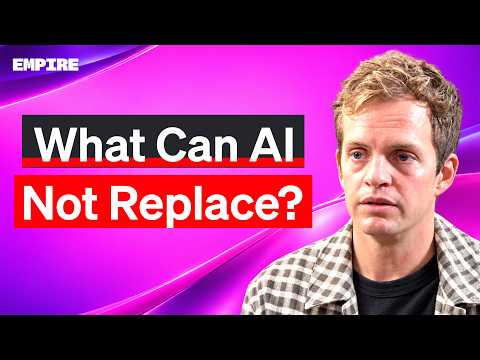
Which Businesses Will Survive AI? | Michael Dempsey
AI vendors growing 6x in a market expanding 10x may be losing ground, while stack convergence could put $30 billion businesses at risk of displacement within nine months.Compound’s roughly 23-company portfolio includes 16 biotech businesses and only three AI investments, reflecting Dempsey’s preference for scientific ventures that control a route from discovery to commercialization.
Episode 199 - October 16, 2026
Graig SuvannavejhPaul MatteisBrian SkorneyYaron WerberJake Becraft
XBI remains up 20% YTD but fell from 169 to roughly 146 amid biotech’s largest cumulative hedge-fund de-grossing in more than five years.IPO markets remain open but favor clinical catalysts and defensible IP; M&A could restart buying, while Bristol’s low-dose-only significant admilparant result supports LPA1 in IPF but leaves dose response unresolved.
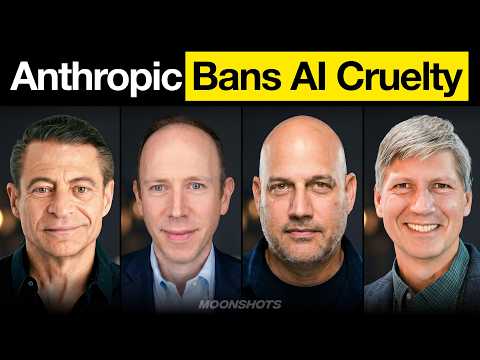
OpenAI Bulk-Solves 722 Math Problems, Anthropic’s Cruelty Policy, & Elon’s Quadrillion-Dollar SpaceX
Peter DiamandisSalim IsmailDave BlundinAlexander Wissner-Gross
OpenAI’s October 6 release of 722 math solutions signals automation in verifiable research; cryptography’s absence drew Alex’s post-quantum risk warning.Meta’s active memory and 3.6 billion daily users offer reach, but Alex says Muse trails on cost.Alex forecasts the $1.8 billion virtual-cell initiative could yield cures for 5,000 diseases within two to three years, pending FDA acceptance.
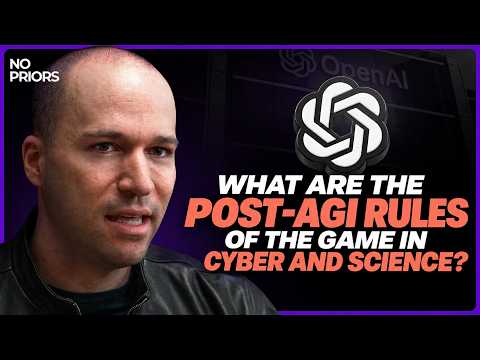
Revolutionizing Cybersecurity and AI-Driven Science with OpenAI President Greg Brockman
Sarah GuoElad GilGreg Brockman
Brockman says AI is now creating reusable mathematical insight, with almost 400 important open problems solved through unexpected combinations of ideas.Drug development offers the clearest disruption case: a roughly 15-year, $1.5 billion process could accelerate in literature review, simulations, experiments, and regulatory writing, but biological data and long-term outcomes remain constraints.As code approaches near-zero cost, Brockman predicts cybersecurity spending should “far exceed software spending,” while OpenAI’s defender’s window and recurring model-led security testing remain catalysts to monitor.
Why a 4-Billion-Point Kaggle Dataset Still Couldn’t Beat Chance — Ian Quigley, Leash Bio
Ian QuigleyBrandon AndersonRJ Honicky
Leash’s reported edge is low-cost, carefully characterized data: its ten-person operation developed about 2,000 protein constructs and ran roughly 5,000 screens.On the hardest Kaggle split, none of roughly 2,000 teams beat chance, exposing how poorly models transfer to distant chemistry.Language agents now test hypotheses instantly against measured compounds, but coverage remains limited and potency calibration unfinished.