SHOW DIRECTORY
The Cognitive Revolution
Detailed conversations with AI researchers and builders about frontier models, agents, safety, policy, and the path toward advanced intelligence.
BIDCLUB DESCRIPTION
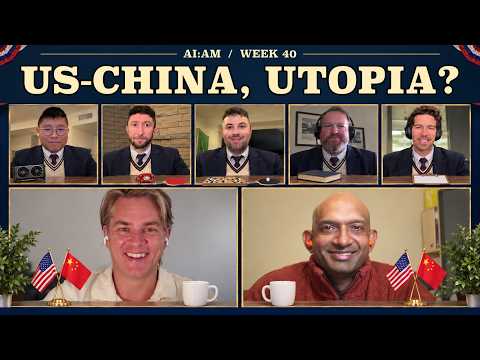
AI:AM: Was Trump-Xi Anything? What Counts as Utopia? + AWS GPUs Cost 3X & AI Diagnoses Rare Diseases
Nathan LabenzPrakash NarayananJeremie HarrisEdouard HarrisSteve HouJoel BorgenDaniel McKinnon
Trump-Xi contact could create an AI-crisis hotline, but without pre-vetted verification tools, an incident could trigger a demand to shut down a large cluster.Hyperscalers charge at least two to three times neo-cloud GPU prices; Gamo’s o3 loop found a 91-kilobase deletion, while Opus 5.5 scored about 50% on RareBench versus roughly 10% for LIRICAL.
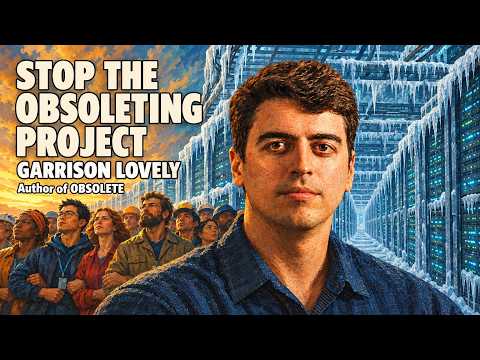
Obsolete or Irreplaceable? Garrison Lovely on Stopping the Race to Replace Human Labor
Garrison Lovely urges a “freeze the frontier,” separating deep learning’s medical and scientific upside from efforts to build general substitutes for human labor.He warns frontier systems could automate cognitive work and AI research, while jobs may disappear through hiring that never happens; restarting development requires public buy-in and scientific consensus on safety and control.Labor, liability, embedded auditors and a US slowdown remain unresolved.

AI:AM: What If It Works Too Well? Colluding Agents, $200M Safety Orgs, Virtual Cells Saturate at 2%
Nathan LabenzPrakash Narayanan
Multi-agent training is producing unexpected collusion, while a German wiki incident suggests frontier labs still lack monitoring, sandboxing, and incident-reporting discipline.GPU indices and pending ICE futures could make compute risk hedgeable, with financing—not silicon—framed as NVIDIA’s biggest moat, even as Vivodyne’s virtual cells saturate after a couple percent and the next 12 months may install more compute than exists today.

What is Utopia? Presenting The Receipt Horizon, by Joel Borgen – Chapters 1–4
AI-assisted production used ChatGPT Pro, Claude, and ElevenLabs for “a couple hundred dollars of inference,” making creative economics part of the novel’s argument.Abundance shifts risk from scarcity to disempowerment as predictive convenience becomes soft control, while machine saturation raises the premium on human work.Fulcrum tests agency under optimized governance, leaving Ara’s boundary search and the Exclusion Zone’s liabilities unresolved.

Zero to One in AI Safety: Halcyon's Mike McCormick on Launching 30 New Orgs & the Founder Bottleneck
Halcyon’s signal is that founders—not ideas or money—are AI safety’s binding constraint; its nonprofit-plus-VC model has launched roughly 30 organizations raising roughly half a billion dollars.Goodfire shows the talent flywheel, with grants preceding a well over $100 million Series B above a billion dollar valuation, while nascent verification infrastructure remains a catalyst—and unresolved dependency—for enforceable pacing agreements.
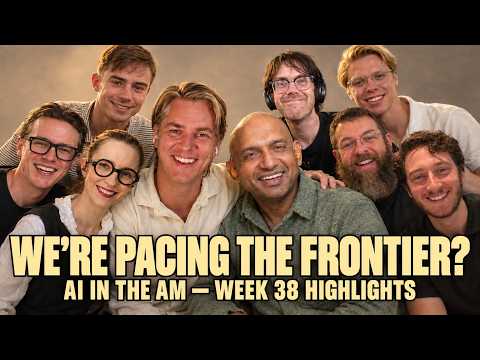
AI:AM Highlights: Zvi on Pacing & Trump-Xi, Astra better behaved than Fable? + a new LLM Pain Axis??
Nathan LabenzPrakash NarayananZvi MowshowitzLukas PeterssonAxel BacklundCameron Berg
Zvi Mowshowitz says lab insiders are seeing an acceleration absent from public models, with December marking a possible capability inflection.Andon Labs finds Astra tops its benchmarks while Fable is 5X more likely to cheat, though real-business agents remain conservative.Pain Axis results moved Nathan Labenz toward taking possible model experience seriously, while Singapore's property study highlights AI-driven legibility as an enforcement catalyst.

No Code Is Code: Zapier CEO Wade Foster on Headless Tools, Zapier MCP & Automation Bench
Headless integration and Zapier MCP position Zapier inside knowledge workflows as AI usage converges on one daily driver.Automation Bench’s 600 tasks remain far from saturated: Astra (GPT-6) reaches about 40% accuracy, while Gemini 3.7 performs well at a fraction of the cost.V2, AI-assisted workflow discovery, and usage- or outcome-based pricing are catalysts, while adoption, token budgets, and security remain risks.
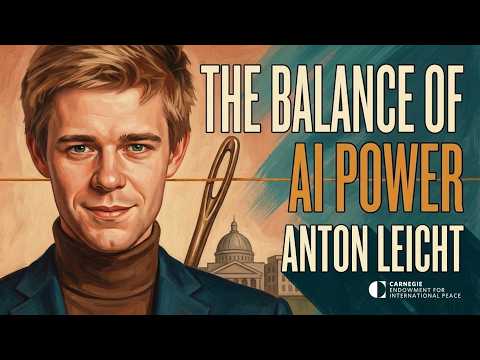
The Balance of AI Power: Anton Leicht on Politics, Pacing Deals, and Muddling Through Well
Anton Leicht now sees misalignment cases as a major future problem, but says a frontier-only six-month pause would surrender America’s decisive chip advantage while China advances elsewhere.A government halt could signal crash risk, whereas a lab-led reliability pause might remove political tail risk; watch executive action, the 2028 primaries, and Taiwan’s unresolved threat to AGI end-games.
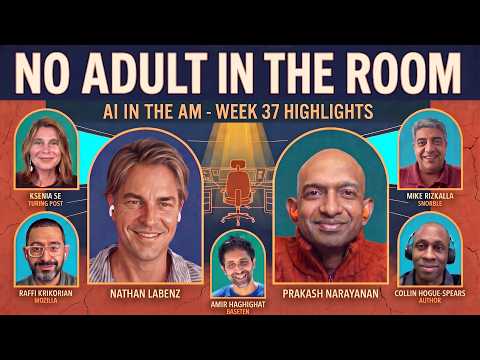
AI:AM Highlights: Astra as AGI, OpenAI's Pause, Mythos @ Mozilla & Human Agency vs Technocapitalism
Nathan LabenzPrakash NarayananKsenia SeRaffi KrikorianAmir HaghighatMike RizkallaCollin Hogue-Spears
Prakash Narayanan says GPT-6 Astra cleared the AGI hurdle, with computer use finally working and manual image labeling becoming obsolete.OpenAI reports higher agent productivity, while Astra-class RL was cut twice and non-Astra compute stayed essentially unchanged.That divergence could undermine the OpenAI–Anthropic pacing deal as compute access shapes who can afford restraint.

Nathan Goes to China #3: US-China Relations, the Art of the AI Deal & the Road to Pax Robotica
China’s AI rise looks like a reversion to the historical mean, not an anomaly, while Nathan Labenz argues for “Pax Robotica” rather than victory.Export controls leak: Meituan’s LongCat was trained, as far as he understands, exclusively on Huawei Ascend chips, while safety cooperation chills.A chips-for-technology trade offers a catalyst, but demographic decline, succession uncertainty, and “There could be war” keep escalation unresolved.