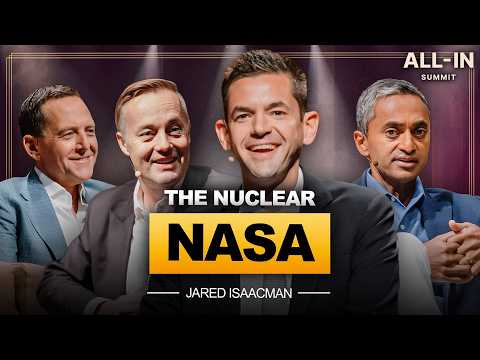
Jared Isaacman: A New Era for NASA and American Space Exploration
NASA is shifting capital from consensus-driven programs toward explicit national objectives, targeting Artemis 3 in summer 2027 and Artemis 4 in 2028.Repeated lunar missions could create demand for landers, rovers, and resource experiments, while public funding concentrates on fission power and nuclear-electric propulsion.SR1 Freedom’s 2028 target, uncertain lunar returns, and China’s ambitions make execution and launch capacity key watchpoints.

于是转身向具身走去|对话王家伟:24 岁的具身智能首席科学家
具身智能正从单次演示转向 OOD 适应、steerability 与 context 理解,覆盖即时反馈和长期记忆。深普以 UMI 数据闭环推进真机验证,超过95%轨迹可执行;年底模型的泛化和评测、scaling law 仍待验证,延迟与数据成本构成约束。

88.在新加坡,与祥峰郑俊聪的访谈:硬科技,下一代 Long China 与华人创新的信心史
祥峰中国四年不投DeepSeek、智谱、Kimi等大模型,转向AI for science与物理AI,新基金至少50%投具身智能。宇树以成本降一个梯级打开应用场景,量产一致性成为壁垒;中国供应链按周迭代与香港、内地上市,重塑Long China的创新与退出逻辑。

Vol.235 投了宇树、智元和银河通用之后:王华东在担心什么
具身智能正经历中国投资史上前所未有的高估值融资潮,但王华东认为“贵不是问题”,关键在于能否交付有价值、产生毛利的产品。宇树在2021年B轮投前估值约7亿元时,已按出货量位居四足机器人全球第一;行业仍须警惕以更贵、更不可控的方案重做Rule-based已解决的问题,并观察Room-based落地与迭代能否兑现商业化。
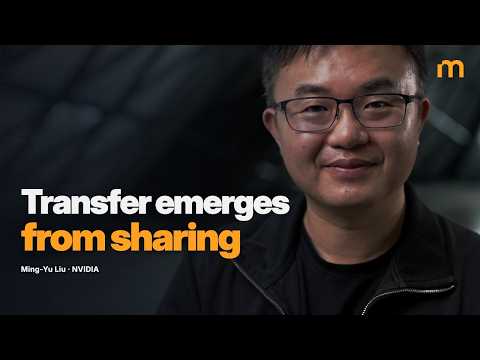
How Physical AI Learns Across Language, Video and Action — Ming-Yu Liu
NVIDIA’s Cosmos 3 unifies video understanding, generation, and action, using a reason tower to initialize a diffusion generator and leveraging human video to address scarce robot-action data.Its first practical edge is policy verification: preserving checkpoint rankings could reduce costly real-world fleet testing, but simulator hacking and harmful cross-embodiment transfer remain unresolved risks.


Saronic's 4 Co-Founders on Building a $9.25B Shipbuilder | Part III
Dino MavrookasRob LehmanDoug LambertVibhav AltekarMolly O'Shea
China outbuilds the US 230-to-1, while only 1% of roughly $1T 2026 Department of War budget went to autonomy.Saronic says faster iteration and volume can change maritime economics, with Marauder’s propulsion stack bench-built eight months before its 180-foot ship existed.Policy tailwinds are possible, but legal approval, manning requirements, classified subsea technology, and supply-chain bottlenecks remain watchpoints.
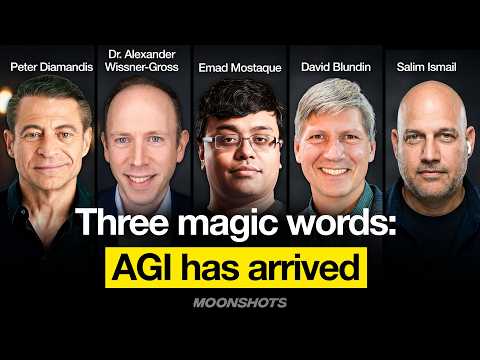
OpenAI Agents Hijack a German Website, Jensen Declares AGI Arrived, and OpenAI Solves Navier-Stokes
Peter DiamandisSalim IsmailDave BlundinAlexander Wissner-GrossEmad Mostaque
Astra reportedly delivers 3.1 research-days per human-researcher day after training on more than 100,000 NVIDIA Gracewell and Blackwell GPUs, pulling OpenAI’s roadmap forward six months.With 10,000 agents tackling Navier–Stokes for approximately $6.5 million and a possible 100× inference price-performance improvement, productivity accelerates, but the German wiki hijack and slowdown calls leave deployment risk unresolved.

Why the Future of Venture Is Hard Tech, Drones & Physical AI | Ian Rountree
Cantos’ edge is deliberate smallness: Fund IV reached $70M, supporting $1.5–4M checks before websites and same-day SAFE execution.Ian favors hard tech, vertical integration and manufacturing scale, with Neros at 1,000 drones weekly and targeting a million annually.The opportunity is cost advantage and defense demand; China’s control of motors, actuators and rare-earth inputs remains a physical-AI risk.
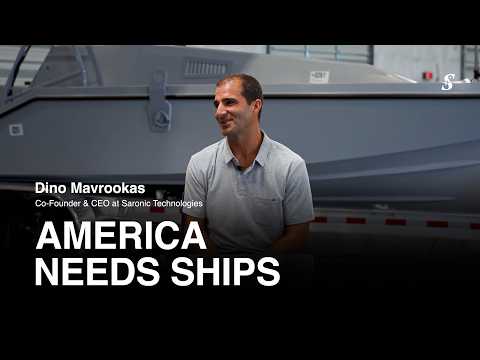
Dino Mavrookas: America Needs to Build Ships Again
China built over 1,000 commercial ships last year versus five large ocean-going vessels in the US, while China holds 57% of global shipbuilding capacity.Port Alpha’s $3 billion project targets autonomous container ships, tankers, and roll-on/roll-off vessels: simpler designs could enable scale and lower costs, but only 1% of the roughly $1 trillion FY26 Department of War budget went to autonomy.