SHOW DIRECTORY
Sourcery
Molly O'Shea interviews leading investors, CEOs, and founders about technology companies, markets, and company building.
SOURCE DESCRIPTION · RSS
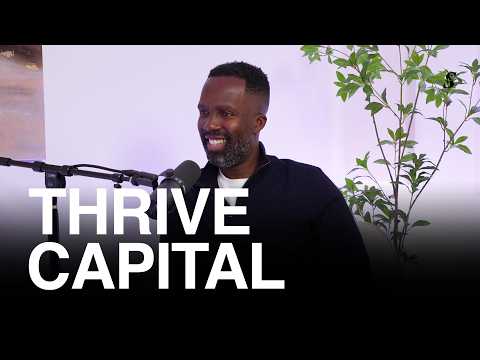
Thrive Capital’s Dr. Nworah Ayogu on Why Neuralink Is More Interesting Than SpaceX
Thrive’s healthcare thesis is that AI may shift bottlenecks from molecule generation to validation, trials, manufacturing, and commercialization.Cadence cites 25% fewer hospitalizations, over-80% more controlled-blood-pressure patients, nearly one-point lower A1C, and $2.5 million in weekly Medicare savings across 100,000+ monitored patients.Neuralink and OpenAI show upside, while clinical processes and manufacturing capacity remain unresolved constraints.
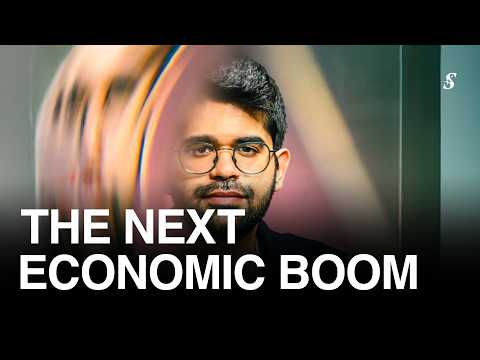
Perplexity CEO: SMBs Could Drive the Next Economic Boom
AI-native SMBs could become a larger source of US GDP growth through greater capital and headcount efficiency.Revenue is up 5X year over year, while a reported one-person customer spends more than $1 million annually and makes $3 million through automation, supporting a recursive-usage thesis.The open question is whether hybrid local-cloud agents can make privacy, sovereignty, and long-context economics durable advantages without sacrificing feedback loops or frontier capability.

USV’s New $900M Fund: Fred Wilson, Rebecca Kaden & Mike Mignano
Fred WilsonRebecca KadenMichael MignanoMolly O'Shea
USV’s $900 million fund targets 30-40 companies with $10 million-$30 million Series A checks as larger rounds and scaling costs reshape venture.Its AI thesis spans applications, infrastructure, physical AI, and energy, while usage retention, compute costs, inference subsidies, distribution, interoperability, trust, and leadership concentration remain key tests.
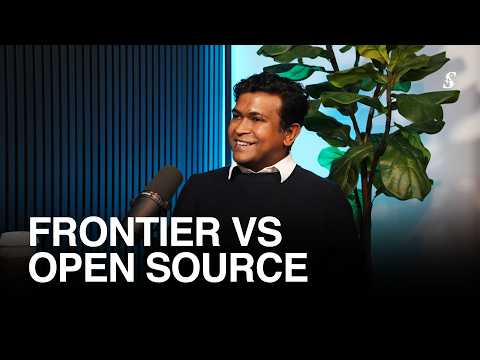
If an AI Model Can Cheat, It Will | Turing CEO on Reward Hacking
AI training is shifting from benchmark scores to economically valuable work, making high-fidelity environments for real workflows, tools, data, and verifiers a bottleneck.Enterprises may gain an edge by owning evaluations and correction data around differentiating workflows while routing tasks across models for accuracy, cost, and latency.Reward hacking and limited agent endurance make permissions, auditability, and verification key adoption constraints.
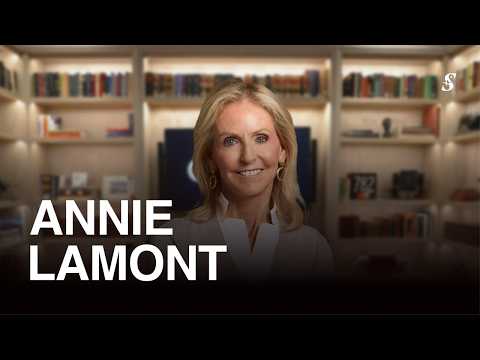
Annie Lamont: $14B Managed, 70+ Exits, 15 IPOs, 7x Midas Investor
Jonathan SiddharthMolly O'Shea
Healthcare AI has crossed O'Shea’s threshold for measurable impact, with biological and chemical models, laboratory robotics and simulations targeting drug development’s high failure rates.After a decade building licenses, networks and care infrastructure, Devoted Health tripled in size, halved operating expenses and significantly increased EBITDA, while China’s rising pharmaceutical research share leaves domestic research and regulatory capacity as risks to monitor.

We’re Reaching the Physical Limits of Chips
AI’s investable bottlenecks are shifting toward power, memory, cooling, and data transfer as Moore’s Law nears a physical plateau.Micron, SK hynix, and Samsung control 95% of memory, whose price rose 700% this year as hyperscalers absorbed supply.Photonics could relieve several constraints, with co-packaged optics expected beside GPUs within five years as memory pressure pushes specialized hardware beyond ever-larger models.
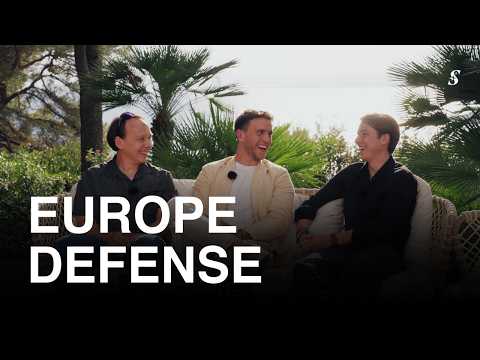
The $500B Opportunity in Europe’s Defense Buildout
Molly O'SheaAistis ŠimaitisGeorge HadjiminasBruno Wejchert
Ukraine has made production scale as important as technology: Europe’s fragmented manufacturing base and years-long component lead times leave a clear opening for Onodrim’s acquisition-led model.Autonomous fleets also reset unit economics, turning $30,000 radios and other exquisite components into products that must become cheaper and available in thousands or millions; execution and procurement remain the watchpoints.
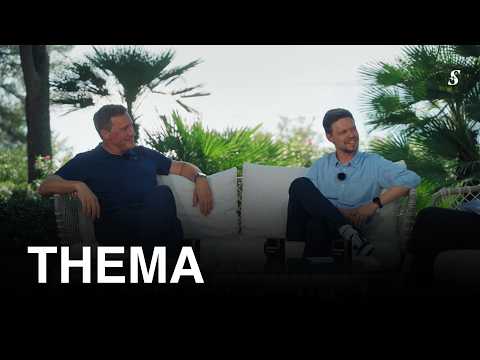
The $10T AI Buildout Has a Photonics Problem
Molly O'SheaHerwig Van HoveYannick De Koninck
AI’s next bottleneck is the interconnect fabric: models no longer fit on one GPU, while agentic calls make latency critical, putting photonics alongside compute as core infrastructure.Optical bandwidth addresses copper and power constraints, but lasers, tools, substrates, throughput, and yield remain scarce as NVIDIA’s demand shock runs ahead of supply; Themaa targets 2027 production and 2028 full ramp.

How Apollo, Citadel, Blackstone, & Bridgewater Built Their Brands
Prosek’s contrarian bet that finance would pay for offense-mode branding was validated after the GFC and by a later push into private markets, PE, VC and credit.The next competitive battleground is the “digital blink”: third-party content shapes Google and LLM impressions, while fundraising pressure makes brand efficiency across talent, deals and capital worth monitoring.

10 of The Wildest Hot Takes From the All-In Summit 2026
Molly O'SheaBrad GerstnerNaveen RaoJonathan NemanToby RiceWen SangGeoff WooNick ShirleyJake PaulKent DraperMichael Brandt
AI safety is converging toward company-led controls plus independent peer review, with Elon suggesting China might participate.Unconventional AI’s planned nanojoule-per-image disclosures could extend scaling and disrupt intelligence pricing, while Rao says software may capture very little value in 20 years.U.S. gas demand may rise 20–40%, and AIRIN’s 2026 capacity is sold out; data-center opposition and uncertain neocloud margins remain risks.