Loading podcasts…
Language

CNBC Halftime Report with Brad Gerstner - October 15th, 2026
Gerstner is tactically cautious after AI stocks’ April–May surge, but more bullish on 2027–28 as model capability drives revenue and recursive development creates “Claude Code moments.”Anthropic’s Q3 revenue of just under $17 billion, up 45% sequentially, supports his expectation of an IPO in “weeks, not months” with demand above $500 billion.CoreWeave debt and AI-safety framework remain key tests.

硅谷坐标 x Datadog首席产品官|HYSTA主席李严冰: AI 落地进入 ROI 时代
AI落地已从验证可行性转向衡量治理、可信度与ROI,可观测性由此成为控制token成本、预算和规模化部署的关键。Datadog凭运营复杂度、专有数据和垂直模型构筑护城河,其模型质量接近顶级前沿模型、成本至少低一个数量级;产品将延伸至CLI和Slack,但业余代理泄露数据或API密钥仍是普及风险。

based16z - The Hyperliquid Trade, Early Lore, & How to Make It
Hyperliquid became based16z’s defining trade after he recognized its superior product and exceptional founder before an investable token existed.Rare asymmetric setups—not frequent activity—powered positive crypto years despite a 25%–30% win rate, while oversized positions and 40x leverage damaged realized returns.Whop marks his shift toward positive-sum equity and products, but permanent holding remains unresolved.

OpenAI Bulk-Solves 722 Math Problems, Anthropic’s Cruelty Policy, & Elon’s Quadrillion-Dollar SpaceX
Peter DiamandisSalim IsmailDave BlundinAlexander Wissner-Gross
OpenAI’s October 6 release of 722 math solutions signals automation in verifiable research; cryptography’s absence drew Alex’s post-quantum risk warning.Meta’s active memory and 3.6 billion daily users offer reach, but Alex says Muse trails on cost.Alex forecasts the $1.8 billion virtual-cell initiative could yield cures for 5,000 diseases within two to three years, pending FDA acceptance.

Jensen Huang | Does AI Revenue Justify Capex, '27 AI Bottlenecks, Singularity, Open vs Closed & more
Jensen HuangBrad GerstnerClark Tang
Jensen Huang argues AI demand can compound as reasoning consumes more inference and agents take on more work, even as intelligence gets cheaper.Physical AI generated $10 billion for Nvidia in the first six months of the year, while infrastructure constraints may delay capacity.Broader demand and software licensing support the capex case, but deployment timing remains a risk.
(Preview) Apple Enters the Uncanny Valley, The SpaceX Play for Cellular, Q&A on The Ringer, Smartphones, AI Parenting
HomeView’s launch buried its Siri AI premise, while LG and Schneider Electric’s “no apps, no logins” integrations stress smart-home convenience.Ben Thompson sees an “uncanny valley”: users may already have better AI, as vibe coding challenges Apple’s “just works” edge.The Wall Street Journal reports SpaceX agreed to buy cellular spectrum licenses from Grain Management, its biggest wireless move yet.
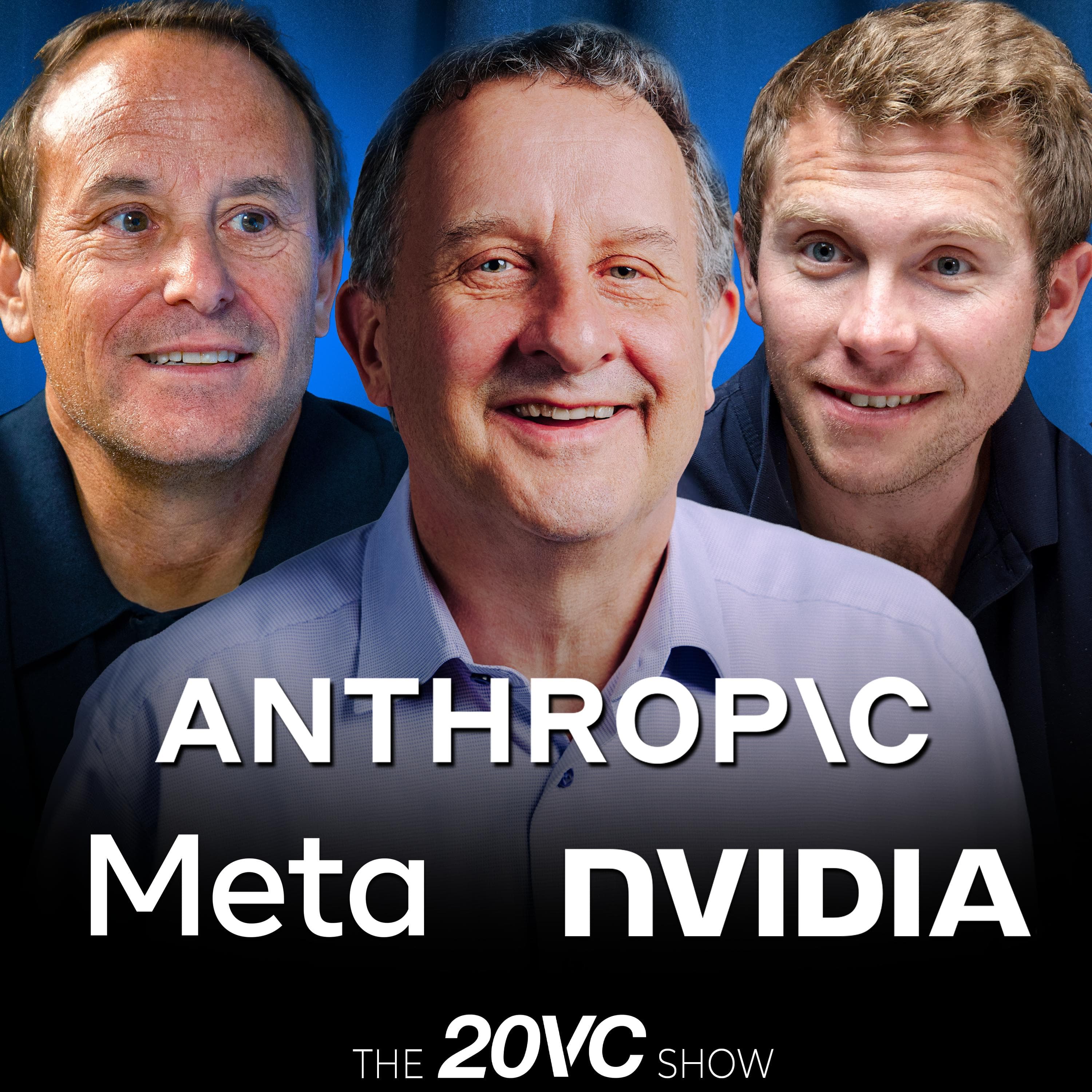
20VC: Valar’s Pro-Rata Fight, Meta’s Muse and NVIDIA’s Bet
Pro rata rights emerge as economically valuable options, while Meta’s Muse Wonder signals a return to the model frontier despite unresolved usability questions.Meanwhile, rumored NVIDIA-Reflection and Jev’s $870 million Series A at a $7.5 billion valuation hinge on strategic control, hyper-accurate classification, and whether AI demand can absorb steep inference-price cuts.

184: 与陈哲的「具身季报26Q3」:Astra冲击后,通用模型会吃掉Robotics吗?
Astra可直接输出末端位姿,再经逆动力学转成电机信号;银河通用10项Robot Dojo任务中,监督π0.5将成功率从26%升至48%。这动摇了“physical AI大于digital AI”的估值前提,但VLA仍可能有位置;Astra目前仍慢且成功率偏低,尚不能真实部署。

October 2026 Random Ramblings
Headline gains conceal sharp dispersion: the S&P rose 13% YTD, yet the Russell 2000 fell 8% since June 30 as energy and tech led.Russell’s reconstitution also helped it avoid SMCI’s later 80% collapse.Meanwhile, FICO’s regulatory pressure, Disney’s “Infinity Vision” effort, and Chinese microdramas flag competitive threats to pricing power and Netflix viewing.
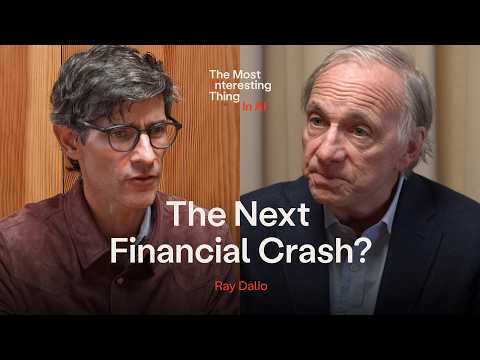
Why Ray Dalio is Worried About an AI Bubble
Ray Dalio argues that transformative AI can be a poor investment when paper wealth outruns cash, with current bubble conditions at the same magnitude as 2000 and 1929.The unresolved risk is fiscal: Washington’s debt and refinancing burden may demand liquidity before AI productivity becomes taxable income, while China’s cheaper infrastructure-style deployment across 32% of global industrial production could create a different competitive advantage.