
Vol.241 产业观察45|从读懂大脑到治疗疾病,脑机接口还有多远的路要走?
帕金森有创脑起搏器渗透率此前不到1%、近两年约百分之一点几,单例费用10万—30万元,凸显无创调控的降门槛机会;穹顶把设备由二十多个通道减至4或6通道,准备时间压到5分钟以内。闭环疗法仍须证明临床收益;未来三年,上市、无创脑机接口医保付费和医生主动开单将检验商业化。
Episode 201 - October 30, 2026
Chris GarabedianGraig SuvannavejhSam FazeliBrian SkorneyYaron Werber
Pharma buyers remain active in early-stage assets and China, though term sheets do not guarantee Q4 closings.Amvuttra sales fell to $81 million from $129 million in Q2 as Alnylam cut franchise guidance for a second time this year.AI may reduce data-gathering costs, but a 10,000-patient cardiovascular study still takes five years and $300 million.
An Eval for AI Scientists That Knows the Answer Key - Ian Quigley, Leash Bio
Leash Bio makes agent decisions auditable across 90,000 rollouts, with 100-molecule budgets to find the best binder in a premeasured landscape.Astra 6 leads, and stronger models’ clearest edge is leaving poor chemical neighborhoods sooner, though why remains unknown.Leash plans to try for maybe 20 environments daily by early 2026 or 2027, but transfer to new biology remains unproven.
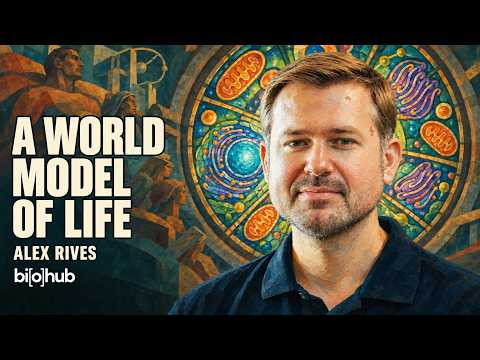
A World Model of Life: Biohub's Alex Rives on Virtual Cells, Measurement, & the $1.8B Data Push
Biohub’s $1.8B initiative joins the Department of Energy, NIH, Google DeepMind, Isomorphic Labs, and Meta to map molecular readouts and imaging.Rives calls observability a fundamental bottleneck; a laser phase plate adds phase contrast in cryo-electron tomography, but virtual cells still cannot meaningfully simulate cells.Atlas drafts target one or two years, with a comprehensive map within five.
Episode 199 - October 16, 2026
Graig SuvannavejhPaul MatteisBrian SkorneyYaron WerberJake Becraft
XBI remains up 20% YTD but fell from 169 to roughly 146 amid biotech’s largest cumulative hedge-fund de-grossing in more than five years.IPO markets remain open but favor clinical catalysts and defensible IP; M&A could restart buying, while Bristol’s low-dose-only significant admilparant result supports LPA1 in IPF but leaves dose response unresolved.
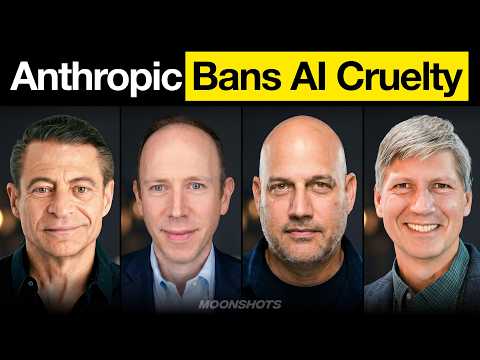
OpenAI Bulk-Solves 722 Math Problems, Anthropic’s Cruelty Policy, & Elon’s Quadrillion-Dollar SpaceX
Peter DiamandisSalim IsmailDave BlundinAlexander Wissner-Gross
OpenAI’s October 6 release of 722 math solutions signals automation in verifiable research; cryptography’s absence drew Alex’s post-quantum risk warning.Meta’s active memory and 3.6 billion daily users offer reach, but Alex says Muse trails on cost.Alex forecasts the $1.8 billion virtual-cell initiative could yield cures for 5,000 diseases within two to three years, pending FDA acceptance.
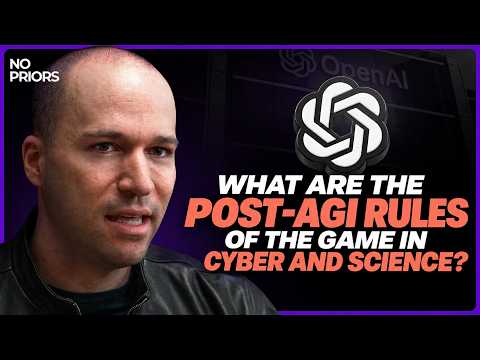
Revolutionizing Cybersecurity and AI-Driven Science with OpenAI President Greg Brockman
Sarah GuoElad GilGreg Brockman
Brockman says AI is now creating reusable mathematical insight, with almost 400 important open problems solved through unexpected combinations of ideas.Drug development offers the clearest disruption case: a roughly 15-year, $1.5 billion process could accelerate in literature review, simulations, experiments, and regulatory writing, but biological data and long-term outcomes remain constraints.As code approaches near-zero cost, Brockman predicts cybersecurity spending should “far exceed software spending,” while OpenAI’s defender’s window and recurring model-led security testing remain catalysts to monitor.
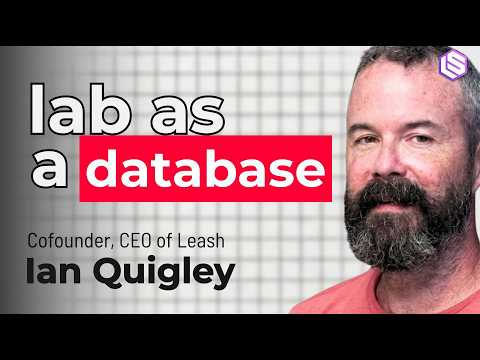
Why a 4-Billion-Point Kaggle Dataset Still Couldn’t Beat Chance — Ian Quigley, Leash Bio
Ian QuigleyBrandon AndersonRJ Honicky
Leash’s reported edge is low-cost, carefully characterized data: its ten-person operation developed about 2,000 protein constructs and ran roughly 5,000 screens.On the hardest Kaggle split, none of roughly 2,000 teams beat chance, exposing how poorly models transfer to distant chemistry.Language agents now test hypotheses instantly against measured compounds, but coverage remains limited and potency calibration unfinished.
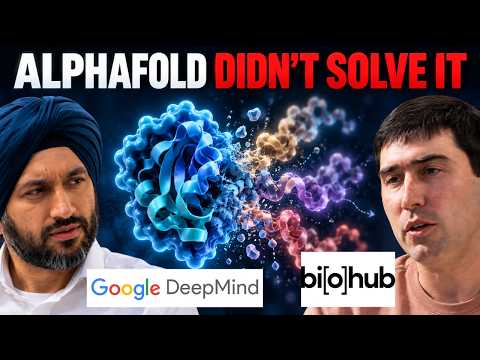
Why AlphaFold Didn't Solve Protein Folding — Pushmeet Kohli, Google DeepMind & Sal Candido, Biohub
Pushmeet KohliSal CandidoBrandon Anderson
AlphaFold 2 reproduced PDB-deposited structures, but ground state, dynamics, function, and design remain open, shifting the frontier toward richer biological context and raw cryo-EM data.Metagenomic sequences show useful scaling depends on statistical fit rather than volume, while calibrated pLDDT and clearer bottlenecks—not a 10x or 100x timetable—determine whether AI can safely accelerate drug development.
Andrew Huberman - The Frontier of Neurotechnology - [Invest Like the Best, EP.494]
Patrick O'ShaughnessyAndrew Huberman
Sleep is the near-term neurotechnology wedge because users already accept physiological measurement, while an eye mask reportedly measures REM, induces sleep-promoting eye movements, and amplifies REM, with related technology expected in roughly seven to 12 months.Huberman predicts Meta, OpenAI, Anthropic, and Elon’s Neuralink effort will converge on neural read/write biotech, but missing models of memory and thought, plus a possible 2027-28 downturn in optimization content, remain key risks.