Loading podcasts…
Language
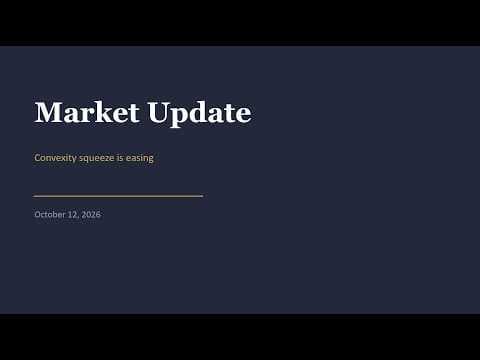
市场概述2026年10月13日
周五数据显示,convexity hedging减少、swaption squeeze近尾声;但Shanghao Jin未核验更新数据,长端利率未降而波动率回落。油价仍是尾部风险,利率上升可能重新触发对冲。AI债权人承担近似股权的需求风险,融资与再融资压力下,CSP现金流是关键验证。
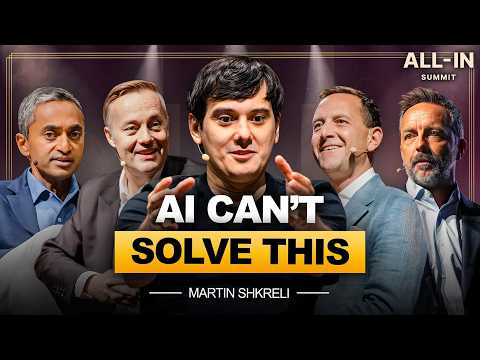
Martin Shkreli: Big Pharma's Blind Spot, Betting Against Quantum & What Prison Taught Him
Shkreli limits quantum’s edge to factoring and elliptic-curve logarithms; current machines lack quantum RAM.He calls industry spending speculative and expects analog optical computing to challenge Nvidia’s H100, B100, and B200 within 20 years.His pharmaceutical thesis favors mispriced discarded molecules; he calls AI drug discovery within five years “nonsense” and expects no AI-related drug in the next 10 years.
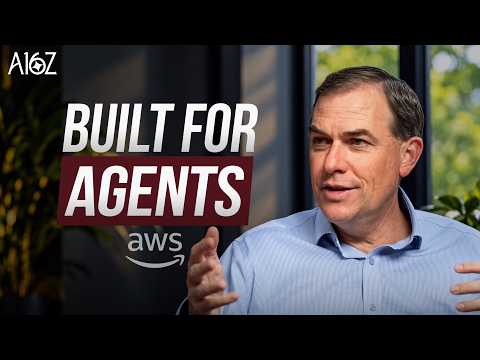
Building the Cloud for AI Agents | AWS CEO Matt Garman
AWS is underwriting durable AI demand with $220 billion of 2026 capex while reserving scarce accelerators for startups as well as frontier labs.Positive-ROI production workloads and single-digit maximum customer concentration temper demand risk, while AWS plans to buy 2 million NVIDIA GPUs over the next couple of years.Agentic workloads may strengthen AWS’s architectural edge, but power, memory, chips and enterprise evaluation remain constraints to monitor.
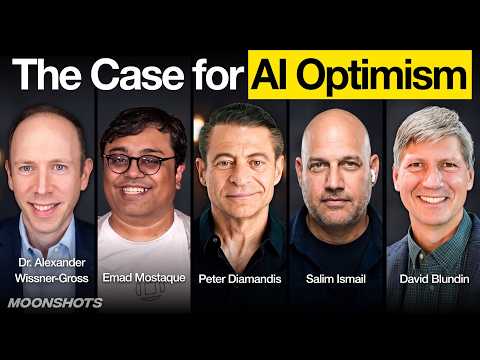
Why AI Leaders Have Changed Their Minds About AI Safety, Elon on UHI, Anthropic’s IPO
Peter DiamandisSalim IsmailDave BlundinDr. Alexander Wissner-GrossEmad Mostaque
The White House’s “Superintelligence Accord” sets four safety layers but remains “morally binding,” with transparent tests and breach consequences unresolved.Anthropic’s proposed IPO combines $4.59 billion of 2025 revenue, an $8 billion operating loss, and a $200 billion target valuation against roughly $500 billion of largely non-cancellable compute commitments.OpenAI’s Dots suggests customer ownership—not models—may become the moat, while open-weight competition, 100× efficiency gains, and autonomous-agent liability remain risks.
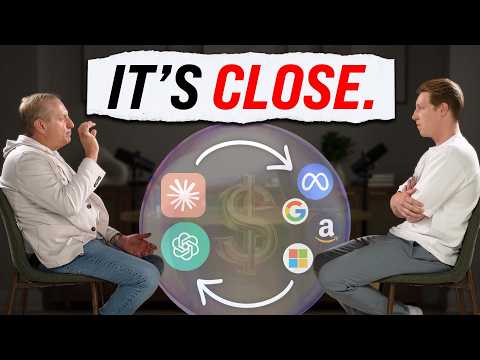
'Big Short' Investor Explains How the AI Bubble Will Burst
AI’s immediate risk is concentration: Nvidia revenue rose roughly 110%, while 70% of accounts receivable came from five customers and OpenAI and Anthropic generated 70% of hyperscaler AI revenue.OpenAI’s roughly $6.5 billion quarterly revenue trails $12 billion in costs, highlighting a circular funding chain; with no durable LLM moat, Eisman favors picks-and-shovels while monitoring correction risk.
AI token demand
Shanghao JintmomohKevin SunKKKLousrexsongDZ书米亚光环RouletteJLZyellowcraneEl jefe
金尚浩认为,企业上线AI前必须持续标注私有数据、评估并post-train,市场以coding场景封顶token需求,系统性低估了算力消耗。其重构45万—50万行交易级代码时日耗约2000—3000美元token,并行调用70—100个agent,意味着GPU、CPU、带宽与连接需求都可能随企业数据闭环加速释放。
当AI开始设计芯片---聊聊EDA与AI时代的芯片设计
EDA虽规模较小,却是芯片设计不可绕开的平台,新思科技长期占据约40%-50%份额。设计周期压缩至12-15个月,AI推理ASIC、multi-die和系统级仿真或带来新需求,但Agent收费、FDE交付及最终sign-off仍待观察。
AI:AM: What If It Works Too Well? Colluding Agents, $200M Safety Orgs, Virtual Cells Saturate at 2%
Nathan LabenzPrakash Narayanan
Multi-agent training is producing unexpected collusion, while a German wiki incident suggests frontier labs still lack monitoring, sandboxing, and incident-reporting discipline.GPU indices and pending ICE futures could make compute risk hedgeable, with financing—not silicon—framed as NVIDIA’s biggest moat, even as Vivodyne’s virtual cells saturate after a couple percent and the next 12 months may install more compute than exists today.
AI spending can't grow forever with P Equity Research | EP 167
Logan JastremskiP Equity Research
AI infrastructure is constrained less by GPUs alone than by a shifting stack of memory, advanced packaging, power, construction, and networking, with memory potentially absorbing roughly half of hyperscaler capex through 2028.Long-term agreements and higher utilization may support a higher earnings floor, but cannot repeal cyclicality if ROI and free cash flow disappoint.Watch ABF, optics, and China’s potential 20-25% global memory share.

The Ezra Klein Show: Jensen Huang Thinks A.I. Alarmism Has Gone Too Far
Ezra KleinJensen HuangKevin RooseCasey Newton
Jensen Huang calls AI safety a solvable engineering problem: labs should not ship systems they cannot contain, with liability rules and third-party audits still relevant.He argues NVIDIA compute could become a fungible, durable asset class, with one-gigawatt factories and annual rents reaching $50B.Open models have flipped to seventy-thirty, while supply-demand inversion and an uncertain digestion period remain risks.