SHOW DIRECTORY
The a16z Show
The venture firm’s view of startups, AI, software, markets, company building, and the technological shifts creating new categories.
BIDCLUB DESCRIPTION

AI, Infrastructure, and the Next Investment Cycle
David GeorgeSarah WangAlex ImmermanSantiago Rodriguez
AI’s rally is being driven by earnings rather than multiple expansion, with the S&P 500 below 20 times earnings while growing about 15%.Capex is projected to rise from $416 billion in 2025 to about $780 billion in 2026 and exceed $1 trillion annually from 2027; enterprise adoption remains concentrated in pilots, with inference-cost declines and workflow deployment as catalysts.

Why Investors Are Rethinking Everything for the AI Era
Jen KhaDavid GeorgeAram Verdiyan
AI is making capital itself compound advantage, pushing venture’s power law beyond prior tech cycles as compute improves products and inference demand remains unlimited.Only 20 of 3,000 US VC firms produced consistent 3x net returns over two decades, supporting concentrated LP portfolios and 5–10%+ late-stage sizing in category-defining companies.Meanwhile, traction is harder to parse and pre-ChatGPT software LBOs face repricing, leaving diffusion, liquidity, and power access as key risks and catalysts.
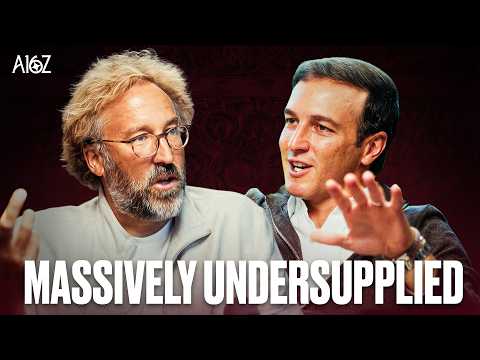
Why AI Demand Is Outrunning Compute Supply
AI demand accelerated through July and August, with usage concentrated among possibly sub-10 million heavy users and no leader identifying a worsening quantitative metric.Nebius suggests nine-to-ten-month paybacks on $50B-per-gigawatt builds, supported by 50-60% customer prepayments; undersupply through ’28 could lift token prices, while shifting capacity to training could cut lab revenue from $480B to $120B.
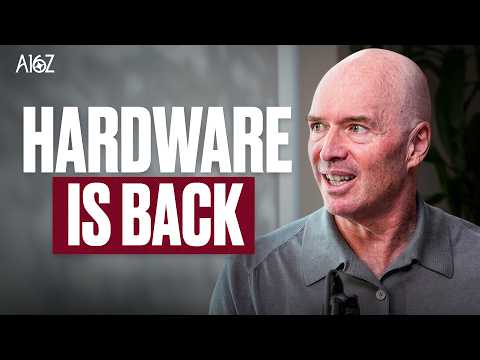
How AI Is Reinventing Computing from Chips to Power
Ben HorowitzMartin CasadoRaghu RaghuramErik Torenberg
a16z’s new AI infrastructure fund captures a founder migration into hardware, with top-founder hardware pitches rising from roughly 3–5% to “north of 20% or 30%.”Hyperscaler capex, booked-out GPUs and resale premiums support opportunities across chips, power and cooling, while grid shortages, regulation and uncontrolled agent spending remain constraints.

The Company That Made AI Coding Feel Inevitable
Martin CasadoSarah WangMatt Bornstein
Cursor’s interface-over-model thesis challenged Microsoft’s Copilot despite its VS Code, OpenAI weights, 100 million developers, and enterprise distribution.Rejecting a $25–50M ARR self-serve ceiling, it built enterprise sales reaching over 50% of the Fortune 500, where margins matter; its IDE-to-agent-to-model shift still faces model releases such as Opus 4.5 and an unnamed acquirer’s potential compute-distribution-data fit.

The New Geography of Startups
Elena BurgerAngela StrangeGabriel Vasquez
AI is reversing a16z’s international sourcing flow toward Silicon Valley, where borderless founders can compound differentiated talent, government-backed validation, and enterprise access across countries.With 40% of a16z’s investments in international founders, the test is whether diaspora networks and 3–6 months of Bay Area immersion create durable customer and talent advantages.

Building a Company in Stealth | Travis Kalanick with a16z
Travis KalanickBen HorowitzErik Torenberg
Atoms is applying full-stack industrial AI to food, mining, and transport, with production, logistics, robotics, and infrastructure unified as an “atoms-based computer.”Its 50% production-cost reduction, 50¢–$1 robotic delivery, and mining productivity now above humans support a path to lower-cost meals and faster deployment, while execution depends on management capacity and overcoming industrial regulation.

Jake Paul on Going From YouTube to Boxing to Investing | a16z ft. Anti Fund
Erik TorenbergJake PaulGeoff Woo
Anti Fund is pairing growth capital with Jake Paul’s scarce distribution advantage, backing names including Anduril, SpaceX, OpenAI and Anthropic as Woo argues that attention, not capital, is increasingly constrained.Paul’s experiment-measure-concentrate playbook and resilience underpin the partnership, while creator monetization, political and education ambitions, platform limits and the possibility of rapid AI imitation remain important variables.
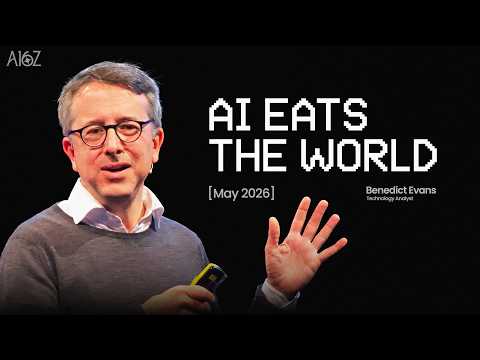
The Economics of AI Usage and What's Next For SaaS | Benedict Evans on a16z
Agentic coding has crossed unmistakable product-market fit, with customers pulling products from vendors’ hands.Foundation models appear headed toward commodity economics absent durable differentiation, while today’s token scarcity meets $1 trillion–$2 trillion of capex and “100x, 200x” efficiency gains.Cheaper development should create more software, but the unresolved question is which SaaS incumbents survive and whether models capture infrastructure-like returns.
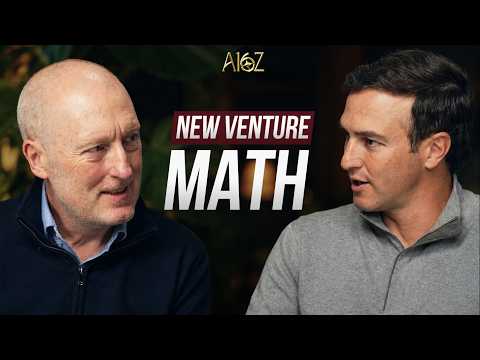
The New Rule for Picking AI Winners | The a16z Show
OpenAI and Anthropic now add more monthly revenue than Meta, Google, or Microsoft despite AI diffusion below 5%, making “in the token path” George’s rule for application winners.Five frontier labs could lower token prices, but Chinese models reportedly offer 80% of frontier capability at 10% of the cost; scarce capacity lasts through early 2029, with algorithmic breakthroughs the key reversal risk.