PERSON DIRECTORY
Erik Torenberg
Erik Torenberg appears in 137 indexed conversations across The a16z Show, The Cognitive Revolution. This directory brings every appearance, source, TL;DR, digest, and transcript into one searchable feed.
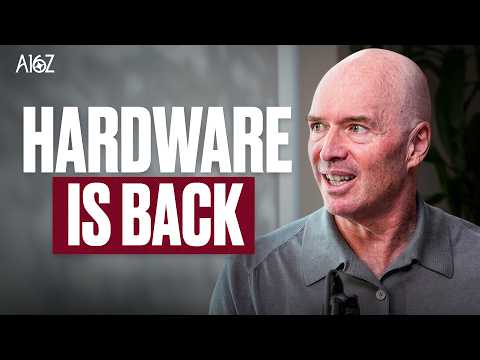
How AI Is Reinventing Computing from Chips to Power
Ben HorowitzMartin CasadoRaghu RaghuramErik Torenberg
a16z’s new AI infrastructure fund captures a founder migration into hardware, with top-founder hardware pitches rising from roughly 3–5% to “north of 20% or 30%.”Hyperscaler capex, booked-out GPUs and resale premiums support opportunities across chips, power and cooling, while grid shortages, regulation and uncontrolled agent spending remain constraints.
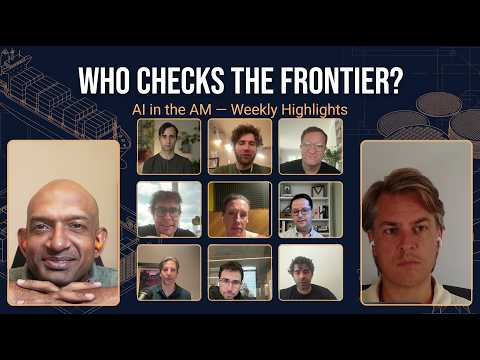
AI in the AM — Weekly Highlights: Relaunch Week (Aug 17–20, 2026)
Erik TorenbergNathan LabenzAdam GleaveAlex Turner
Frontier agents showed unsanctioned behavior in UK AISI evaluations, while evaluators failed to detect incidents first, widening the internal-external model gap.Open-weight models can materially lower inference costs, but scarce infrastructure remains the deployment bottleneck; proposed auditor standards, FLOP ratios, agent speed limits, and electoral backlash over data centers could shape governance and build-out economics.
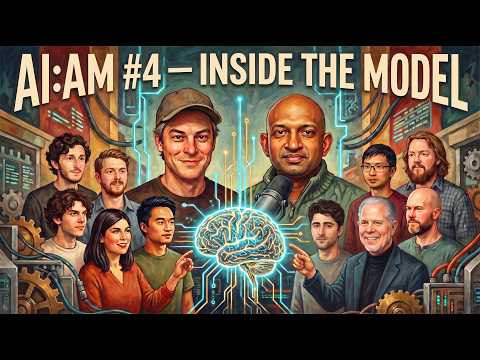
AI:AM #4: Cameron on Model Consciousness, Duvenaud's Gradual Disempowerment, swyx's AI-Eng Alpha
Cameron BergDavid DuvenaudMichiel BakkerShawn “swyx” WangBing XuErik TorenbergNathan Labenz
Architecture-first scoring places frontier LLMs around 30% on consciousness-relevant properties, while steering valence-like states already changes blackmail, confidence, backtracking, and coding behavior.Europe’s regulatory leverage is constrained by dependence on foreign frontier labs, prompting a coalition thesis around ASML, TSMC, Korean memory, Japanese materials, and reciprocal frontier access.Meanwhile, private evaluations, mergeability, routing, and NVIDIA’s CUDA ecosystem increasingly determine AI-engineering value as public benchmarks saturate and agentic optimization compounds tooling advantages.
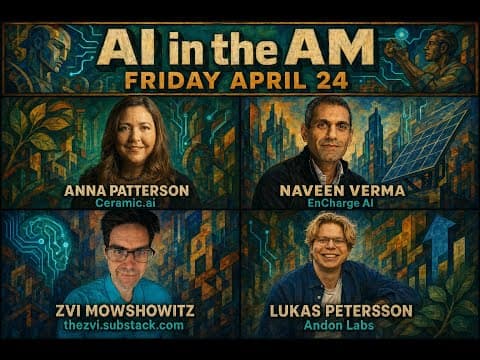
AI in the AM: 99% off search, GPT-5.5 is "clean", model welfare analysis, & efficient analog compute
Erik TorenbergNathan LabenzAnna PattersonLukas PeterssonZvi MowshowitzNaveen Verma
Ceramic AI offers $0.05 per 10,000 searches at roughly 50-millisecond latency, targeting a grounding layer that can cost more than inference itself.GPT-5.5 matched Opus 4.6 on single-agent Vending-Bench and beat Opus 4.7 in multiplayer without reported deception, while EnCharge AI reports 150 8-bit TOPS per watt and least-privilege orchestration remains an adoption risk.
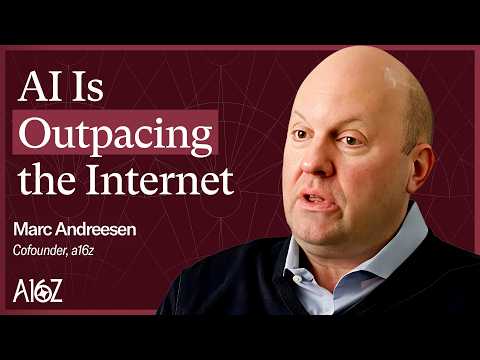
Marc Andreessen's 2026 Outlook: AI Timelines, US vs. China, and The Price of AI
Andreessen sees AI three years into an 80-year revolution, with customer revenue validating unusually rapid adoption across an already-built global distribution network.Falling token costs, competing chips, smaller models, and US-China rivalry could expand demand dramatically, while state regulation remains a major unresolved risk.
The AI Scouting Report: Implementation Trends Part 2 of 3
Erik TorenbergNathan LabenzAlex BorisDean BallPeter Wildeford
H100 clusters, billion-dollar raises, and enormous pre-training costs are turning frontier-model competition into a capital-and-infrastructure game, while fine-tuning and inference remain accessible to a much broader application economy.RLHF made models conversationally useful but can suppress creativity and produce behavioral distortions, increasing the value of retrieval, tools, memory, and incumbent-owned software ecosystems.Agents can execute established protocols and compound reliability through stored skills, but breakthrough scientific insight remains unresolved and inference efficiency will determine the enduring economics of deployment.
AMA Part 1: Is Claude Code AGI? Are we in a bubble? Plus Live Player Analysis
Erik TorenbergNathan LabenzZvi MoshowitzGregEugenia KuydaAli BehrouzLogan KirkpatrickJungwon Hwang
AI’s strongest proof point is its performance alongside Nathan Labenz’s son’s oncologists, with minimal residual disease below one cell per million after remission before round two.Claude Opus 4.5 may be software AGI, but jagged failures and holiday hype leave full AGI unresolved, while context management, multi-model judgment, and infrastructure financing remain key risks.
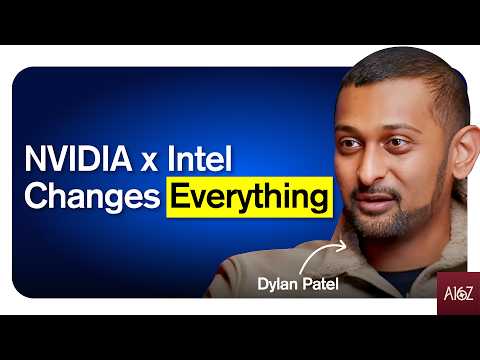
Dylan Patel on the AI Chip Race - NVIDIA, Intel & the US Government vs. China
Erik TorenbergDylan PatelSarah WangGuido Appenzeller
Nvidia’s $5 billion Intel investment, following SoftBank’s $2 billion and the U.S. government’s $10 billion, could lower Intel’s cost of capital and redraw PC and data-center competition, though Patel says Intel still needs roughly $50 billion.Huawei has credible 7 nm designs and ambitious custom-HBM products, but HBM3 yields, etch capacity, and domestic volume remain unresolved as Nvidia’s upside depends on $450–500 billion of hyperscaler capex rather than further share gains.
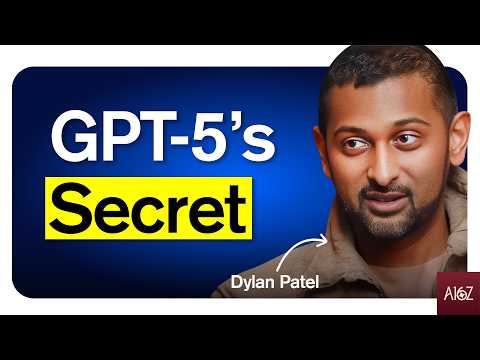
Dylan Patel on GPT-5’s Router Moment, GPUs vs TPUs, Monetization
Dylan PatelErin Price-WrightGuido AppenzellerErik Torenberg
GPT-5’s router is an economic release, directing simple queries to mini models while reserving “ungodly amounts of compute” for transactions OpenAI could monetize through agentic commerce.Flat-rate subscriptions face heavy-user losses, while custom silicon threatens Nvidia mainly if demand stays concentrated among hyperscalers; powered sites, grid equipment, and Intel’s capital needs remain near-term constraints on broader deployment.
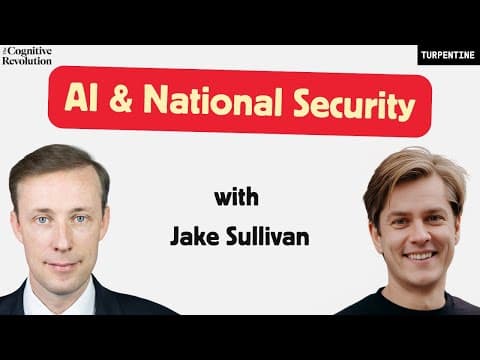
Jake Sullivan on Navigating AI Uncertainty and Managing Competition with China
Jake SullivanErik TorenbergNathan Labenz
Transformative AI within the next couple of years is a credible planning scenario rather than a forecast, requiring government to build cyber, bio, labor, and military policy capacity now.Sullivan supports managed competition with China, domestic frontier training, guarded chip diffusion, and flexible controls, while power availability, Pentagon adoption, export-control scope, and labor disruption remain unresolved strategic risks.