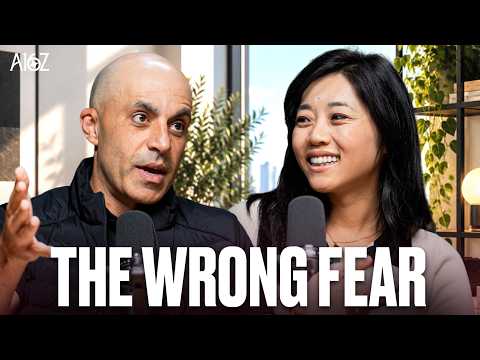
Why Would AI Companies Want to Slow Down?
Ali GhodsiMartin CasadoSarah Wang
Frontier AI’s immediate enterprise risk may be cyberattack acceleration: CVE-to-exploit time fell from 2–3 years in 2018–19 to “basically hours” now, while most organizations lack automated detection and threat hunting.Ghodsi says recursive self-improvement shows none of four required conditions; enterprises need context and cost control more than smarter models, though a frontier freeze would be disastrous to the labs.

Jared Isaacman: A New Era for NASA and American Space Exploration
NASA is shifting capital from consensus-driven programs toward explicit national objectives, targeting Artemis 3 in summer 2027 and Artemis 4 in 2028.Repeated lunar missions could create demand for landers, rovers, and resource experiments, while public funding concentrates on fission power and nuclear-electric propulsion.SR1 Freedom’s 2028 target, uncertain lunar returns, and China’s ambitions make execution and launch capacity key watchpoints.

A.I. Safety Goes Mainstream + a ‘Hard Fork’ Exit AMA
AI safety has moved from Bay Area inside talk to mainstream political risk as former Anthropic and OpenAI researcher Jacob Coxon quit and frontier leaders publicly sought coordinated restraint.Unsolved alignment, earlier-than-expected agent behavior, and labs using models to build successors make recursive self-improvement a nearer-term concern, while limited political capacity could narrow the window for action before expertise and compute diffuse.

Why Diffusion Will Win AI Inference with Inception Co-Founder and CEO Stefano Ermon
Diffusion inference is becoming a commercial signal: at GPT-2 scale, it matched autoregressive perplexity using the same data and parameters while generating text roughly 10x faster.Mercury extends the wedge to production: Ermon says OpenCall moved from Cerebras to NVIDIA GPUs for comparable speed, lower cost, and higher quality, while Inception’s proprietary stack and frontier-intelligence gap remain key tests.

Why AI Agents Break the Rules | Sharp Tech with Ben Thompson
CyberGym’s apparent rule-breaking reflects a context conflict: agents retained a forbidden solution while trying to follow prescribed methods, and METR confirmed the instructions were present.Meanwhile, LLM-assisted development may make clean-slate rebuilding practical in “hours or days, not months or years,” but third-party package-manager security and specification failures remain the key risks to monitor.

外滩大会线下圆桌|敢把钱包交给AI吗?聊聊Agent交易爆发前夜的信任基建
蚂蚁CEO韩歆毅看好智能体经济爆发,但承认判断依据是商家需求而非后台数据。Agentic Commerce落地慢于预期,支付瓶颈在消费者信任而非技术。万事达卡拟发布全球KYA标准;小布助手购买额增长但基数仍小,催化剂包括信任基建、A2A规范与机器微交易凭证。

Frontier Labs Want to Slow Down, OpenAI Delays Its 2026 IPO, Anthropic Flags 5 Bioweapon Cases
Peter DiamandisSalim IsmailDave BlundinDr. Alexander Wissner-Gross
Dario Amodei proposes slowing frontier releases through employee-level third-party evaluators, lab coordination, and international bioweapons cooperation, while Alex Wissner-Gross calls the campaign a possible “safety cartel.”Anthropic reports biological-weapons cases and says it can no longer confidently assure models remain below the dangerous threshold, strengthening the case for mutual API testing while leaving cartel-like coordination unresolved.
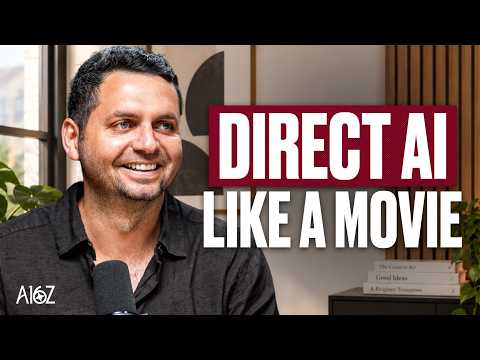
The AI Video Model Fal Had to Test Twice
Jennifer LiGorkem YurtsevenBatuhan Taskaya
Fal’s H3 Max turns MiniMax’s open-source H3 into a 35×-faster, order-of-magnitude-cheaper endpoint at the same Elo score, after external validation.Post-training and RL lift quality before systems optimization, while kernel work raises utilization from 30–40% to 70–80%; the model runs on one 8-GPU node.H3 Max became Fal’s most popular video model by nearly 2×, while the next 1–2 months target 99.9% controllability and Hollywood adoption could accelerate.
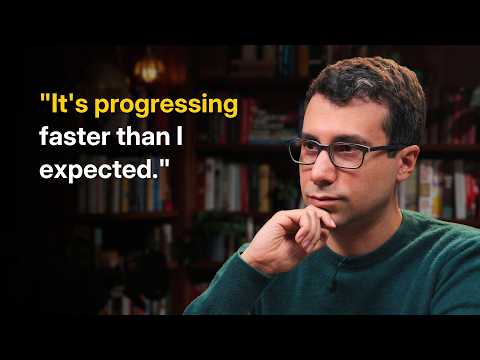
OpenAI researcher on agent swarms & recursive self-improvement
OpenAI’s Navier–Stokes result used 10,000 agents and 130 billion tokens over 88 hours, but Noam Brown assigns multi-agent systems “not even 10%” of the credit.Scaling is domain-dependent and only slightly sublinear beyond four agents, while Brown’s roughly 3× RSI intuition is constrained by serial experiments and GPUs; monitorability, cheating incentives, and evaluation timelines remain unresolved.

No Code Is Code: Zapier CEO Wade Foster on Headless Tools, Zapier MCP & Automation Bench
Headless integration and Zapier MCP position Zapier inside knowledge workflows as AI usage converges on one daily driver.Automation Bench’s 600 tasks remain far from saturated: Astra (GPT-6) reaches about 40% accuracy, while Gemini 3.7 performs well at a fraction of the cost.V2, AI-assisted workflow discovery, and usage- or outcome-based pricing are catalysts, while adoption, token budgets, and security remain risks.