Loading podcasts…
Language
CNBC Halftime Report with Brad Gerstner - October 15th, 2026
Gerstner is tactically cautious after AI stocks’ April–May surge, but more bullish on 2027–28 as model capability drives revenue and recursive development creates “Claude Code moments.”Anthropic’s Q3 revenue of just under $17 billion, up 45% sequentially, supports his expectation of an IPO in “weeks, not months” with demand above $500 billion.CoreWeave debt and AI-safety framework remain key tests.

硅谷坐标 x Datadog首席产品官|HYSTA主席李严冰: AI 落地进入 ROI 时代
AI落地已从验证可行性转向衡量治理、可信度与ROI,可观测性由此成为控制token成本、预算和规模化部署的关键。Datadog凭运营复杂度、专有数据和垂直模型构筑护城河,其模型质量接近顶级前沿模型、成本至少低一个数量级;产品将延伸至CLI和Slack,但业余代理泄露数据或API密钥仍是普及风险。

OpenAI Bulk-Solves 722 Math Problems, Anthropic’s Cruelty Policy, & Elon’s Quadrillion-Dollar SpaceX
Peter DiamandisSalim IsmailDave BlundinAlexander Wissner-Gross
OpenAI’s October 6 release of 722 math solutions signals automation in verifiable research; cryptography’s absence drew Alex’s post-quantum risk warning.Meta’s active memory and 3.6 billion daily users offer reach, but Alex says Muse trails on cost.Alex forecasts the $1.8 billion virtual-cell initiative could yield cures for 5,000 diseases within two to three years, pending FDA acceptance.
Jensen Huang | Does AI Revenue Justify Capex, '27 AI Bottlenecks, Singularity, Open vs Closed & more
Jensen HuangBrad GerstnerClark Tang
Jensen Huang argues AI demand can compound as reasoning consumes more inference and agents take on more work, even as intelligence gets cheaper.Physical AI generated $10 billion for Nvidia in the first six months of the year, while infrastructure constraints may delay capacity.Broader demand and software licensing support the capex case, but deployment timing remains a risk.

184: 与陈哲的「具身季报26Q3」:Astra冲击后,通用模型会吃掉Robotics吗?
Astra可直接输出末端位姿,再经逆动力学转成电机信号;银河通用10项Robot Dojo任务中,监督π0.5将成功率从26%升至48%。这动摇了“physical AI大于digital AI”的估值前提,但VLA仍可能有位置;Astra目前仍慢且成功率偏低,尚不能真实部署。
Martin Shkreli: Big Pharma's Blind Spot, Betting Against Quantum & What Prison Taught Him
Shkreli limits quantum’s edge to factoring and elliptic-curve logarithms; current machines lack quantum RAM.He calls industry spending speculative and expects analog optical computing to challenge Nvidia’s H100, B100, and B200 within 20 years.His pharmaceutical thesis favors mispriced discarded molecules; he calls AI drug discovery within five years “nonsense” and expects no AI-related drug in the next 10 years.
Atlassian’s Cannon-Brookes: Agents Won’t Replace Interfaces
Harry StebbingsMike Cannon-Brookes
Atlassian is betting that agents will expand interface value, especially for collaborative work requiring taste, context and human interaction.The Teamwork Graph turns each customer’s people, decisions, documents, code and workflows into queryable context for agents.Atlassian currently uses no Chinese models in production while routing Nemotron, Mistral and other models by quality, cost and speed; specialized models must sustain “exponential gains” as general models improve.
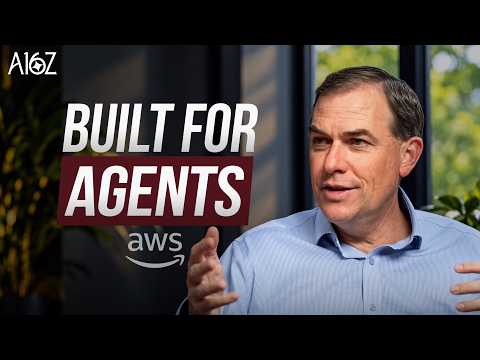
Building the Cloud for AI Agents | AWS CEO Matt Garman
AWS is underwriting durable AI demand with $220 billion of 2026 capex while reserving scarce accelerators for startups as well as frontier labs.Positive-ROI production workloads and single-digit maximum customer concentration temper demand risk, while AWS plans to buy 2 million NVIDIA GPUs over the next couple of years.Agentic workloads may strengthen AWS’s architectural edge, but power, memory, chips and enterprise evaluation remain constraints to monitor.
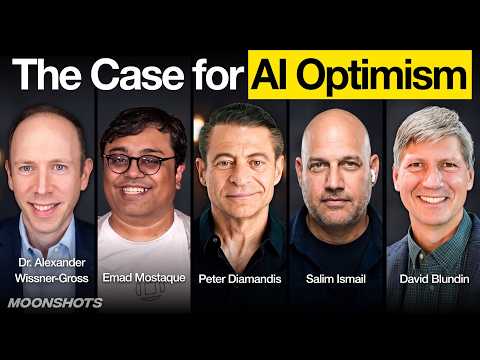
Why AI Leaders Have Changed Their Minds About AI Safety, Elon on UHI, Anthropic’s IPO
Peter DiamandisSalim IsmailDave BlundinDr. Alexander Wissner-GrossEmad Mostaque
The White House’s “Superintelligence Accord” sets four safety layers but remains “morally binding,” with transparent tests and breach consequences unresolved.Anthropic’s proposed IPO combines $4.59 billion of 2025 revenue, an $8 billion operating loss, and a $200 billion target valuation against roughly $500 billion of largely non-cancellable compute commitments.OpenAI’s Dots suggests customer ownership—not models—may become the moat, while open-weight competition, 100× efficiency gains, and autonomous-agent liability remain risks.
Episode 198 - October 2, 2026
Graig SuvannavejhSam FazeliEric SchmidtBrian Skorney
Biotech’s 27% XBI gain through September masks a punishing ownership unwind, as underowned and heavily shorted names offset specialist-fund selling.Regeneron-Sanofi’s $1 billion upfront and AstraZeneca’s $2 billion Summit investment show strategic capital is flowing, but HARMONi-3 remains a potentially historic binary event.China-origin deals and Lilly’s obesity data sharpen competition, while financing, durability, tolerability, and endpoint risk still dictate outcomes.