SHOW DIRECTORY
All-In
Industry veterans Chamath Palihapitiya, Jason Calacanis, David Sacks, and David Friedberg cover economics, technology, politics, society, and poker.
SOURCE DESCRIPTION · RSS
Jake Paul & The Chainsmokers: Turning Fame into Funds, Jake Enters Politics? & Venture Bubble Signs
Chamath PalihapitiyaJason CalacanisDavid SacksDavid FriedbergJake PaulDrew TaggartAlex Pall
Jake Paul is turning owned attention into distribution and talent infrastructure, citing 138 million Netflix viewers for the Mike Tyson event and 400 MVP fighters.His $100 million Anti Fund and The Chainsmokers’ fund target venture economics, but later tranches priced at two or three times earlier valuations without operating improvement leave realized DPI—not TVPI—as the test of Chamath’s bubble warning.
Can the AI Industry Regulate Itself? Stripe Wants PayPal, China Catches Up, NY Bans Datacenters
Chamath PalihapitiyaJason CalacanisDavid SacksDavid Friedberg
Demis Hassabis’s FINRA-style SRO emerged as the least-bad AI oversight option, but startup and open-source representation, catastrophic-risk limits, voluntary proof and preemption remain essential.A reported $53 billion Stripe-led PayPal bid could combine 439 million consumer accounts with Stripe’s merchants, Braintree, Venmo, Cash App and stablecoin infrastructure to challenge Visa and Mastercard.Electricity is the binding constraint: a 7-8 GW PGM auction drew roughly 156 MW, while New York’s moratorium makes energizable sites scarcer and deployment a catalyst to monitor.
Why Secondary Markets Are Eating the IPO | All-In Liquidity Secondary Markets Panel
Brad GerstnerGavin BakerKelly RodriquesChamath PalihapitiyaJason CalacanisDavid SacksDavid Friedberg
Private-company secondaries have become a third exit market, with 2025 volume roughly twice the 2021 peak and activity equal to 31% of primary venture activity.Forge’s Schwab partnership could distribute private equity to millions of investors through regulated products, while longer private lifecycles, double-fee SPVs and valuation compression make governance, pricing and liquidity worth monitoring.
Bill Ackman: Here's What the Market is MISSING
Ackman now prioritizes long-term, durable, protected, non-disruptable growth as AI makes disruption the first underwriting question.He sees Microsoft, Meta, and Amazon as undervalued amid enthusiasm for chips and energy, while SaaS requires company-by-company analysis of pricing power and platform value.Howard Hughes is his 50-year compounding project, combining below-liquidation-value real estate with insurance float and a potential path toward “a trillion-dollar thing over time.”
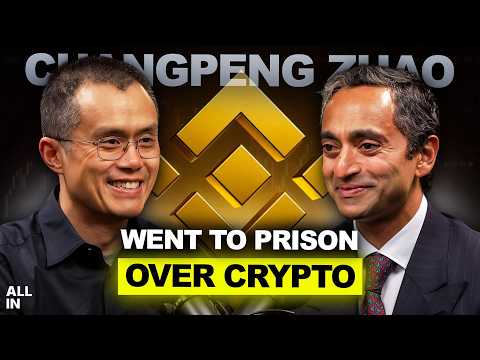
Binance CEO: 4 Months in Prison, $4 Billion Fine, and What Comes Next
CZChamath PalihapitiyaJason CalacanisDavid SacksDavid Friedberg
Binance emerged after China’s March 2017 shutdown erased roughly 30 software clients, with an ICO selling 60% of BNB for about $15 million to fund the crypto-to-crypto exchange.Faster execution and a 50% fee discount drove adoption, but weak KYC/AML and unregistered US service led to CZ’s four-month sentence, while AI-agent payments remain a possibility and privacy unresolved.
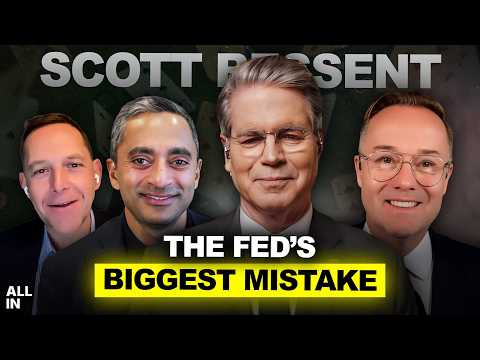
Scott Bessent: Fixing the Fed, Tariffs for National Security, Solving Affordability in 2026
Bessent’s 2026 thesis pairs roughly 6% nominal growth with a $200-$300 billion fiscal contraction, targeting mid-five deficit-to-GDP.He frames tariffs up to 145% as national-security leverage, not permanent revenue, with fentanyl rates later halved to 10%.Execution risk centers on whether Fed normalization, $1,000-$2,000 refunds, and capex incentives can repair affordability.
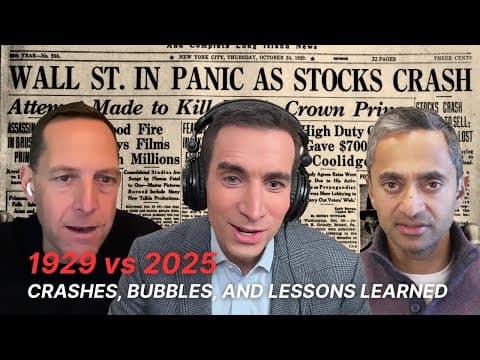
1929 vs 2025: Andrew Ross Sorkin on Crashes, Bubbles & Lessons Learned
Chamath PalihapitiyaDavid FriedbergAndrew Ross Sorkin
AI investment echoes 1929’s mix of technology and easy credit, but corporations are funding much of today’s spending with real cash and leverage is harder to locate across data centers, energy, real estate and private credit.Nvidia–OpenAI and AMD arrangements suggest possible circularity, yet a reckoning could still be years away; the key test is whether AI moves beyond novelty-slopware toward durable productivity and quality.

Solana’s Anatoly Yakovenko on Crypto's Next Era: Quantum, AI, and the Future of Money
GENIUS Act implementation could unlock $1 trillion–$10 trillion of stablecoins on public chains, potentially making the internet the largest holder of U.S.Treasuries within five years.Solana’s proposed edge is execution speed—roughly 1,000 times faster than ETH by Yakovenko’s estimate—while tokenized securities, uncorrelated real-world assets, and Bitcoin’s quantum migration remain regulation- and infrastructure-dependent catalysts.
Robinhood CEO Vlad Tenev on tokenizing stocks, expanding access to private shares, fintech's future
Robinhood’s tokenization thesis prioritizes access to inaccessible, illiquid assets over 24/7 trading, using stablecoin-like reserves and one-to-one minting to offer exposure to assets including OpenAI and SpaceX across 31 countries.Public stocks provide the cleaner regulatory starting point, while private shares offer greater long-term significance but raise issuer-consent and disclosure issues; Robinhood is also expanding its integrated financial platform as Harmonic develops formally verified mathematical reasoning and software.
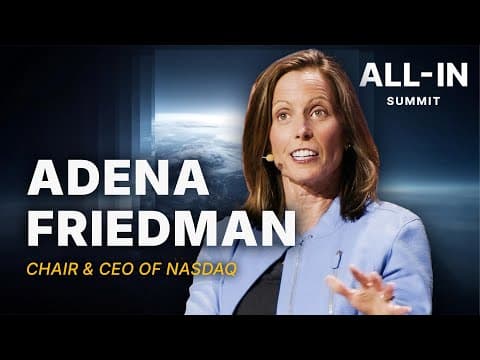
Nasdaq CEO Reveals the Next Era Of The Stock Market - Adena Friedman | All-In Summit
Nasdaq is expanding from an exchange into market infrastructure, serving technology to 17 markets and 135 others while its index business supports roughly $700 billion in assets tied to major innovators.Tokenized equities will enter the core market, with 24/5 trading ahead of possible 24/7 access; regulatory clarity, public-market reform, private-share control, and leverage outside banks remain the catalysts and risks.