PERSON DIRECTORY
Scott Bessent
Scott Bessent appears in 4 indexed conversations across All-In, Money Maze Podcast. This directory brings every appearance, source, TL;DR, digest, and transcript into one searchable feed.
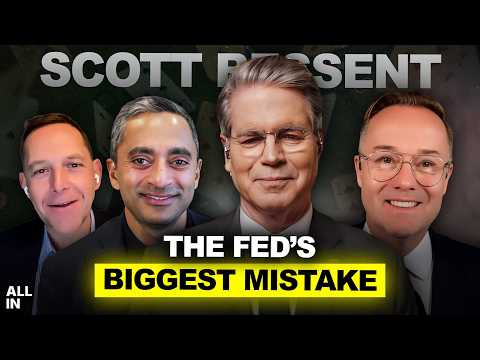
Scott Bessent: Fixing the Fed, Tariffs for National Security, Solving Affordability in 2026
Bessent’s 2026 thesis pairs roughly 6% nominal growth with a $200-$300 billion fiscal contraction, targeting mid-five deficit-to-GDP.He frames tariffs up to 145% as national-security leverage, not permanent revenue, with fentanyl rates later halved to 10%.Execution risk centers on whether Fed normalization, $1,000-$2,000 refunds, and capex incentives can repair affordability.

Winning the AI Race Part 4: Scott Bessent, Howard Lutnick, Chris Wright, and Doug Burgum
Scott BessentDoug BurgumChris WrightHoward Lutnick
Scott Bessent’s 3-3-3 plan depends on roughly $300 billion of annual AI capex translating into productivity growth, a deficit near 3% of GDP, and persistent 3%-plus growth.Stablecoins could generate “several trillion dollars of demand for T-bills,” while tariffs are intended to compress foreign margins and pull factories such as AstraZeneca’s announced $50 billion US buildout onshore.The immediate AI-power bottleneck is natural gas and retained baseload, with planned closures potentially removing 100 GW by 2030 and advanced nuclear treated as a roughly 10-year rebuild.
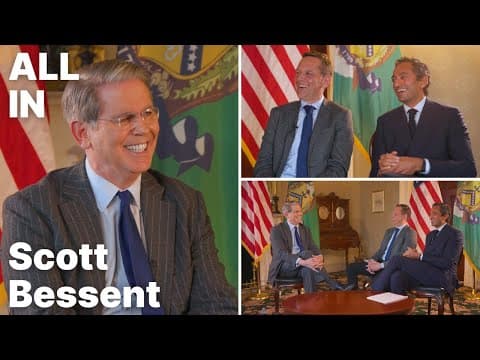
The Shocking Truth About DC Spending & Corruption - Scott Bessent
Chamath PalihapitiyaDavid FriedbergScott Bessent
Scott Bessent’s fiscal strategy targets a 3–3.5% deficit-to-GDP ratio by 2028 through slower spending, deregulation, tariffs, cheap energy and private-sector re-employment, while warning that every $300 billion cut equals roughly 1% of GDP.Bank balance-sheet reform could lower Treasury-bill yields 30–70 basis points, and a sovereign wealth fund could mobilize federal assets; execution risk centers on recession timing, congressional constraints and whether growth reaches 3%+.
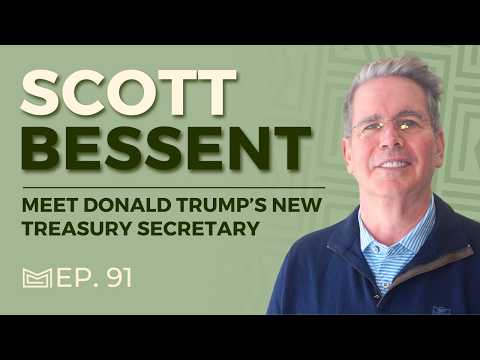
Who is Scott Bessent? Meet Trump's New US Treasury Secretary
Bessent sees Japan as a major live thesis: the Nikkei and TOPIX are gonna break through the all-time high, supported by governance reform, reshoring, and possible BOJ action.His long-yen trigger is a BOJ tightening cycle as the Fed nears its end, but CTA short-yen positioning, China-Taiwan tensions, and slow-motion de-dollarization keep sequencing and downside risks in focus.