SHOW DIRECTORY
The a16z Show
The venture firm’s view of startups, AI, software, markets, company building, and the technological shifts creating new categories.
BIDCLUB DESCRIPTION
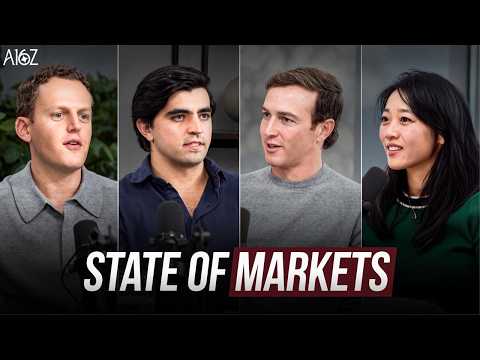
AI, Infrastructure, and the Next Investment Cycle
David GeorgeSarah WangAlex ImmermanSantiago Rodriguez
AI’s rally is being driven by earnings rather than multiple expansion, with the S&P 500 below 20 times earnings while growing about 15%.Capex is projected to rise from $416 billion in 2025 to about $780 billion in 2026 and exceed $1 trillion annually from 2027; enterprise adoption remains concentrated in pilots, with inference-cost declines and workflow deployment as catalysts.
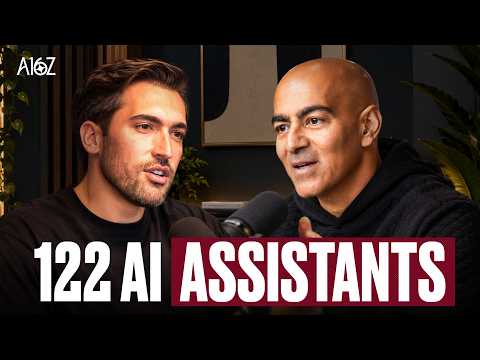
How AI Agents Could Start Saving You Money Automatically
AI assistants may win by recovering “free money”—HSA reimbursements, fare credits, or 50% lower water bills—not by abstract productivity gains.Proactivity can be a moat when agents act invisibly, but one unauthorized insurance switch could destroy trust.At roughly $20 per user per day for ambitious browser-driven services, economics may require narrow agents priced at $200-$300—or eventually $1,000—a month.
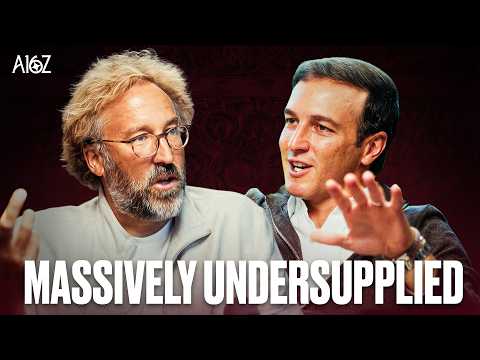
Why AI Demand Is Outrunning Compute Supply
AI demand accelerated through July and August, with usage concentrated among possibly sub-10 million heavy users and no leader identifying a worsening quantitative metric.Nebius suggests nine-to-ten-month paybacks on $50B-per-gigawatt builds, supported by 50-60% customer prepayments; undersupply through ’28 could lift token prices, while shifting capacity to training could cut lab revenue from $480B to $120B.
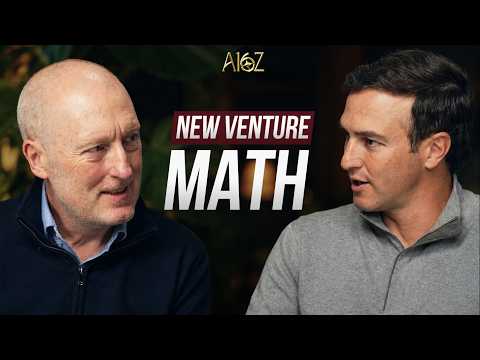
The New Rule for Picking AI Winners | The a16z Show
OpenAI and Anthropic now add more monthly revenue than Meta, Google, or Microsoft despite AI diffusion below 5%, making “in the token path” George’s rule for application winners.Five frontier labs could lower token prices, but Chinese models reportedly offer 80% of frontier capability at 10% of the cost; scarce capacity lasts through early 2029, with algorithmic breakthroughs the key reversal risk.
How to Reorg After AI Changes Everything | Block's Owen Jennings on the a16z Show
Block says Opus 4.6 and Codex 5.3 broke the link between headcount and output, prompting a workforce reduction of slightly more than 40% concentrated in development rather than compliance or sales.Small squads now supervise abundant machine labor, with meetings down 70-80% and Money Bot reduced from roughly 15 people to four plus $2,000 of tokens, while distribution, regulation, network effects, hardware, and proprietary economic data define the emerging moat.
Marc Andreessen and Ben Horowitz on the State of AI
Erik TorenbergMarc AndreessenBen Horowitz
AI need not match Beethoven to transform productivity: clearing 99.99% of humanity at intelligence and creativity could unlock recombination across domains.Current models already show commercially useful theory of mind in Socratic dialogue and simulated focus groups, though intelligence alone does not confer leadership or human connection.Demand, talent, and chip shortages are attracting supply, while the still-unformed interface and US–China robotics race leave the platform outcome open.
Dylan Patel on GPT-5’s Router Moment, GPUs vs TPUs, Monetization
Dylan PatelErin Price-WrightGuido AppenzellerErik Torenberg
GPT-5’s router is an economic release, directing simple queries to mini models while reserving “ungodly amounts of compute” for transactions OpenAI could monetize through agentic commerce.Flat-rate subscriptions face heavy-user losses, while custom silicon threatens Nvidia mainly if demand stays concentrated among hyperscalers; powered sites, grid equipment, and Intel’s capital needs remain near-term constraints on broader deployment.

What DeepSeek Means For The Future Of AI | Tech Veterans Weigh In
Steph SmithMartin CasadoSteven Sinofsky
DeepSeek R1’s permissive MIT-like license and released reasoning traces enable broad adoption and distillation into smaller models, shifting strategic advantage toward distribution and “AGI in your pocket.”Model value may migrate from benchmark leadership to stateful workflows as competitors catch up, while scale-out expands endpoints without eliminating hyperscale compute.The clearest policy signal is that chip and open-source restrictions did not prevent capable Chinese research, making faster domestic innovation and permissionless diffusion the unresolved US advantage.