SHOW DIRECTORY
The a16z Show
The venture firm’s view of startups, AI, software, markets, company building, and the technological shifts creating new categories.
BIDCLUB DESCRIPTION

AI, Infrastructure, and the Next Investment Cycle
David GeorgeSarah WangAlex ImmermanSantiago Rodriguez
AI’s rally is being driven by earnings rather than multiple expansion, with the S&P 500 below 20 times earnings while growing about 15%.Capex is projected to rise from $416 billion in 2025 to about $780 billion in 2026 and exceed $1 trillion annually from 2027; enterprise adoption remains concentrated in pilots, with inference-cost declines and workflow deployment as catalysts.

Why Investors Are Rethinking Everything for the AI Era
Jen KhaDavid GeorgeAram Verdiyan
AI is making capital itself compound advantage, pushing venture’s power law beyond prior tech cycles as compute improves products and inference demand remains unlimited.Only 20 of 3,000 US VC firms produced consistent 3x net returns over two decades, supporting concentrated LP portfolios and 5–10%+ late-stage sizing in category-defining companies.Meanwhile, traction is harder to parse and pre-ChatGPT software LBOs face repricing, leaving diffusion, liquidity, and power access as key risks and catalysts.
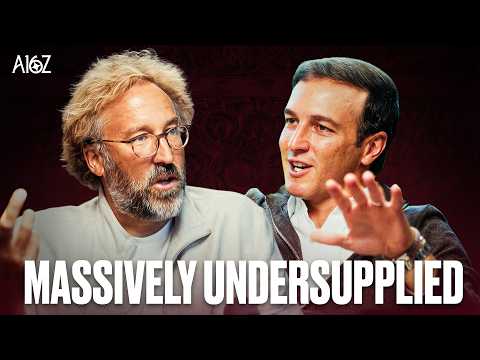
Why AI Demand Is Outrunning Compute Supply
AI demand accelerated through July and August, with usage concentrated among possibly sub-10 million heavy users and no leader identifying a worsening quantitative metric.Nebius suggests nine-to-ten-month paybacks on $50B-per-gigawatt builds, supported by 50-60% customer prepayments; undersupply through ’28 could lift token prices, while shifting capacity to training could cut lab revenue from $480B to $120B.

The Economics of AI Usage and What's Next For SaaS | Benedict Evans on a16z
Agentic coding has crossed unmistakable product-market fit, with customers pulling products from vendors’ hands.Foundation models appear headed toward commodity economics absent durable differentiation, while today’s token scarcity meets $1 trillion–$2 trillion of capex and “100x, 200x” efficiency gains.Cheaper development should create more software, but the unresolved question is which SaaS incumbents survive and whether models capture infrastructure-like returns.
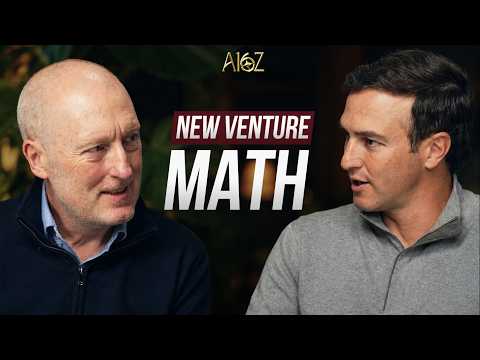
The New Rule for Picking AI Winners | The a16z Show
OpenAI and Anthropic now add more monthly revenue than Meta, Google, or Microsoft despite AI diffusion below 5%, making “in the token path” George’s rule for application winners.Five frontier labs could lower token prices, but Chinese models reportedly offer 80% of frontier capability at 10% of the cost; scarce capacity lasts through early 2029, with algorithmic breakthroughs the key reversal risk.

Goldman Sachs Chairman on Why Finance Adopts AI Differently | a16z
Finance is adopting AI aggressively, but near-zero error tolerance requires proven and experimental systems to run in parallel—sometimes 50 runs with perfection on the last 49—raising costs before efficiency gains.Opaque software executing 70,000 transactions could scale hidden errors and leverage, making testable reliability, regulation, and public legitimacy key adoption constraints for OpenAI, Anthropic, and other systemically important AI companies.
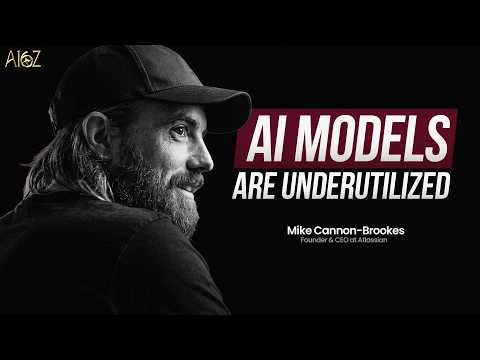
Atlassian CEO on the SaaS Apocalypse, AI Agents & What Comes Next
Alex RampellErik TorenbergMike Cannon-Brookes
AI is repricing SaaS before proving universal impairment, with Zendesk-like seat models exposed to agent substitution while Workday’s employee-based pricing and Adobe’s middle position may be underappreciated.Atlassian’s three great quarters, accumulated process knowledge, Teamwork Graph and extensibility strategy could make core systems stickier, but value depends on fair pricing and product design that earns trust as agents enter workflows.
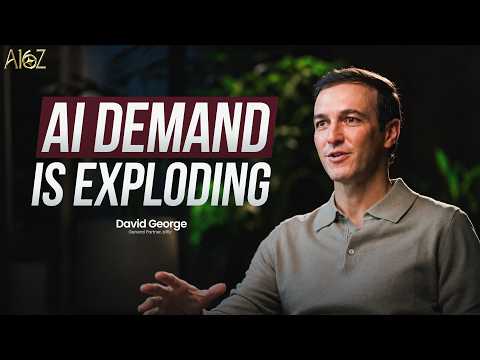
AI Markets: Deep Dive with a16z's David George
AI-native companies grow more than 2.5x faster, with top performers reaching 693% year-over-year growth and $500,000-$1 million of ARR per employee.Engagement and operating evidence includes Navan handling 50% of travel interactions with AI and expanding gross margins 20 percentage points, while enterprise change management remains the key execution risk.
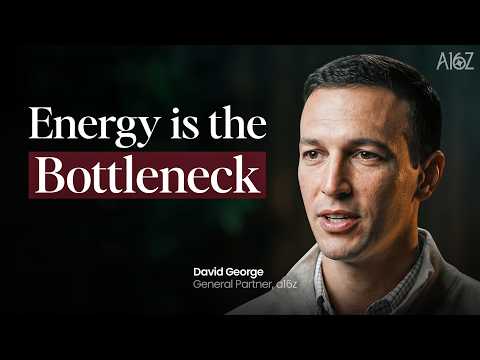
The Biggest Bottlenecks For AI: Energy & Cooling
AI infrastructure is becoming a utility layer: big-tech capex annualizes near $400 billion, model-access costs fell more than 99% in two years, and ChatGPT reached 365 billion searches in two years.Energy is likely the next five-year bottleneck, followed by cooling, while application durability depends on 90% or more retention, easy acquisition, and workflow depth rather than model access alone.
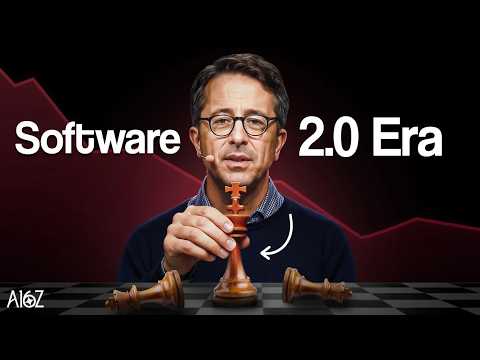
AI Eats the World: Benedict Evans on the Next Platform Shift
Generative AI may match the internet or smartphones in scale, but uneven adoption—ChatGPT’s 800 or 900 million weekly users with only about 5% paying—makes workflow integration, not model novelty, the central commercial test.Specialized products that encode validation and institutional knowledge may capture value above increasingly comparable models, while OpenAI’s distribution remains a fragile moat and falling compute costs, overbuilding and uncertain capability keep the bubble’s timing and infrastructure demand unresolved.