PERSON DIRECTORY
Dwarkesh Patel
Host of Dwarkesh Podcast. Dwarkesh Patel appears in 66 indexed conversations across Dwarkesh Podcast, Hard Fork, The a16z Show. This directory brings every appearance, source, TL;DR, digest, and transcript into one searchable feed.
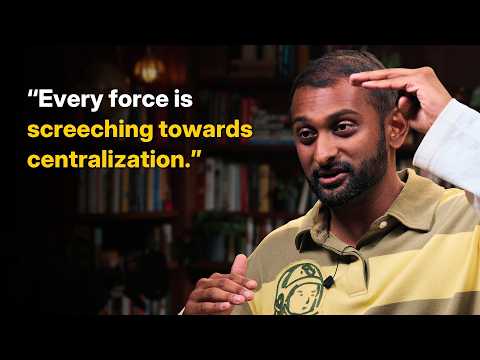
Dylan Patel – Two labs will soon control most of the world's workforce
Anthropic and OpenAI could receive 40%–50% of new compute next year, potentially controlling most usable FLOPs by end-2028 as GB300, TPU v7 and Trainium 3 improve performance per watt 3–5×.Anthropic’s revenue has reached as high as $50M/MW, it started turning profitable in Q2, and compute repricing, regulation and export controls leave margins, financing and centralization as key risks.
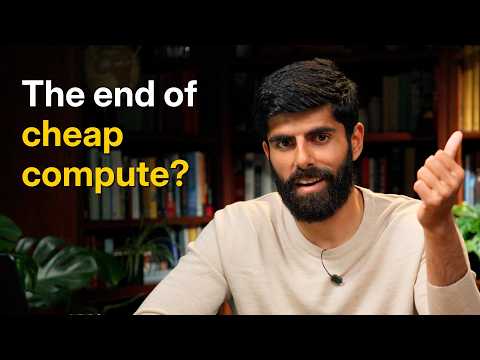
Why smarter AI models could drive up compute prices 10x
Dwarkesh argues that Anthropic’s potential 10x revenue growth against only 3x compute growth leaves rising compute prices as the key outlet, with labs below the frontier capturing the surplus.GPU spot prices are already up more than 40%, Google pays SpaceX twice spot for frontier capacity, and supply faces ASML, fabrication, and wafer-allocation constraints; efficient models may command premiums while lower-value applications are priced out.
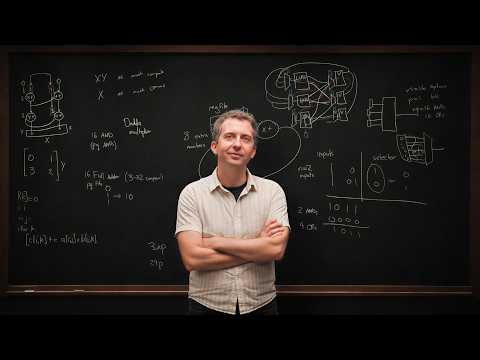
Chip design from the bottom up – Reiner Pope
Low-precision arithmetic’s quadratic multiplier-area advantage and Tensor Cores’ reduced register-file traffic explain why AI-chip efficiency depends on maximizing compute per communication across the stack.ASICs offer roughly 10x lower cost and better energy efficiency than FPGAs, but $30 million tape-outs favor flexibility; MatX’s publicly discussed splittable systolic array is a product signal to monitor, alongside Dwarkesh’s angel-investor disclosure.
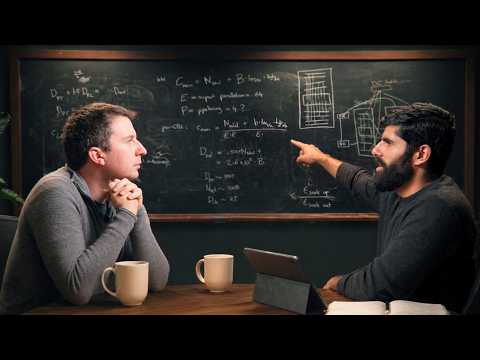
How GPT, Claude, and Gemini are actually trained and served – Reiner Pope
Pope’s roofline analysis shows inference economics are governed by batch size, memory bandwidth and active parameters, with optimal batching around 300 times the model’s sparsity ratio and unbatched serving potentially a thousand times worse.The memory wall now constrains context length and scale-up design more than weight capacity, while API pricing reveals bandwidth bottlenecks and keeps HBM demand tied to low-latency inference.
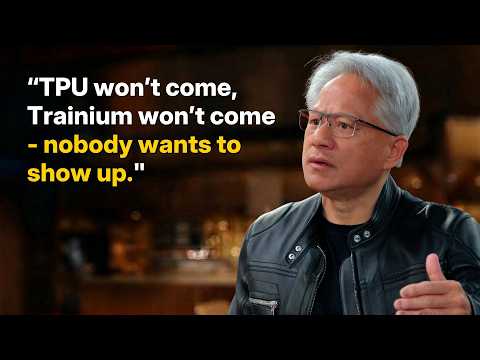
Jensen Huang – Will Nvidia’s moat persist?
Jensen argues TPU and ASIC growth is concentrated in Anthropic, while Nvidia’s broader programmable platform and supply-chain commitments preserve its reach and unit-TCO advantage.Groq expands Nvidia into premium low-latency inference, with Vera Rubin and Feynman targeting annual order-of-magnitude token-cost declines; China export controls remain an unresolved strategic risk after a direct security challenge.
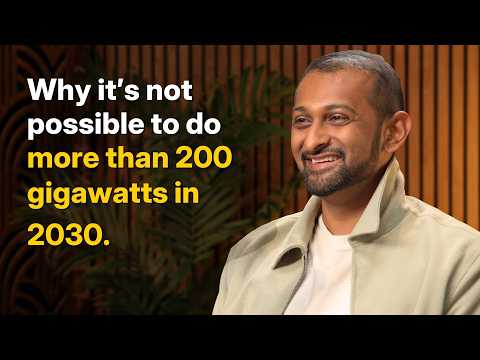
Dylan Patel — The single biggest bottleneck to scaling AI compute
AI scaling’s binding constraint is migrating to ASML, whose EUV capacity could cap annual AI-chip output at roughly 200GW by 2030.Supply scarcity is supporting H100 contracts near $2.40/hour against a $1.40 all-in build cost, while memory absorbs roughly 30% of Big Tech’s 2026 CapEx and new fabs arrive only in late 2027/2028.The central timeline risk is geopolitical: fast progress favors the US, but slower returns could let China’s verticalized supply chain scale past the West, especially if Taiwan is lost.

Dario Amodei — “We are near the end of the exponential”
Amodei gives 90% odds of a “country of geniuses in a data center” within ten years, while Anthropic revenue reached $9-10B in 2025.RL shows log-linear scaling, but $1T annual compute commitments could be ruinous if demand arrives a year late.Anthropic is buying hundreds of billions, not trillions, as a differentiated three-to-four-player market develops, leaving margins and regulation to watch.
Satya Nadella – How Microsoft thinks about AGI
Satya NadellaDwarkesh PatelDylan Patel
Microsoft is deliberately trading maximum AI-hosting scale for flexibility, holding about 9.5GW after its pause while Oracle could surpass it by end-2027.GitHub Copilot’s share fell below 25% in a $5–6B run-rate market, while Agent HQ bundles rival agents and model economics remain disputed: Anthropic’s inference gross margin rose from below 40% to above 60%.
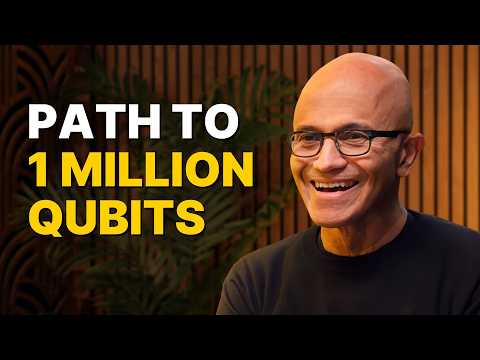
Satya Nadella — Microsoft’s AGI plan & quantum breakthrough
Hyperscalers should capture AI infrastructure value as agents multiply compute demand, while open source and enterprise buyers constrain single-model dominance.Microsoft’s $13B AI revenue is a spending governor amid expected overbuild and cheaper leased capacity in '27 and '28; Majorana One’s fault-tolerant timeline remains '27, '28, '29, while agentic SaaS faces legal and change-management risks.

Jeff Dean & Noam Shazeer — 25 years at Google: from PageRank to AGI
Dwarkesh PatelJeff DeanNoam Shazeer
Google’s AI veterans argue that inference-time compute, algorithmic progress and automated research could drive a major capability and infrastructure expansion, with top labs holding perhaps a million times Transformer-era training compute.Gemini already generates roughly 25% of characters checked into Google’s codebase, while trillion-token context, modular architectures and TPU-scale serving point to durable infrastructure advantages; the pace of self-improvement and safety remain unresolved.