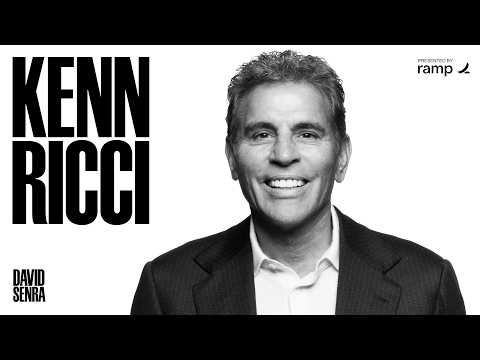
From a $27,500 Charter Company to a $4 Billion Private Jet Giant | Kenn Ricci, Flexjet
Fractional ownership raises utilization, but Flexjet still holds roughly 70 of its 365 aircraft as unsold core fleet.Buffett’s June 1998 $750 million NetJets acquisition helped unlock nearly $300 million in debt; Flight Options’ sales reached $400 million the next year, teaching Ricci that free cash flow and balance-sheet strength, not EBITDA, govern growth.

Most VCs Are Afraid to Be Wrong | Rohan Pujara
Pujara avoids consensus-heavy seed categories where inflated prices, copycats, and weak margins destroy early economics, underwriting distinctive founders instead.Valhalla’s $80 million–$100 million fund makes only two to four new investments annually and can concentrate 20%–30% behind a clear fund-returner.K2 Space’s more than $1 billion of signed business and $6.8 billion valuation illustrate the playbook, while the roughly 30-check diversification case remains unresolved.
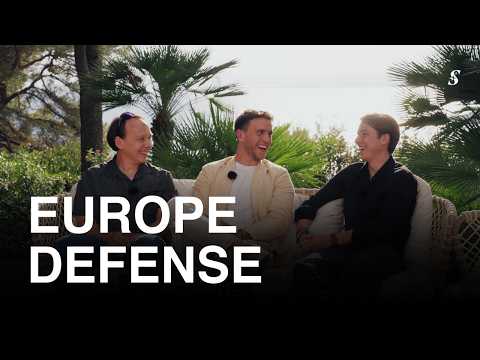
The $500B Opportunity in Europe’s Defense Buildout
Molly O'SheaAistis ŠimaitisGeorge HadjiminasBruno Wejchert
Ukraine has made production scale as important as technology: Europe’s fragmented manufacturing base and years-long component lead times leave a clear opening for Onodrim’s acquisition-led model.Autonomous fleets also reset unit economics, turning $30,000 radios and other exquisite components into products that must become cheaper and available in thousands or millions; execution and procurement remain the watchpoints.
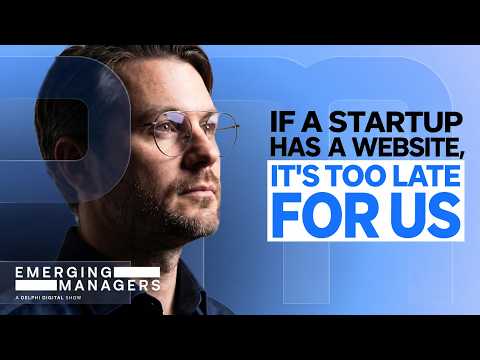
Why the Future of Venture Is Hard Tech, Drones & Physical AI | Ian Rountree
Cantos’ edge is deliberate smallness: Fund IV reached $70M, supporting $1.5–4M checks before websites and same-day SAFE execution.Ian favors hard tech, vertical integration and manufacturing scale, with Neros at 1,000 drones weekly and targeting a million annually.The opportunity is cost advantage and defense demand; China’s control of motors, actuators and rare-earth inputs remains a physical-AI risk.
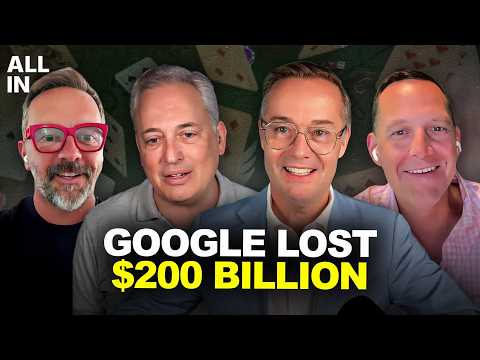
Google’s AI Brain Drain, SpaceX's Huge Quarter, Airtable’s 90% Collapse, US Data Fuels China AI
Jason CalacanisDavid SacksDavid FriedbergBrad Gerstner
Google’s infrastructure-first capital shift is coinciding with senior AI departures, while Sacks sees Anthropic and OpenAI forming a premium frontier duopoly as cheaper models pressure weights toward commodity pricing.SpaceX reported $7.8B revenue, up 92% YoY, and Starlink’s cash generation could fund expansion, but the proposed $300B-scale AI buildout leaves financing, spot pricing, and demand sensitivity as key risks.
Anthropic's Fable Banned by US Government | Wix & Adobe Hit All-Time Lows | Mistral Raising at $20BN
SpaceX’s 19% debut was amplified by a 4% float, newly listed options, and index inclusion, while both guests expect six-month weakness.Fable marks a possible Rubicon: the US ostensibly regulated an AI model by capability without judicial review, testing 3-6 months later.Mistral’s $3BN raise at $20BN underscores sovereign-AI demand, while Fin’s $3.6BN sale contrasts with Wix and Adobe’s replicability and strategic-option problems.

E239|SpaceX要让太空算力从科幻走向现实,但它划算吗?
SpaceX将火箭、Starlink与xAI打包进2026年6月、1.75万亿美元IPO,首个目标是1 GW太空算力。但按实际7,000美元/公斤发射价计入散热、冗余、制造与GPU寿命后,回本期可能从两个月拉长至两年,2029年经济性仍待验证。
SpaceX Launches Largest Ever IPO | OpenAI Files to Go Public | Uber Cuts 23% of HR
SpaceX’s $75 billion IPO at $135 a share and roughly $1.8 trillion valuation replaces price discovery with Elon’s conviction, while a book only 2X covered leaves meaningful downside, flat-trading, and retail-driven upside scenarios.A weak debut could restrain OpenAI’s valuation ambitions and reset LP return expectations, while persistent AI, radically higher revenue per employee, and concentrated foundation-model supply remain the more durable signals to monitor.
The IPO Comeback: Why Tech Giants Are Finally Going Public | All-In Liquidity IPO Panel
Andrew FeldmanWill MarshallBrad GerstnerChamath PalihapitiyaJason CalacanisDavid SacksDavid Friedberg
The IPO pendulum is shifting toward companies listing at $1 billion to $5 billion, with Planet creating roughly 90% of its post-SPAC value in years three and four.Cerebras’s $18.50 IPO followed a difficult 9.5 years, while its chip targets 15–18-times faster OpenAI workloads; orbital data centers offer a potential two-to-three-year cost catalyst, but distributed clustering remains unresolved.
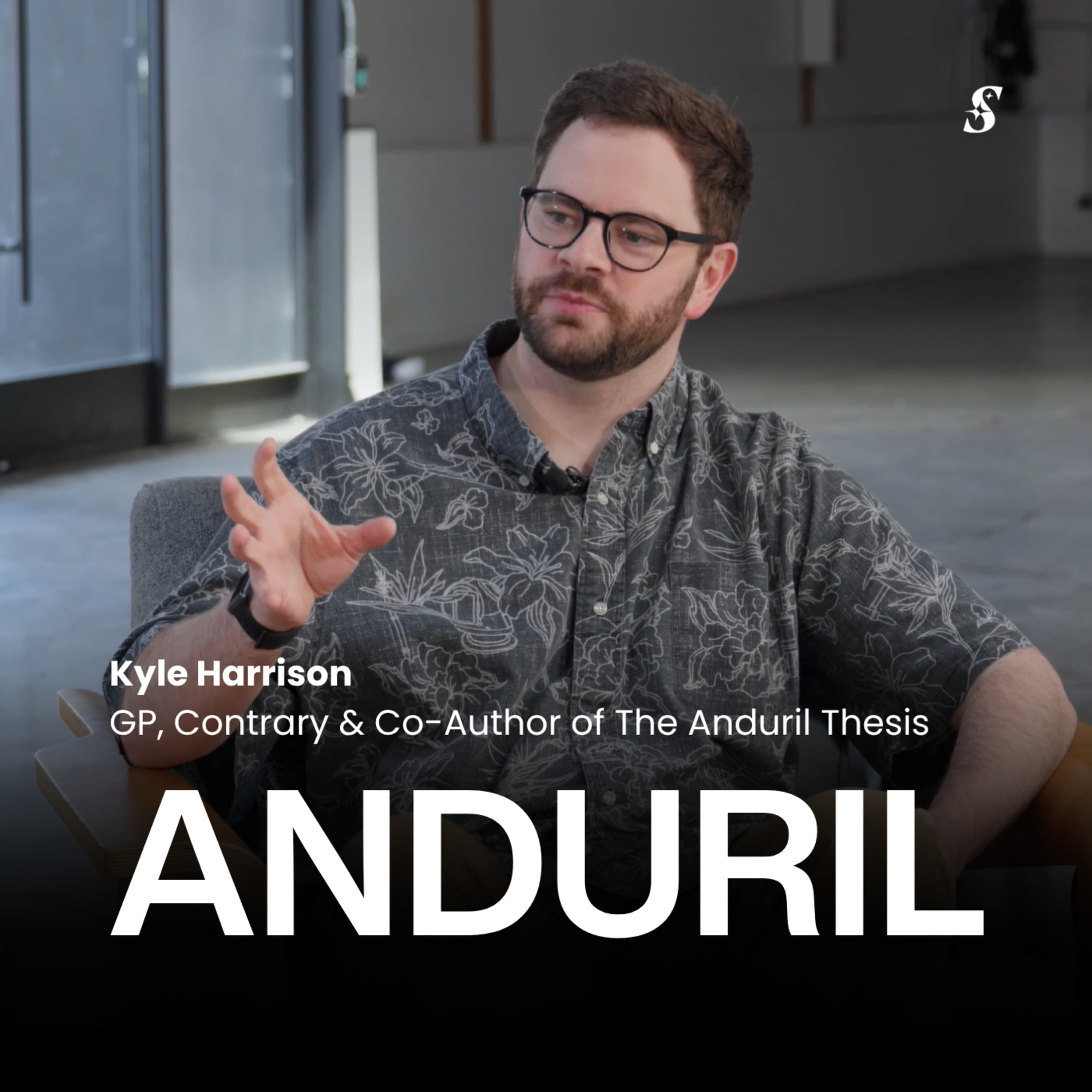
The Anduril Thesis
Anduril challenges defense’s cost-plus, built-to-spec model with fixed-price, built-to-mission products for high-volume, low-cost, attritable conflict, where US munitions could last roughly 11 days.Lattice links Sentry Towers, Fury, Copperhead, and EagleEye’s $22 billion IVAS contract through sensor fusion; the small number of neo-primes makes execution and second-order beneficiaries worth monitoring.