SHOW DIRECTORY
All-In
Industry veterans Chamath Palihapitiya, Jason Calacanis, David Sacks, and David Friedberg cover economics, technology, politics, society, and poker.
SOURCE DESCRIPTION · RSS
Nvidia's Historic Quarter, SaaS Comeback, Bessent vs Druck, America's Debt Crisis, Cancer Vaccine
Chamath PalihapitiyaJason CalacanisDavid SacksDavid Friedberg
Nvidia’s $96.2B revenue and $60B net profit came with 70% growth guidance versus the Street’s 45%, despite supply constraints.Salesforce’s 20%+ rally on $5.90 adjusted EPS and a $46B guide suggests agents may reinforce horizontal systems of record, while vertical SaaS remains contested.Debt also bears watching: $10T must be refinanced within 12 months at a 5.2% 30-year rate.
Dan Dreyfus: The Next AI Bottleneck is Copper
AI, reshoring, defense, and electrification are colliding with decades of infrastructure underinvestment, turning critical minerals into a supply shock against surging demand.China’s export restrictions exposed near-term shutdown risk, while Washington’s equity, permitting, and floor-price offtake package could finance new mines; copper supply may still lag enough for prices to double.
Ray Dalio: "AI Is Eating Everything - and It Might Eat Itself"
Dalio sees an unstable U.S. fiscal path—about $7 trillion of spending against $5 trillion of revenue, debt equal to 600% of annual receipts, and $9 trillion to roll—making foreign Treasury demand and eventual Fed balance-sheet expansion central risks.He favors 5%-15% gold for diversification, while Bitcoin remains a smaller, more controllable, tech-correlated market; meanwhile, AI may transform productivity even as competition destroys returns for many AI companies.

Debt Spiral or NEW Golden Age? Super Bowl Insider Trading, Booming Token Budgets, Ferrari's New EV
Chamath PalihapitiyaJason CalacanisDavid SacksDavid Friedberg
AI agents are expanding knowledge work before replacing it, with users working faster, covering more tasks, and reporting greater stress and burnout.Jason’s venture firm has four of 20 employees focused on adoption, while OpenClaw agents perform roughly 20% of an average investment-team member’s work and 30% of his assistant’s former workload.Agents reached $300 per day each through cloud APIs, making on-premises infrastructure and token-cost declines key variables for scale.

ICE Chaos in Minneapolis, Clawdbot Takeover, Why the Dollar is Dropping
Chamath PalihapitiyaJason CalacanisDavid SacksDavid Friedberg
Clawdbot demonstrates measurable white-collar substitution, completing research, CRM, outreach and scheduling while costing roughly $100 in first-day API calls and potentially replacing 40 of a producer’s 50 weekly hours.Open-source Kimi K2.5 could cut inference costs sharply, but hidden prompts, code injection and update drift remain unresolved as dollar weakness and refinancing costs intensify the broader economic pressure.
All-In's 2026 Predictions
Chamath PalihapitiyaJason CalacanisDavid SacksDavid Friedberg
The panel’s most aggressive macro signal is 5%-6% U.S.GDP growth in 2026, supported by AI productivity, tax refunds, capital investment, and possible rate cuts, while California’s proposed 5% wealth tax creates a migration and asset-pricing risk.Copper, Polymarket, Huawei, and Amazon supply the clearest upside calls, but software maintenance, entry-level white-collar work, oil, the dollar, and California luxury property remain key disruption or downside themes.
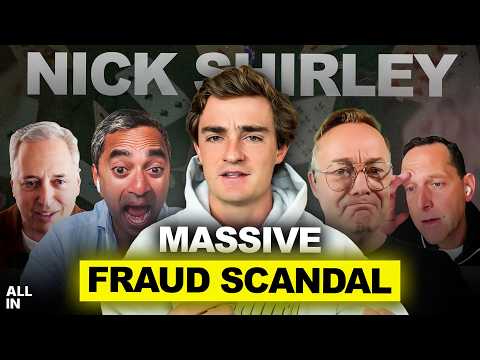
Massive Somali Fraud in Minnesota with Nick Shirley, California Asset Seizure, $20B Groq-Nvidia Deal
Chamath PalihapitiyaJason CalacanisDavid SacksDavid FriedbergNick Shirley
Nick Shirley’s door-knocking report made Minnesota’s alleged fraud visible, adding roughly $110 million of potential daycare fraud to a record exceeding $9 billion since 2018, while leaving collusion and terror-financing claims unproved.The broader catalyst is market discipline: California’s 5% Billionaire Tax Act and state deficits could pressure municipal bonds, while Groq’s decode architecture and Nvidia connectivity may materially reduce AI inference costs.
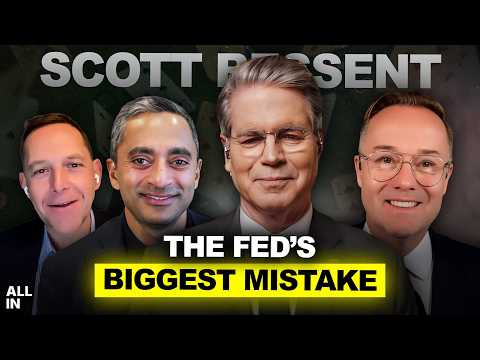
Scott Bessent: Fixing the Fed, Tariffs for National Security, Solving Affordability in 2026
Bessent’s 2026 thesis pairs roughly 6% nominal growth with a $200-$300 billion fiscal contraction, targeting mid-five deficit-to-GDP.He frames tariffs up to 145% as national-security leverage, not permanent revenue, with fentanyl rates later halved to 10%.Execution risk centers on whether Fed normalization, $1,000-$2,000 refunds, and capex incentives can repair affordability.
Trump Brokers Gaza Peace Deal, National Guard in Chicago, OpenAI/AMD, AI Roundtripping, Gold Rally
Chamath PalihapitiyaJason CalacanisDavid SacksDavid FriedbergBrad Gerstner
Trump’s first-phase Gaza deal pairs a ceasefire and unrestricted aid with hostage and prisoner releases plus an initial Israeli withdrawal, though “the Middle East has a way of disappointing you.”The panel linked regional stability to oil monetization and investment, while the Chicago dispute exposed unresolved risks around federal enforcement, political consent, and the roughly $100,000-per-deportation cost cited for ICE.
12 Day War, Socialism Wins in NYC, Stocks All-Time High, AI Copyright, Science Corner
Chamath PalihapitiyaJason CalacanisDavid SacksDavid Friedberg
Trump’s targeted strikes and ceasefire reduced the feared forever-war risk, while oil rising only from roughly $60 to $74 suggested markets priced a less chaotic Middle East.Mamdani’s New York upset exposed an indebted, “negative capital” generation, and the panel linked his urban-socialist platform to student debt growing from $500 billion to $2 trillion.Stocks reached all-time highs amid a split between weakening breadth and possible liquidity-driven upside, while early FOXO3 cell-therapy results and AI copyright rulings leave major scientific and legal risks unresolved.