SHOW DIRECTORY
The a16z Show
The venture firm’s view of startups, AI, software, markets, company building, and the technological shifts creating new categories.
BIDCLUB DESCRIPTION
Why One Internet Pioneer Thinks the Original Model Broke
Barrett Lyon argues the Internet’s open model is eroding as corporate servers, carrier-grade NAT, and policy-driven identity and age controls move communication and surveillance into the network layer.Docs.net owns the stack from software to wiring, using AI-operated hardware and private domains for peer-to-peer exchange; scaling under applicable laws while resisting telemetry-driven surveillance remains the key risk.
Why AI’s Next Breakthroughs Could Come from Outside the Big Labs
Erik TorenbergAaron LevieMartin CasadoSteven Sinofsky
Agent swarms expose a security gap: controls built for trustworthy, capacity-constrained humans fail when software exhausts APIs and confuses good tasks with bad ones.That implies upgrades across identity, authorization, observability, operating systems, networks, and granular data permissions.Meanwhile, Jevons-style option selection could shift innovation beyond frontier labs by making models faster, cheaper, and more accurate interfaces for traditional software.
Inside the Race to Measure Frontier Intelligence
Erik TorenbergBen HorowitzJennifer LiRayan Krishnan
Meta’s Llama 4 performed worse privately but showed incredible ability publicly, exposing why labs’ self-reports cannot support rational purchasing markets.Token spending is opaque: a Fortune 10 company’s $100 Cloud Code budget reset at 4 PM, while an experiment spent $1.5 million—10 times payroll.Val Smith’s repository evals may clarify ROI, while RSI leaves geopolitical verification risk to monitor.
Ben Horowitz on the Global Race for Tech, Power, and Influence
Ben HorowitzAnne NeubergerRaghu RaghuramJen Kha
AI models are becoming geopolitical infrastructure because their defaults will mediate products while encoding contested histories, ethics, and values, making model choice a question of sovereignty as well as performance.Private AI, autonomy, and cyber vendors now shape allied deterrence, while global APIs expose startups to demand before local distribution exists; anchor customers and trusted relationships can justify $5 million or $10 million market-entry investments.

Ben Horowitz on American Dynamism and the Future of AI | The a16z Show
A16Z’s more-than-$15 billion new funds turn scale into an explicit obligation to help America win AI through investment, government integration, citizen access, and allied integration.U.S. entrepreneurs and a government willing to change rules are catching up with China’s government AI integration, while Horowitz calls Anthropic’s breakdown a commercial exit and identifies Mexico and Japan as complementary industrial allies.

The $100 Billion Promise: How NASA is Returning to The Moon | Jared Isaacman on The a16z Show
NASA’s lunar return is a deadline-driven test of US credibility and national security after roughly $100 billion and 35 years, with NASA’s target and its rival’s pre-2030 goal leaving less than 1 year of margin.Isaacman’s reset depends on increasing launch cadence, testing lunar-lander rendezvous in low Earth orbit in 2027, and reducing contractor leakage estimated at $1.4 billion annually, while nuclear power and resource processing remain catalysts for Mars capability.
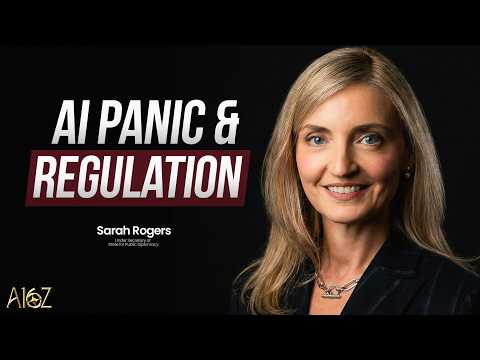
Digital Freedom, AI Regulation, and the Fight for the Western Internet | The a16z Show
Katherine BoyleSarah B. Rogers
A Western AI stack built around individualistic reasoning, user consent and viewpoint neutrality is presented as national-security and soft-power infrastructure.Copyright rules, strict-liability proposals and European content enforcement could expose American platforms to fines reaching 6% of global revenue while making model development unpredictable.Rogers favors transparent provenance, censorship-circumvention VPNs and Community Notes, leaving the unresolved risk of foreign regulation shaping speech and AI systems across borders.
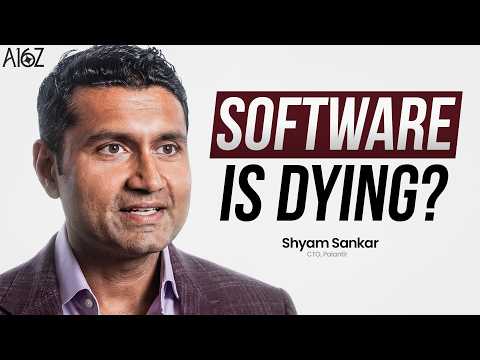
Palantir CTO on The SaaS Apocalypse & Preventing The Next World War | a16z
Shyam SankarKatherine BoyleErik Torenberg
Shyam Sankar argues that restoring deterrence requires reconnecting commercial R&D and manufacturing with national security after defense-only companies rose from 6% to 86% of major-weapons spending.His AI thesis favors infrastructure and “ontology” layers as models commoditize, while alpha software expressing customer-specific advantage may endure better than standardized beta SaaS vulnerable to vibe coding.AI-enabled reindustrialization could raise worker productivity 50 to 100 times and reunite production with innovation, but institutional competence, national will, and unresolved day-two maintenance remain critical risks.
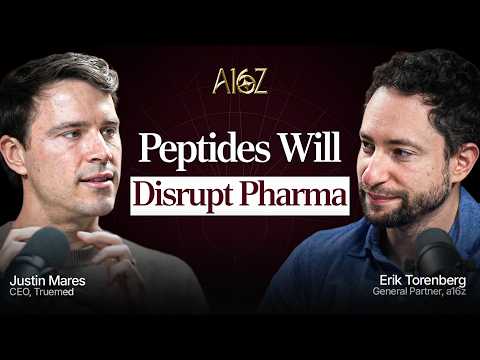
How Truemed Is Incentivizing Americans to Invest in Prevention
TrueMed’s differentiated wedge is turning qualified preventive interventions into tax-advantaged healthcare through letters of medical necessity and payment integrations with Eight Sleep, Peloton, Momentous, and Life Time Fitness.The model targets a structural mismatch in which consumers pay for prevention while insurers absorb enormous downstream costs, but subsidy reform, food quality, GLP-1 limitations, and regulatory capture remain essential risks to changing chronic-disease economics.

“How We Can Eliminate Crime” | Ben Horowitz and Garrett Langley
Erik TorenbergGarrett LangleyBen Horowitz
Flock is positioned as an intelligence and orchestration layer that integrates license-plate readers, gunshot detection, drones, video, and criminal-history context.Its claimed operating evidence includes about 1 million arrests and more than 450 returned missing children, while Vegas reportedly saw police shootings of suspects fall approximately 75%; staffing shortages, retention rules, and community distrust remain execution risks.