SHOW DIRECTORY
The a16z Show
The venture firm’s view of startups, AI, software, markets, company building, and the technological shifts creating new categories.
BIDCLUB DESCRIPTION
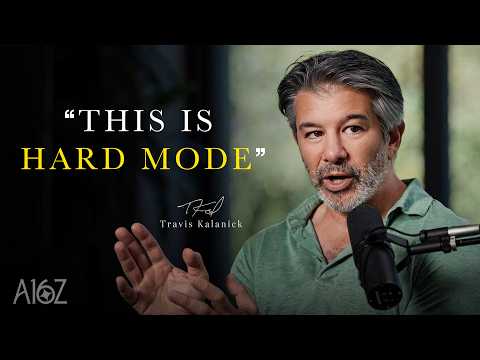
Building a Company in Stealth | Travis Kalanick with a16z
Travis KalanickBen HorowitzErik Torenberg
Atoms is applying full-stack industrial AI to food, mining, and transport, with production, logistics, robotics, and infrastructure unified as an “atoms-based computer.”Its 50% production-cost reduction, 50¢–$1 robotic delivery, and mining productivity now above humans support a path to lower-cost meals and faster deployment, while execution depends on management capacity and overcoming industrial regulation.

Jake Paul on Going From YouTube to Boxing to Investing | a16z ft. Anti Fund
Erik TorenbergJake PaulGeoff Woo
Anti Fund is pairing growth capital with Jake Paul’s scarce distribution advantage, backing names including Anduril, SpaceX, OpenAI and Anthropic as Woo argues that attention, not capital, is increasingly constrained.Paul’s experiment-measure-concentrate playbook and resilience underpin the partnership, while creator monetization, political and education ambitions, platform limits and the possibility of rapid AI imitation remain important variables.
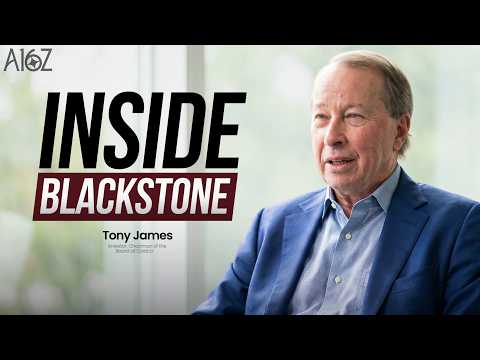
Building Blackstone, Backing Costco, and Working with Munger | Tony James on The a16z Show
Tony James’s compounding playbook paired early S-curve positioning with operating discipline, from DLJ using leveraged buyouts to “buy clients we couldn’t actually win competitively” to Blackstone increasing market value about 170-fold while fund IRRs improved.Costco shows the customer moat in practice—if sourcing saves a nickel, “100% of that nickel gets lower prices”—while James sees a private-credit correction ahead and favors seasoned assets through co-investments and continuation vehicles.
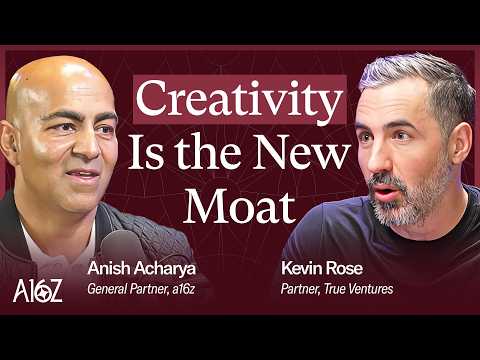
Why Creativity Will Matter More Than Code | Kevin Rose and Anish Acharya
Consumer AI is reopening a market Acharya compares with 2010–2012, with ChatGPT at $200 a month, Google Ultra at $250 and Grok at $300 signaling unusually strong willingness to pay.As software creation costs collapse, startups can win through personality, model choice, orchestration and product taste, while companionship’s agreeability and always-on memory’s privacy-preserving social contract remain unresolved risks.