SHOW DIRECTORY
The a16z Show
The venture firm’s view of startups, AI, software, markets, company building, and the technological shifts creating new categories.
BIDCLUB DESCRIPTION
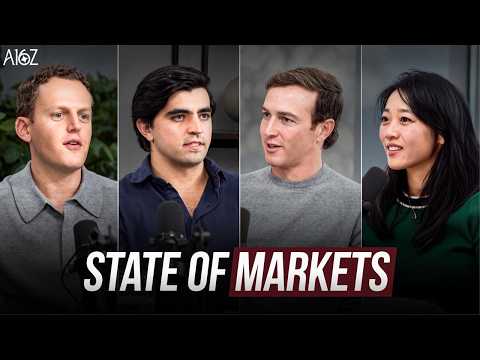
AI, Infrastructure, and the Next Investment Cycle
David GeorgeSarah WangAlex ImmermanSantiago Rodriguez
AI’s rally is being driven by earnings rather than multiple expansion, with the S&P 500 below 20 times earnings while growing about 15%.Capex is projected to rise from $416 billion in 2025 to about $780 billion in 2026 and exceed $1 trillion annually from 2027; enterprise adoption remains concentrated in pilots, with inference-cost declines and workflow deployment as catalysts.
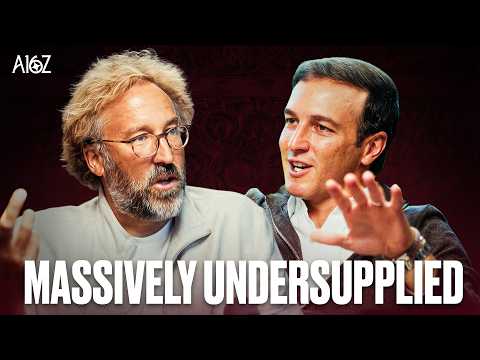
Why AI Demand Is Outrunning Compute Supply
AI demand accelerated through July and August, with usage concentrated among possibly sub-10 million heavy users and no leader identifying a worsening quantitative metric.Nebius suggests nine-to-ten-month paybacks on $50B-per-gigawatt builds, supported by 50-60% customer prepayments; undersupply through ’28 could lift token prices, while shifting capacity to training could cut lab revenue from $480B to $120B.
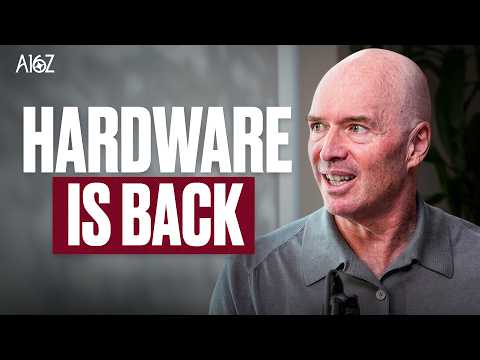
How AI Is Reinventing Computing from Chips to Power
Ben HorowitzMartin CasadoRaghu RaghuramErik Torenberg
a16z’s new AI infrastructure fund captures a founder migration into hardware, with top-founder hardware pitches rising from roughly 3–5% to “north of 20% or 30%.”Hyperscaler capex, booked-out GPUs and resale premiums support opportunities across chips, power and cooling, while grid shortages, regulation and uncontrolled agent spending remain constraints.
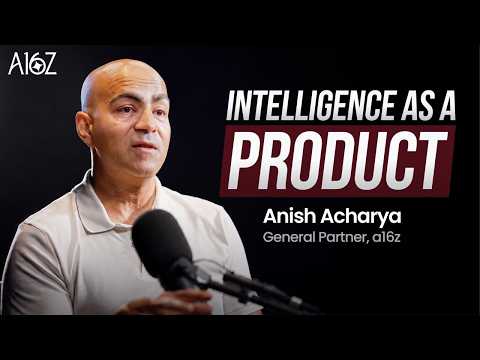
The State of AI: Models, Moats, and the Consumer Renaissance
Frontier AI is becoming a many-winners market: xAI moved from non-contender to one of three in two weeks while OpenAI, Anthropic and others grow through specialization.Rising B200 per-hour prices indicate constrained supply and essentially infinite demand, but coding agents threaten integration moats; open-weight models may capture bounded-upside workloads as cheaper consumer software awaits an AI-native app store.
The New Rule for Picking AI Winners | The a16z Show
OpenAI and Anthropic now add more monthly revenue than Meta, Google, or Microsoft despite AI diffusion below 5%, making “in the token path” George’s rule for application winners.Five frontier labs could lower token prices, but Chinese models reportedly offer 80% of frontier capability at 10% of the cost; scarce capacity lasts through early 2029, with algorithmic breakthroughs the key reversal risk.

Marc Andreessen's 2026 Outlook: AI Timelines, US vs. China, and The Price of AI
Andreessen sees AI three years into an 80-year revolution, with customer revenue validating unusually rapid adoption across an already-built global distribution network.Falling token costs, competing chips, smaller models, and US-China rivalry could expand demand dramatically, while state regulation remains a major unresolved risk.

Faster Science, Better Drugs
Erik TorenbergPatrick HsuJorge Conde
Arc is combining neuroscience, immunology, machine learning, chemical biology, and genomics to reduce organizational and experimental latency, with virtual cells aimed at navigating diseased cells toward healthy states.The commercial prize depends on better targets, drug design, higher clinical success, lower capital intensity, and shorter timelines, but physical testing and human endpoints remain serial bottlenecks while virtual-cell capability sits somewhere between GPT-1 and GPT-2.