PERSON DIRECTORY
Erik Torenberg
Erik Torenberg appears in 146 indexed conversations across The a16z Show, The Cognitive Revolution. This directory brings every appearance, source, TL;DR, digest, and transcript into one searchable feed.
Mark Cuban on Why AI Could Turn Solo Founders Into Trillionaires
Mark CubanJulie YooErik Torenberg
Cost Plus Drugs grew from 111 generics in January 2022 to roughly 4,000 SKUs at a fixed 15% markup, with its public API giving buyers a price benchmark.Pre-signing AI review of Dallas’s 1,335-page PBM contract could uncover overcharges; savings may reach millions for organizations above 1,500 employees or members, depending on existing overcharging.Manufacturing pods target roughly 200 annual sales within two years, though 1,000 ANDA applications alone would cost $365 million plus other fees, before manufacturing investment.
Approaching the AI Event Horizon? Part 1, w/ James Zou, Sam Hammond, Shoshannah Tekofsky, @8teAPi
Erik TorenbergNathan LabenzJames ZouSam HammondShoshannah Tekofsky
Virtual Lab’s nanobodies were experimentally validated and often outperformed earlier human-designed candidates, moving AI-for-science beyond plausible prose.Learning to Discover uses roughly $500 and LoRA adapters to optimize disposable models for single best math, optimization, or GPU-kernel results.However, multi-agent teams often match or underperform their best member, while 64 cases of intentional deception among 109,000 chain-of-thought summaries make output-only oversight risky.
How Truemed Is Incentivizing Americans to Invest in Prevention
TrueMed’s differentiated wedge is turning qualified preventive interventions into tax-advantaged healthcare through letters of medical necessity and payment integrations with Eight Sleep, Peloton, Momentous, and Life Time Fitness.The model targets a structural mismatch in which consumers pay for prevention while insurers absorb enormous downstream costs, but subsidy reform, food quality, GLP-1 limitations, and regulatory capture remain essential risks to changing chronic-disease economics.
The AI-Powered Biohub: Why Mark Zuckerberg & Priscilla Chan are Investing in Data, from Latent.Space
Erik TorenbergNathan LabenzMark ZuckerbergPriscilla Chan
CZI is making Biohub the main focus of its next decade, pairing frontier biology with frontier AI and building institutes, instruments and models to address scientific bottlenecks conventional grants cannot fund over 10 to 15 years.Its 125 million-cell ecosystem, billion-cell project and EvolutionaryScale partnership point to a compounding data flywheel for virtual-cell and N-of-one medicine research, but wet-lab validation and missing empirical data remain unresolved constraints.
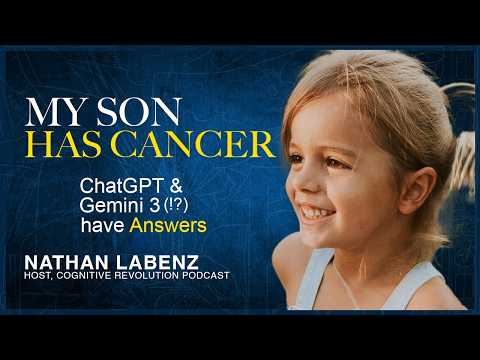
Using AI to navigate son's cancer diagnosis
GPT-5 Pro and other models flagged an LDH reading around 1,500 as requiring action within 24–48 hours after clinicians discounted it as hemolysis.Treatment reduced Ernie’s main mass about 80% and cleared marrow and spinal-fluid tests, while proposed ctDNA surveillance remains unproven and nonstandard despite its potential to detect relapse earlier.
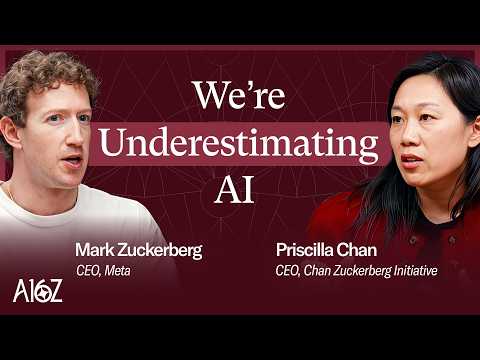
Mark Zuckerberg & Priscilla Chan: How AI Will Cure All Disease
Mark ZuckerbergPriscilla ChanBen HorowitzErik TorenbergVineeta Agarwala
Biohub is betting that shared scientific tools, not another round of small grants, can accelerate cures through $100 million to $1 billion investments over 10–15 years.CELLxGENE standardized single-cell data and created a network effect: CZI funded 25% of the resource while the broader community contributed 75%, supporting a model-to-experiment flywheel.Biohub plans to expand from roughly 1,000 GPUs toward 10,000, but virtual-cell models remain quite early and must prove that directional predictions can reliably derisk costly wet-lab work.
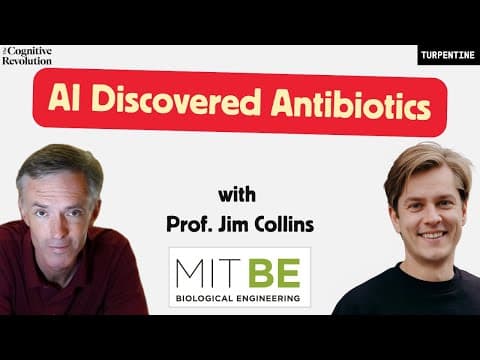
AI Discovered Antibiotics: How Small Data & Small GNNs Led to Big Results, w/ MIT Prof. Jim Collins
Erik TorenbergNathan LabenzJim Collins
A 2,500-compound dataset and graph neural network raised antibiotic-screening hit rates from below 1% to 51%-52%, producing halicin after screening 6,100 additional molecules for efficacy, safety, and novelty.AI can search chemical spaces no laboratory could physically cover, but clinical trials remain the dominant cost and models still struggle with solubility, PK/PD, animal translation, and resistance, keeping medicinal-chemist judgment and public-private funding central.

Taking Bold Bets: NIH and the Future of Biomedical Science
Jay BhattacharyaErik TorenbergVineeta AgarwalaJorge Conde
Bhattacharya wants NIH managed like a venture portfolio, tolerating productive failures and funding younger, newer ideas instead of rewarding six-to-eight-year-old proposals and publication volume.The $50 million autism data-science program and cautious leucovorin and acetaminophen guidance show near-term execution, while replication, public-health trust, and AI-generated application volume remain critical reform risks.
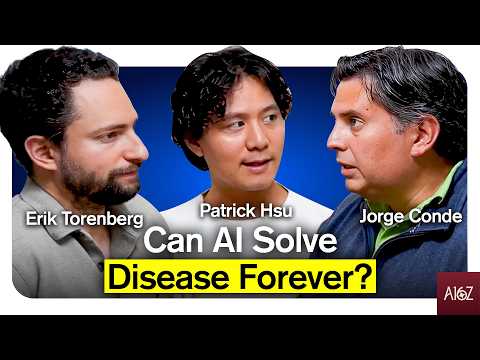
Faster Science, Better Drugs
Erik TorenbergPatrick HsuJorge Conde
Arc is combining neuroscience, immunology, machine learning, chemical biology, and genomics to reduce organizational and experimental latency, with virtual cells aimed at navigating diseased cells toward healthy states.The commercial prize depends on better targets, drug design, higher clinical success, lower capital intensity, and shorter timelines, but physical testing and human endpoints remain serial bottlenecks while virtual-cell capability sits somewhere between GPT-1 and GPT-2.
Frontier Models for Frontier Science with Prof. Derya Unutmaz, Immunologist & ChatGPT Pro Grantee
Erik TorenbergNathan LabenzDerya Unutmaz
Frontier models are becoming peer-level scientific collaborators, with Derya Unutmaz saying o1 Pro and Deep Research now touch every area of his research workflow. o1 Preview transferred Battle Royale dynamics into engineered T-cell strategies, while Deep Research identified qualitative and epigenetic aging in supposedly naïve T cells.AI is already compressing patent work from more than $10,000 to roughly half an hour, while longer contexts could unlock decades of biological datasets and new drug targets.