PERSON DIRECTORY
Erik Torenberg
Erik Torenberg appears in 137 indexed conversations across The a16z Show, The Cognitive Revolution. This directory brings every appearance, source, TL;DR, digest, and transcript into one searchable feed.
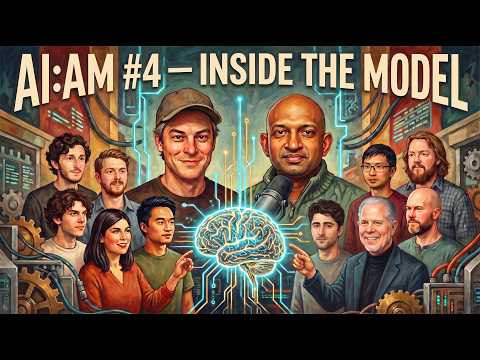
AI:AM #4: Cameron on Model Consciousness, Duvenaud's Gradual Disempowerment, swyx's AI-Eng Alpha
Cameron BergDavid DuvenaudMichiel BakkerShawn “swyx” WangBing XuErik TorenbergNathan Labenz
Architecture-first scoring places frontier LLMs around 30% on consciousness-relevant properties, while steering valence-like states already changes blackmail, confidence, backtracking, and coding behavior.Europe’s regulatory leverage is constrained by dependence on foreign frontier labs, prompting a coalition thesis around ASML, TSMC, Korean memory, Japanese materials, and reciprocal frontier access.Meanwhile, private evaluations, mergeability, routing, and NVIDIA’s CUDA ecosystem increasingly determine AI-engineering value as public benchmarks saturate and agentic optimization compounds tooling advantages.
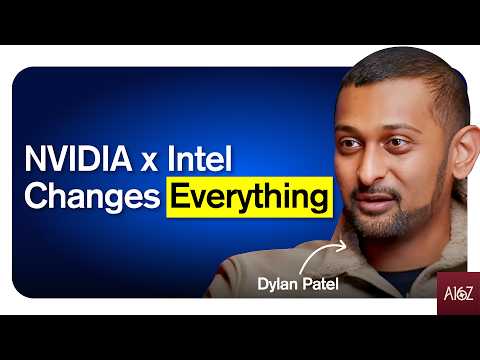
Dylan Patel on the AI Chip Race - NVIDIA, Intel & the US Government vs. China
Erik TorenbergDylan PatelSarah WangGuido Appenzeller
Nvidia’s $5 billion Intel investment, following SoftBank’s $2 billion and the U.S. government’s $10 billion, could lower Intel’s cost of capital and redraw PC and data-center competition, though Patel says Intel still needs roughly $50 billion.Huawei has credible 7 nm designs and ambitious custom-HBM products, but HBM3 yields, etch capacity, and domestic volume remain unresolved as Nvidia’s upside depends on $450–500 billion of hyperscaler capex rather than further share gains.
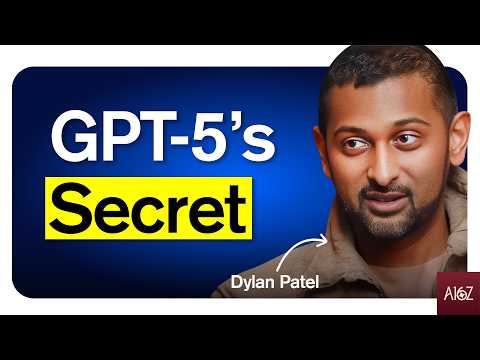
Dylan Patel on GPT-5’s Router Moment, GPUs vs TPUs, Monetization
Dylan PatelErin Price-WrightGuido AppenzellerErik Torenberg
GPT-5’s router is an economic release, directing simple queries to mini models while reserving “ungodly amounts of compute” for transactions OpenAI could monetize through agentic commerce.Flat-rate subscriptions face heavy-user losses, while custom silicon threatens Nvidia mainly if demand stays concentrated among hyperscalers; powered sites, grid equipment, and Intel’s capital needs remain near-term constraints on broader deployment.

Distributed Training, Decentralized AI: Prime Intellect's Master Plan to Make AI Too Cheap to Meter
Vincent WeisserJohannes HagemannErik TorenbergNathan Labenz
Prime Intellect is building an asset-light marketplace across fragmented clouds and data centers, while Intellect-1 demonstrated 10-billion-parameter distributed training using DiLoCo and 8-bit updates to cut communication roughly 400x.R1-style reinforcement learning could improve decentralized scaling by shifting compute toward inference-heavy rollouts, but efficient participation beyond about 16 workers, fault tolerance, safety, governance, and the planned tokenized foundation remain unresolved.