PERSON DIRECTORY
Dylan Patel
Host of SemiAnalysis. Dylan Patel appears in 13 indexed conversations across Dwarkesh Podcast, Invest Like the Best, SemiAnalysis. This directory brings every appearance, source, TL;DR, digest, and transcript into one searchable feed.
Dylan Patel – Two labs will soon control most of the world's workforce
Anthropic and OpenAI could receive 40%–50% of new compute next year, potentially controlling most usable FLOPs by end-2028 as GB300, TPU v7 and Trainium 3 improve performance per watt 3–5×.Anthropic’s revenue has reached as high as $50M/MW, it started turning profitable in Q2, and compute repricing, regulation and export controls leave margins, financing and centralization as key risks.

Dylan Patel on the infrastructure powering the AI revolution | The Next Big Thing
Dylan PatelChristopher Gannatti
Memory has flipped from AI’s biggest loser to its biggest winner, with capacity growing 20-30% annually while demand doubles for the next three years.Prices are already up 4x, with another 2x, 3x possible before margins reach 85-90% and eventually cycle back toward the 70s or lower.
Why Hardware-Software Co-Design Is AI's Real 100x: Dylan Patel of SemiAnalysis
Dylan PatelShaun MaguireSonya Huang
Hardware-software-model co-design can turn three 2x gains into 100x, creating model-silicon lock-in and shifting CUDA’s moat toward ecosystem gravity.Demand is outrunning compute supply: Anthropic’s Opus 4.8 API margins exceed 80%, but leveraged buildouts remain exposed if useful model work stops expanding faster than capacity.
GPT 5.5 vs Claude 4.7: OpenAI's Comeback From the Brink
Jordan NanosDylan PatelDoug O'LaughlinMax Kan
GPT-5.5 brings OpenAI back into the frontier conversation after Anthropic surpassed it on a like-for-like revenue basis, but Claude 4.7’s quality advantage over 4.6 remains unproven despite a 6x fast-mode premium.Token costs are beginning to pressure heavy users as new tasks drive Jevons-style consumption, while China’s compute constraints widen the open-source gap and revive the CLI-versus-app battle over agent orchestration.
Dylan Patel — The single biggest bottleneck to scaling AI compute
AI scaling’s binding constraint is migrating to ASML, whose EUV capacity could cap annual AI-chip output at roughly 200GW by 2030.Supply scarcity is supporting H100 contracts near $2.40/hour against a $1.40 all-in build cost, while memory absorbs roughly 30% of Big Tech’s 2026 CapEx and new fabs arrive only in late 2027/2028.The central timeline risk is geopolitical: fast progress favors the US, but slower returns could let China’s verticalized supply chain scale past the West, especially if Taiwan is lost.
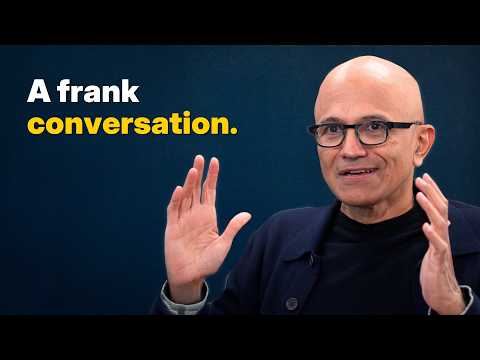
Satya Nadella – How Microsoft thinks about AGI
Satya NadellaDwarkesh PatelDylan Patel
Microsoft is deliberately trading maximum AI-hosting scale for flexibility, holding about 9.5GW after its pause while Oracle could surpass it by end-2027.GitHub Copilot’s share fell below 25% in a $5–6B run-rate market, while Agent HQ bundles rival agents and model economics remain disputed: Anthropic’s inference gross margin rose from below 40% to above 60%.

Inside the Trillion-Dollar AI Buildout | Dylan Patel Interview
Patrick O'ShaughnessyDylan Patel
The OpenAI–Nvidia arrangement shifts enormous balance-sheet risk through gigawatt-scale commitments, while token-cost declines and scaling economics keep demand for compute tied to continued model improvement.Google and Meta emerge as favored platform positions, but neoclouds and AI software face contract, debt, hardware-obsolescence, and gross-margin risks as China accelerates its semiconductor and data-center buildout.
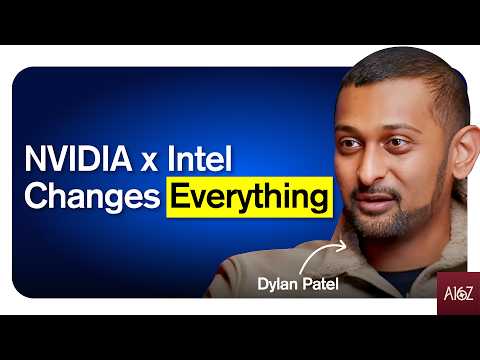
Dylan Patel on the AI Chip Race - NVIDIA, Intel & the US Government vs. China
Erik TorenbergDylan PatelSarah WangGuido Appenzeller
Nvidia’s $5 billion Intel investment, following SoftBank’s $2 billion and the U.S. government’s $10 billion, could lower Intel’s cost of capital and redraw PC and data-center competition, though Patel says Intel still needs roughly $50 billion.Huawei has credible 7 nm designs and ambitious custom-HBM products, but HBM3 yields, etch capacity, and domestic volume remain unresolved as Nvidia’s upside depends on $450–500 billion of hyperscaler capex rather than further share gains.
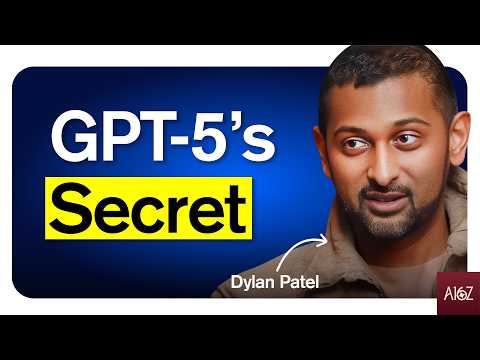
Dylan Patel on GPT-5’s Router Moment, GPUs vs TPUs, Monetization
Dylan PatelErin Price-WrightGuido AppenzellerErik Torenberg
GPT-5’s router is an economic release, directing simple queries to mini models while reserving “ungodly amounts of compute” for transactions OpenAI could monetize through agentic commerce.Flat-rate subscriptions face heavy-user losses, while custom silicon threatens Nvidia mainly if demand stays concentrated among hyperscalers; powered sites, grid equipment, and Intel’s capital needs remain near-term constraints on broader deployment.
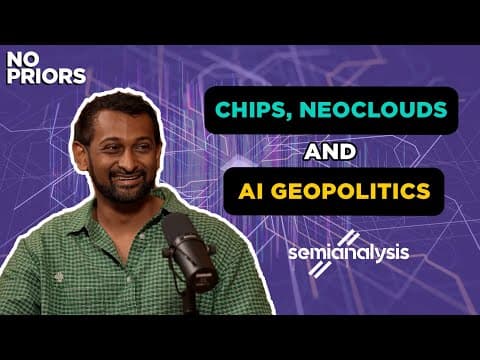
No Priors Ep. 127 | With SemiAnalysis Founder and CEO Dylan Patel
OpenAI’s expected compact, reasoning-heavy open model could push intelligence pricing below the frontier, while inference differentiation shifts from kernels toward orchestration, networking, reliability, and physical infrastructure.Roughly 200 neoclouds face consolidation as GPU economics diverge, while NVIDIA’s hardware, networking, and software moat remains difficult to replicate; bottlenecks in power, packaging, labor, and export policy are the next constraints to monitor.