PERSON DIRECTORY
Dwarkesh Patel
Host of Dwarkesh Podcast. Dwarkesh Patel appears in 66 indexed conversations across Dwarkesh Podcast, Hard Fork, The a16z Show. This directory brings every appearance, source, TL;DR, digest, and transcript into one searchable feed.
Dylan Patel – Two labs will soon control most of the world's workforce
Anthropic and OpenAI could receive 40%–50% of new compute next year, potentially controlling most usable FLOPs by end-2028 as GB300, TPU v7 and Trainium 3 improve performance per watt 3–5×.Anthropic’s revenue has reached as high as $50M/MW, it started turning profitable in Q2, and compute repricing, regulation and export controls leave margins, financing and centralization as key risks.
The better AI gets, the smaller its share of the economy might get – Alex Imas and Phil Trammell
Dwarkesh PatelAlex ImasPhil Trammell
Post-AGI value may concentrate either in relational goods where human participation itself matters or in ever-expanding machine-made varieties, leaving the endpoint unresolved.H100 rents rising despite abundant compute and no white-collar bloodbath yet make demand elasticity the central signal, while political shocks, redistribution design and concentrated capital ownership remain decisive risks to monitor.
Andrej Karpathy — “We’re summoning ghosts, not building animals”
Karpathy’s differentiated call is a “decade of agents”: current systems lack continual learning and multimodality, while coding agents proved “not net useful” on nanochat and struggled with code never written before.He expects three or four or five more RL updates while saying current compute may be absorbed rather than overbuilt; deployment’s march of nines and timeline miscalibration remain watchpoints.
Dwarkesh Patel and Noah Smith on AGI and the Economy
Erik TorenbergDwarkesh PatelNoah Smith
AGI’s investable threshold is whole-job substitution, requiring continual learning, preference accumulation, and reliable workflow execution beyond current reasoning models.AI-built data centers and robot factories could drive rapid growth, but falling labor income, demand, ownership concentration, and compute scaling remain unresolved constraints.
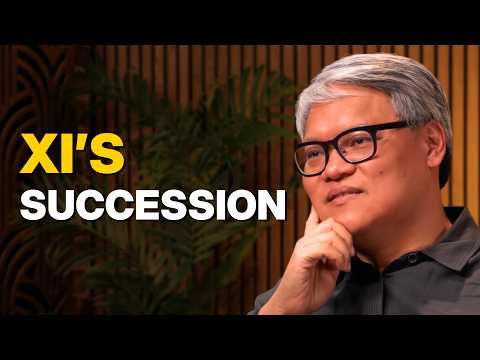
Xi Jinping’s paranoid approach to AGI, debt crisis, & Politburo politics — Victor Shih
China is pushing AI investment despite total government debt nearing 200% of GDP, while Xi’s system prioritizes strategic output and regime control over profitability, consumption and local fiscal health.Ding Xuexiang’s brake-first AI doctrine and DeepSeek’s policy focus reveal the governance model, but succession remains the sharpest risk: a brief lapse in command could trigger capital flight, 20% rates and mass bankruptcy.
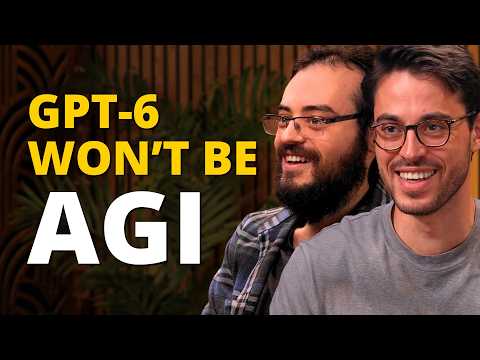
AGI is still 30 years away — Ege Erdil & Tamay Besiroglu
Dwarkesh PatelEge ErdilTamay Besiroglu
Tamay Besiroglu places full remote-work automation around 2045, while the guests argue that capability gains require roughly three orders of magnitude of compute each and only three or four may remain before infrastructure reaches a major economic share.Their broader forecast is roughly 30% explosive growth, but deployment, regulation, complementary supply chains, and unresolved agency and alignment gaps—not intelligence alone—will determine the timing and distribution.
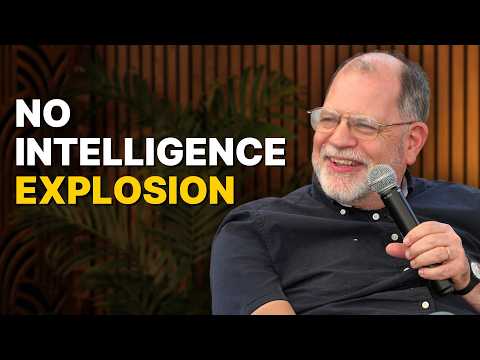
Tyler Cowen — The #1 bottleneck to AI progress is humans
Tyler Cowen argues that AI will transform the world without producing an explosive economic takeoff: as intelligence becomes abundant, adoption, institutions, infrastructure, and other constraints become the bottlenecks.He weighs rapid capability gains against slow diffusion, unusually normal markets, diminishing returns, and the risk that technological progress makes future wars more destructive.