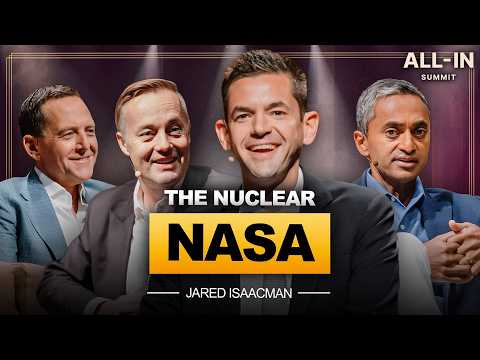
Jared Isaacman: A New Era for NASA and American Space Exploration
NASA is shifting capital from consensus-driven programs toward explicit national objectives, targeting Artemis 3 in summer 2027 and Artemis 4 in 2028.Repeated lunar missions could create demand for landers, rovers, and resource experiments, while public funding concentrates on fission power and nuclear-electric propulsion.SR1 Freedom’s 2028 target, uncertain lunar returns, and China’s ambitions make execution and launch capacity key watchpoints.
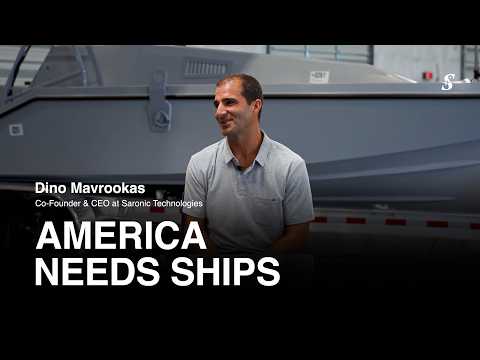
Dino Mavrookas: America Needs to Build Ships Again
China built over 1,000 commercial ships last year versus five large ocean-going vessels in the US, while China holds 57% of global shipbuilding capacity.Port Alpha’s $3 billion project targets autonomous container ships, tankers, and roll-on/roll-off vessels: simpler designs could enable scale and lower costs, but only 1% of the roughly $1 trillion FY26 Department of War budget went to autonomy.

Walter Russell Mead - How America Keeps Winning - [Invest Like the Best, EP.490]
Patrick O'ShaughnessyWalter Russell Mead
Mead sees a dynamic United States inside a collapsing Pax Americana, with information-revolution productivity keeping American power resilient.The investable question is whether “infostructure” can let AI and remote/hybrid work renew the ownership society while adapting to Ukraine’s drone-driven obsolescence.Taiwan’s “soft blockade” and Japan’s strategic awakening offer geopolitical variables as Trump’s unpredictability continues to erode institutional networks.
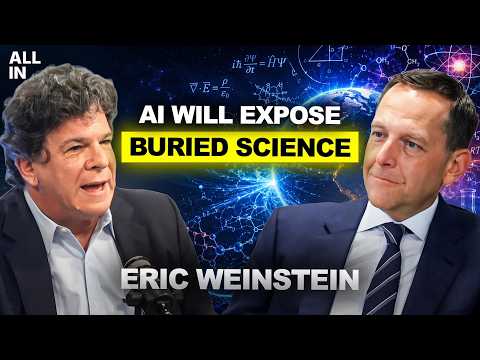
The State of American Science, Breakthrough Coverups, and the Danger of Physics w/ Eric Weinstein
Weinstein diagnoses a “scientific precariat” created by consensus pressure, tracing the break to 1965–75 funding changes and advocating national-interest waivers, weaker HR control, and people-first, high-beta public funding.DESI at Kitt Peak could be a near-term catalyst if the cosmological “constant” is not constant, while China’s recruiting push and AI’s “trash-can corpus” create unresolved competitive risks.
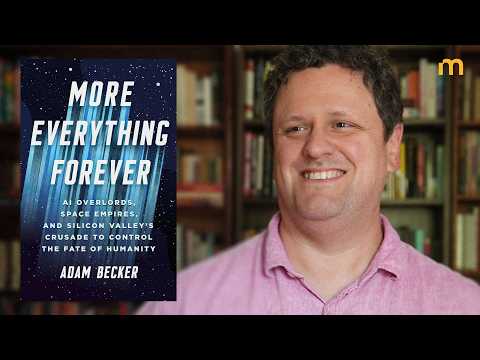
Every Exponential Ends — Silicon Valley Forgot — Adam Becker
Adam Becker argues that the exponential assumptions behind AI automation, AGI, and space-economy narratives inevitably hit physical limits, while LLM hallucination is their only operating mode rather than a fixable failure state.That challenges full-automation and runaway-growth theses as public AI sentiment worsens, data-center resistance strengthens, and a financial bubble—possibly breaking before an IPO—becomes the key catalyst to monitor.

Rahm Emanuel: Trump's Foreign Policy, China, Europe's Decline, Immigration & DSA vs Democrats
Jason CalacanisDavid FriedbergRahm Emanuel
Rahm Emanuel’s China strategy is an economic bloc—not tariffs—to “isolate the isolator” and rebuild US capacity with Australia, Japan, South Korea, Taiwan, the EU and Latin America.Operation Warp Speed’s 90%+-efficacy vaccine versus China’s 60% supports research as national security, but Trump’s proposed 40% NIH cuts and weakened deterrence leave a five-year defense rebuild and Taiwan’s three scenarios unresolved.
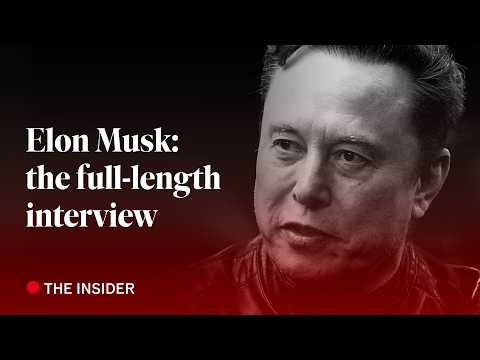
The full-length interview with Elon Musk
Musk forecasts AI exceeding the sum of human intelligence in roughly five years and humanoid robots creating a “quasi-infinite economy” by 2036, when money may not matter.Electricity outside China and chips inside it are his stated bottlenecks; China’s power surplus and progress toward lithography put leadership in play, while rival-model testing and 10-20% killer-robot odds define the watchlist.
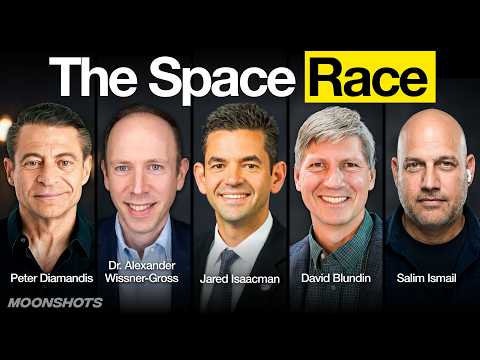
Jared Isaacman: NASA's Moon Base by 2028, Optimus Robots on the Moon, and 15 Years to Mars | Ep #274
Peter DiamandisSalim IsmailDave BlundinAlexander Wissner-GrossJared Isaacman
Jared Isaacman’s NASA reset centers on modular programs, reusable transport and a few near-impossible objectives, arguing that $25 billion annually can fund more progress through sharper capital allocation.A 2028 lunar landing would begin with frequent low-cost robotic failures and learning, while nuclear propulsion, autonomous science and commercial orbital data centers could determine the timeline toward returnable Mars missions.
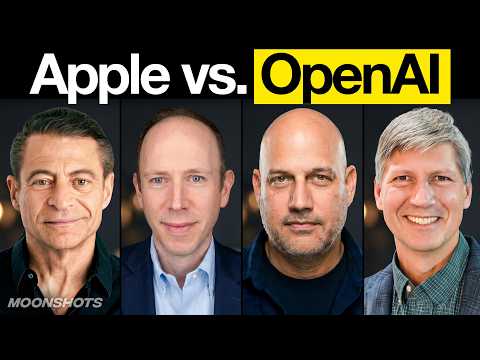
Grok 4.5 vs gpt-5.6, Apple Sues OpenAI, and China Catches up to Elon | #270
Peter DiamandisSalim IsmailDave BlundinAlexander Wissner-Gross
Four model launches in seven days placed Anthropic, OpenAI, Meta, and xAI on the cost-performance frontier, shifting competition from a duopoly toward continuous convergence.Distribution can drive consumer adoption, but scarce compute, GPT Live’s full-duplex interface, Apple’s hardware lawsuit, and regulation will determine where economics and platform power accrue.
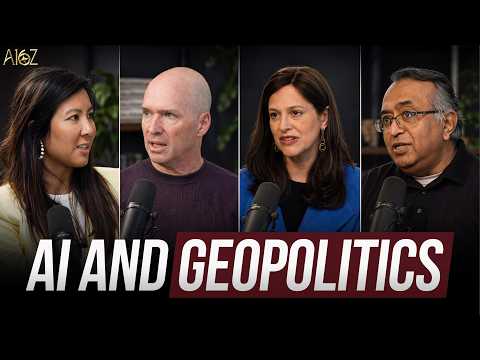
Ben Horowitz on the Global Race for Tech, Power, and Influence
Ben HorowitzAnne NeubergerRaghu RaghuramJen Kha
AI models are becoming geopolitical infrastructure because their defaults will mediate products while encoding contested histories, ethics, and values, making model choice a question of sovereignty as well as performance.Private AI, autonomy, and cyber vendors now shape allied deterrence, while global APIs expose startups to demand before local distribution exists; anchor customers and trusted relationships can justify $5 million or $10 million market-entry investments.