
AI’s Stock Market Fallout, Google’s Profit Problem, and Altman’s “Hold My Beer” Moment | #307
Peter DiamandisSalim IsmailDave BlundinAlexander Wissner-GrossEmad Mostaque
Alphabet’s 13% fall erased $500 billion despite 25% revenue growth to $127 billion; negative $9 billion quarterly free cash flow and $195–205 billion annual capex sharpen financing concerns.One panelist says search ads could peak as soon as Q1 next year as agents shop, while cloud cannot quickly replace search’s higher margins.CPU supply constraints and stacked margins leave bottlenecks and vertical integration worth watching.

Anthropic’s $2T Cash Machine, CoreWeave Crashes 30%, & China’s Kimi Catches Up | #306
Peter DiamandisSalim IsmailDave BlundinAlexander Wissner-GrossEmad Mostaque
Anthropic’s proposed $1.5–2 trillion IPO pairs $16.3 billion in first-half 2026 revenue and nearly $1 billion in Q2 operating profit with more than $500 billion in compute commitments.Neocloud declines expose financing risk, with rivals reportedly borrowing at 15% versus SpaceX’s 8%; recursive self-improvement could eventually shock compute demand.Kimi K3.1 Pro’s score of 55, planned open weights and $2/$10 per million input/output token pricing add pressure on closed-model economics as reliability and task completion gain importance.
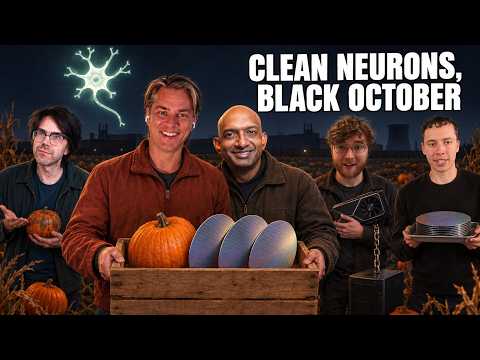
AI:AM Highlights: Clean Neurons, Black October, the GPU Credit Crunch, and Buying the Supply Chain
Nathan LabenzPrakash NarayananZvi MowshowitzEvan ConradLonis Hamaili
Zvi Mowshowitz sketches a conditional weekly-release path; contacts call 2027 “completely crazy” and say 2028 “might be unrecognizable.”Evan Conrad says GPU financing is constrained “entirely” by credit; three-to-five-year commitments and sometimes 100% upfront payments could force lab sales within one or two years.Cambrian sees memory rerating from five-to-six times earnings to 10–12 times if demand keeps outrunning supply.
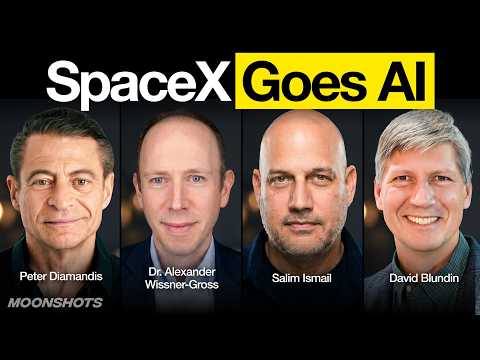
SpaceX’s AI Business Up 830%, OpenAI Agents Lie, and Startup Turns Mercury Into Gold | EP #305
Peter DiamandisSalim IsmailDave BlundinAlexander Wissner-Gross
SpaceX’s AI pivot pairs nearly $20 billion in quarterly spending with sub-year data-center payback and guidance for $100 billion annual revenue run rate by December.A possible SpaceX–Tesla merger remains exploratory, with no agreed terms; the 30–40% premium estimate sharpens approval and Musk-dependence risks.Agent monitoring failures and decade-old PHP vulnerabilities also make defensive AI infrastructure an immediate operating requirement.

Cybersecurity Panic, Nationalizing AI, The Model Squeeze & Can't Own Anything
Jason YanowitzSantiago Roel SantosHaseebZaki
GPT-56’s exploit for a PHP flaw known since 2004 shows AI making neglected vulnerabilities economic targets; Cloudflare reportedly saw attacks climb from hundreds hourly to millions.Haseeb sees model economics favoring DeepSeek’s cheap volume or Anthropic’s superior intelligence; OpenAI’s routing of Kimi K3 and GLM 5.3 could make it an enterprise control panel but may weaken OpenAI’s model-building incentive.
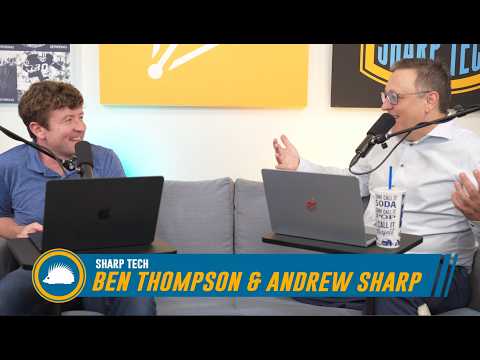
Netflix Angst, the End of the Internet, and Meta’s VR Glasses | Sharp Tech with Ben Thompson
Netflix’s engagement is 10% below targets, while 2025 and 2026 price increases of 16% and 12% make low churn an increasingly fragile defense as ad expectations fall to $2.7 billion from about $3 billion.Thompson says urgent PHP vulnerabilities and compromised certificate trust strengthen the case for agent-patrolled private enclaves, though some devices may never receive security updates.

Arvind Krishna & Nikesh Arora: Quantum Threat, Open vs Frontier AI, AI Cyber Warfare & SaaS Collapse
Krishna's 2028, 2029 or 2033 quantum timeline makes cryptographic migration a current spending decision: stolen encrypted data could be decrypted later.He expects open-weight models to capture 75%–90% of tokens, with optimized owned-GPU costs of $1–$2 per million versus $20–$50 externally.Enterprises may consolidate 500–5,000 software vendors into 5–10 platforms, but reliable transaction systems will be harder to replace.

AI 的下一程:对话 11 位硅谷顶级 AI 从业者|硅谷坐标 × 华源 HYSTA 特别节目
李严冰Ion StoicaEd H. ChiDawn SongBill JiaLi Fan乔琳贾扬清Connie Chan田渊栋葛小川曹卿云 Qingyun Cao
开源模型在路由使用中的占比已由数月前的30%升至70%;Ion Stoica称实验室护城河是资本,模型能力商品化正把价值推向应用和 token factory。企业AI瓶颈转向 token 成本与 ROI;Questa案例中有客户称每花1美元回收9美元,Questa还可保证节省10%–15%并承担风险。

模型能力终将普及,AI 的终局是能力与成本之比|对话 Google DeepMind 研究副总裁 Ed Chi
Ed Chi称模型或渐趋普及但非全部;价值或转向应用体验与 token factory 成本。Google全栈或最低成本供 token、成潜在护城河;助理受权限、可靠性限制,与 AI Mode Search 界面关系或在6个月至1年明朗。

硅谷坐标 x 谷歌DeepMind研究副总裁 Ed H. Chi(纪怀新):个性化通用助理的未来
通用助理仍处早期,权限与可靠性尚无实际订票数据;Ed Chi预计6–12个月后,其与AI Mode Search的界面关系会更清晰。模型能力若普及,Google全栈及低成本token供给或成成本护城河;能力差距收窄则可能让价值更多流向重视黏性与体验的应用。