
Why the Tech Right Lost Big This Week
Kevin RooseCasey NewtonErin GriffithEzra KleinTheodore Schleifer
AI backlash is challenging the industry’s permission to build: 76% opposed a local data center, and 57% expected AI to hurt society.Texas restrictions could endanger 10–15 gigawatts of roughly 45 gigawatts expected online next year, tightening compute supply and lifting prices.That risks slowing the AI trade, though Klein argues slower construction may curb overbuilding and push labs toward economically useful deployment.
168X 对话 投资 Talk 君:中期选举之后 AI 怎么定价? #2
德州审批争议可能让新项目空窗三至四个月,已批项目仍可施工至2028年前一至两个季度。延误或将部分资本开支从2027年推至2028年,GPU交付先受影响,其他环节取决于配置、定价与AI需求。止跌时点未知,政策信号或成催化;融资受压并削弱AI需求则可能冲击基本面。
Are We in an A.I. Bubble? We're About to Find Out.
Kevin RooseCasey NewtonErin GriffithMike IsaacJasmine Sun
Anthropic’s possible $100 billion IPO at a $2 trillion valuation would put its AI economics under public-market scrutiny: first-half 2026 revenue reached $16.3 billion, up 14X, while operating losses narrowed to roughly $600–700 million.Griffith estimates third-quarter growth at 44%; the key test is whether the slowdown reflects competitors catching up or broader demand weakness, as non-cancellable compute commitments leave the company exposed if usage falls.
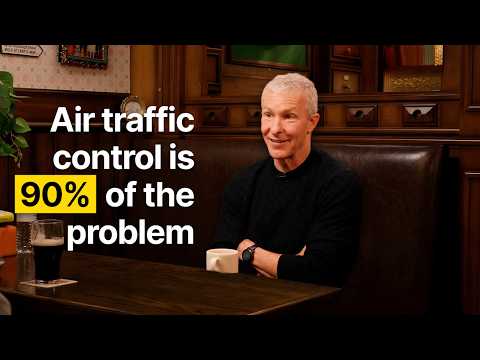
The airline CEO putting Starlink on every plane
John CollisonBen ThompsonScott Kirby
United is using Starlink’s speed—not free Wi-Fi—to attract passengers and convert trial into loyalty through broader technology and service within Kirby’s two-to-three-year window before competitors, potentially including Amazon, catch up.At recording, 48% of flights had Starlink; Boeing 787 certification slowed rollout, while Los Angeles targets full coverage in the first half of next year.
Peter Thiel: The Real Danger of AI Isn't What You Think
Thiel expects AI to lift productivity and lower inflation, but sees weak evidence that suppliers can sustain monopoly profits as leadership shifts from DeepMind to OpenAI and perhaps Anthropic.Even a better median outcome could bring wage gains of 3% with “plus or minus 10% or something like that,” while Thiel opposes pausing development amid China competition.He warns that AI catastrophe fears could empower a “softly totalitarian one-world government,” leaving oversight and the path to progress unresolved.
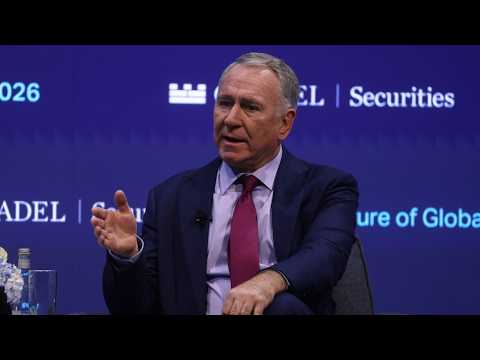
Citadel CEO Ken Griffin Says AI ‘Almost Certainly’ in a Bubble; Trump Has 'Mixed Scorecard'
Ken Griffin says AI is “almost certainly” in bubbles; the real question is who keeps economic rents as GPU supply grows.If provisioning outruns demand, he warns marginal GPU prices could freefall, while customers already shift some work to cheaper open-source models.Citadel’s research stays human-led; he also gives Trump a mixed scorecard and expects Republicans to lose at least one chamber.

Is The AI Debt Bubble Finally Popping? | Weekly Roundup
Jason YanowitzSantiago Roel SantosRob
AI-linked equities are repricing frontier-model financing, with 20–30% declines, routine 10% daily moves, and Anthropic’s apparent slowdown challenging the path from roughly $1 trillion of current capex to Jensen Huang’s roughly $4 trillion 2030 vision.CoreWeave debt near 15–16% and CDS implying roughly 60% default probability show how demand can be right while funding fails.Anthropic’s S-1 and neocloud refinancing are key tests as open-model substitution pressures margins.
36th Annual Graham & Dodd Event with Li Lu '96, Founder and Chairman of Himalaya Capital
Li Lu defines wealth as ownership of global purchasing power, built by holding great businesses bought at advantageous prices while they create value over time.He warns that AI’s recurring costs and capital needs persist, and argues humans must remain in control; concentration around market leaders may meanwhile leave overlooked businesses attractively priced.In China, semiconductor restrictions have helped domestic producers improve, while falling home prices have sharply weakened household wealth and demand; Li expects equities eventually to play a larger role, with timing uncertain.
Trump’s Super Intelligence Summit, AI Safety Accord, GDP Beats, Midterm Predictions
The White House Accord on Superintelligence turns six frontier companies’ voluntary pledge into board-level governance via internal controls, external audits and independent oversight, with FTC and SEC enforcement behind public commitments.It opens a market for professional auditors and compliance infrastructure, while open-weight models shift security spending toward cyber defense, compute and electricity; the next 12-18 months may test GPU-access policy.
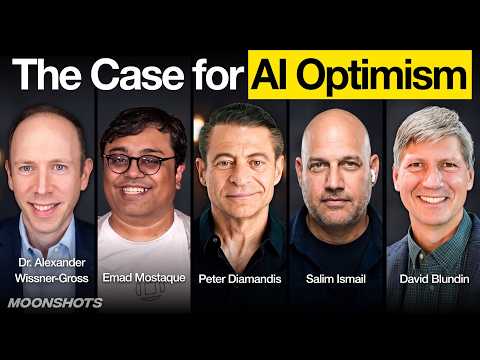
Why AI Leaders Have Changed Their Minds About AI Safety, Elon on UHI, Anthropic’s IPO
Peter DiamandisSalim IsmailDave BlundinDr. Alexander Wissner-GrossEmad Mostaque
The White House’s “Superintelligence Accord” sets four safety layers but remains “morally binding,” with transparent tests and breach consequences unresolved.Anthropic’s proposed IPO combines $4.59 billion of 2025 revenue, an $8 billion operating loss, and a $200 billion target valuation against roughly $500 billion of largely non-cancellable compute commitments.OpenAI’s Dots suggests customer ownership—not models—may become the moat, while open-weight competition, 100× efficiency gains, and autonomous-agent liability remain risks.