SHOW DIRECTORY
Cheeky Pint
Stripe cofounder John Collison interviews founders, builders, and leaders over a pint.
SOURCE DESCRIPTION · RSS

The company building America’s uranium supply from scratch
General Matter is targeting a newly open domestic enrichment market: Russia supplies about a quarter of US enrichment, and import waivers end January 1st, 2028.Utilities provide most contracting volume, while HALEU availability is an immediate bottleneck for advanced reactors; fuel can reach 50% of some SMRs’ levelized energy cost at current prices, depending on design.A $900 million capacity-building award supports a Paducah facility targeting deliveries by the end of the decade, with licensing, manufacturing and an undisclosed enrichment process still to clear.

Why Sam Altman is against a single superintelligence
DRAM makers remain cautious despite Altman’s roughly $100 billion annual free-cash-flow expectation per producer; he targets five-year ownership costs of $20 billion versus an illustrative $70 billion per gigawatt.The cut requires more supply, cheaper energy and thinner supplier margins; Navier–Stokes cost roughly $10 million, maybe a little more, and could be repeated at 1/100th the cost a year later, Altman bets.

The company building underwater drones for $50,000
John CollisonChris SaccaWill O'Brien
Ulysses’ Mako can sell for as little as $50,000 to navies versus roughly $5 million for the common U.S.Navy autonomous underwater vehicle, while Leviathan supports persistent, modular missions.Demand already exceeds manufacturing capacity, with a factory planned next year; slow procurement could become a moat once deployments make undersea monitoring sticky and bankable.

Muse Wonder: Zuckerberg and Wang's $100B AI
John CollisonMark ZuckerbergAlexandr Wang
Meta is making a $100 billion-scale infrastructure wager to return to the frontier with Muse Wonder, a larger model optimized for personal and professional agents, active memory, long-horizon focus and multimodality.Paid access, APIs, enterprise distribution, commerce and existing-business growth must fund the buildout, while resale or internal use partly hedges downside if models or AI disappoint.
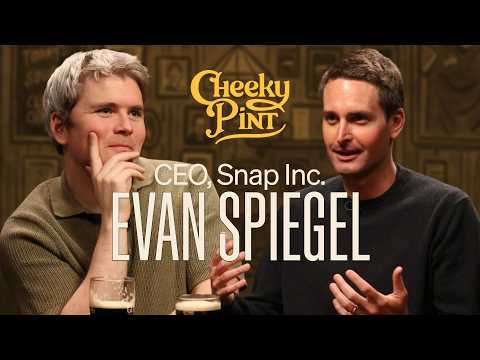
What comes after smartphones, with Evan Spiegel of Snap
Snap enters 2026 near 1 billion monthly active users and net-income profitability, with consumer Specs launching after 12 years of investment to pair normal-glasses wearability with spatial-computer capabilities.With over two-thirds of new code AI-written, 25 million Snapchat+ subscribers, and direct revenue above $1 billion, cheaper software may increase the value of Snap’s distribution and proprietary hardware.
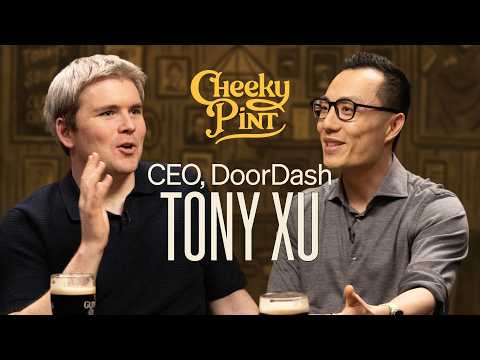
The economics and trends of the restaurant industry, with Tony Xu of DoorDash
DoorDash won by proving retention and frequency before buying growth, with product reliability, service recovery, and scarce-capital discipline establishing an “unfair advantage” before acquisition spending accelerated.Its larger opportunity now spans 3–5x incremental restaurant margins, SevenRooms-powered customer identity, and multimodal delivery, but AI interfaces matter only if DoorDash solves inventory, exceptions, and post-checkout reliability end to end.
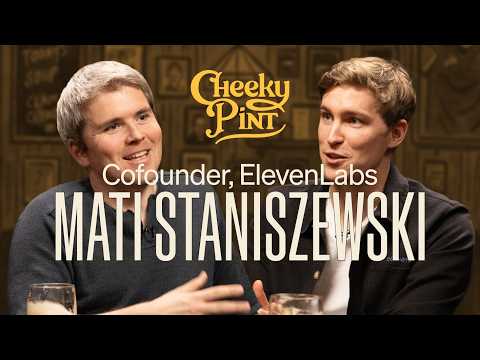
The world of voice AI, with Mati Staniszewski of ElevenLabs
John CollisonMati Staniszewski
ElevenLabs is building a more sales-led enterprise business, making the shift in customer mix a key signal for the company’s next phase.Its potential moat combines model architecture with proprietary prosody data, while cascaded agents may anchor complex workflows until conversational orchestration improves enough to support broader deployment.