SHOW DIRECTORY
The a16z Show
The venture firm’s view of startups, AI, software, markets, company building, and the technological shifts creating new categories.
BIDCLUB DESCRIPTION

Ben Horowitz on the Global Race for Tech, Power, and Influence
Ben HorowitzAnne NeubergerRaghu RaghuramJen Kha
AI models are becoming geopolitical infrastructure because their defaults will mediate products while encoding contested histories, ethics, and values, making model choice a question of sovereignty as well as performance.Private AI, autonomy, and cyber vendors now shape allied deterrence, while global APIs expose startups to demand before local distribution exists; anchor customers and trusted relationships can justify $5 million or $10 million market-entry investments.

Ben Horowitz on American Dynamism and the Future of AI | The a16z Show
A16Z’s more-than-$15 billion new funds turn scale into an explicit obligation to help America win AI through investment, government integration, citizen access, and allied integration.U.S. entrepreneurs and a government willing to change rules are catching up with China’s government AI integration, while Horowitz calls Anthropic’s breakdown a commercial exit and identifies Mexico and Japan as complementary industrial allies.

What Tesla and SpaceX Teach Founders About Building Hardware | a16z
Erin Price-WrightChandler LuzsiczaTurner Caldwell
Tesla and SpaceX accelerate hardware by combining direct information flow, decisive technical leadership, aggressive milestones and factory-style measurement.The model favors vertical integration only when non-integration threatens survival, while deep technical apprenticeships and critical-path execution determine whether Galvadyne and Mariana Minerals can scale.

Inside The $100M Bet on the Future of Space | Northwood CEO on a16z
Northwood is betting that ground infrastructure, not satellite production or launch, is space’s longest bottleneck, vertically integrating antennas, sites, networking, software and operations.citeturn0search0 Standardized containerized stations can compress deployment from roughly three years to three months and spread capital across customers, while the $50 million Space Force contract tests whether commercial proliferation can make ground capacity resilient and scalable.
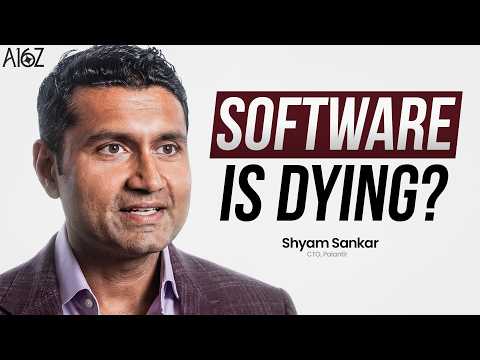
Palantir CTO on The SaaS Apocalypse & Preventing The Next World War | a16z
Shyam SankarKatherine BoyleErik Torenberg
Shyam Sankar argues that restoring deterrence requires reconnecting commercial R&D and manufacturing with national security after defense-only companies rose from 6% to 86% of major-weapons spending.His AI thesis favors infrastructure and “ontology” layers as models commoditize, while alpha software expressing customer-specific advantage may endure better than standardized beta SaaS vulnerable to vibe coding.AI-enabled reindustrialization could raise worker productivity 50 to 100 times and reunite production with innovation, but institutional competence, national will, and unresolved day-two maintenance remain critical risks.
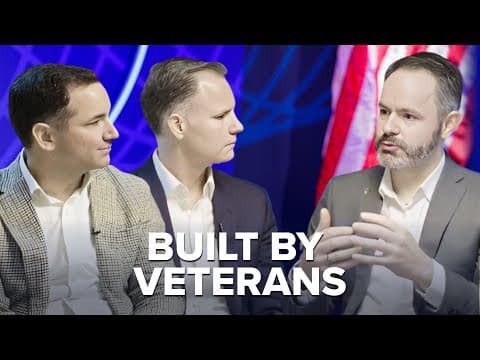
The Dual-Use Founder: Vets Now Building For America
Matt ShortalJohn DoyleDavid TuttleGrant Jordan
Veterans are turning firsthand exposure to drone, logistics, and cellular failures into dual-use companies built for low-cost, asymmetric conflict.Their unified products and apprenticeship-derived operating cultures address defense’s procurement bottleneck, where $1 million-$2 million contracts must bridge to $200 million programs; faster experimentation, ruthless exits, and midsize deployments remain the key catalysts.