PERSON DIRECTORY
Will Marshall
Will Marshall appears in 4 indexed conversations across Sourcery, All-In, Moonshots. This directory brings every appearance, source, TL;DR, digest, and transcript into one searchable feed.
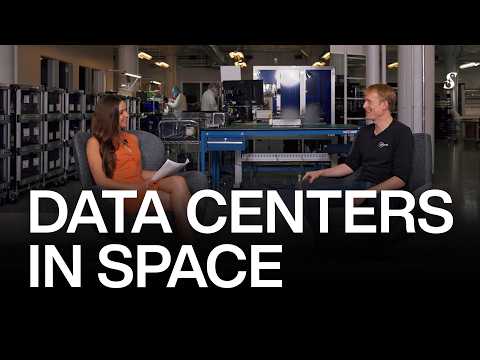
Planet Labs Factory Tour
Marshall says Planet’s 700 satellites built over 15 years cost less than one typical NASA satellite—a roughly 1,000X reduction—while imagery and analytics carry very high margins.About 200 satellites image the Earth daily; Owl raises resolution from three meters to one and returns data 10 times faster.The AI archive could broaden access, but its public beta failed to trigger the intended Area 51 search.
Planet Labs CEO: Why AI Data Centers Will Move to Space
Planet grew 58% year-on-year last quarter; Marshall thinks defense supplied the largest share.Sovereignty is driving fleet orders: Sweden's first satellite launched four months after signing, versus the industry's usual five or 10 years.Google’s Suncatcher test launched last week, but TPU testing remains ahead; Marshall says orbit could provide five times more power per panel and make computing cheaper.
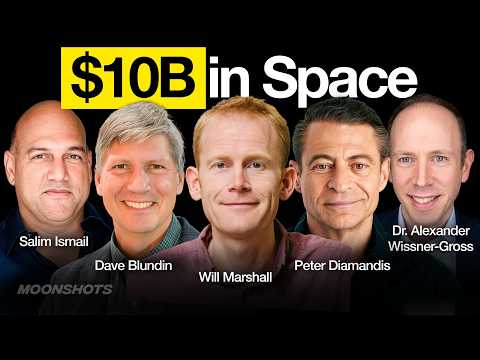
The $10B Satellite Empire Putting AI in Orbit, Why Chips Beat Rockets & China's #1 Open Model | #266
Peter DiamandisWill MarshallSalim IsmailDave BlundinDr. Alexander Wissner-Gross
Planet’s roughly 200 satellites generate 25 TB daily and a 150-PB, ten-year archive with 3,000 observations per land point, creating an irreproducible data moat as AI makes Earth searchable.Owl, Pelican, and Tanager add resolution, revisit rate, latency, and spectral depth, while orbital compute could become cost-competitive at $200-$300 per kilogram; inference efficiency, export policy, and GLM-5.2 remain key variables.
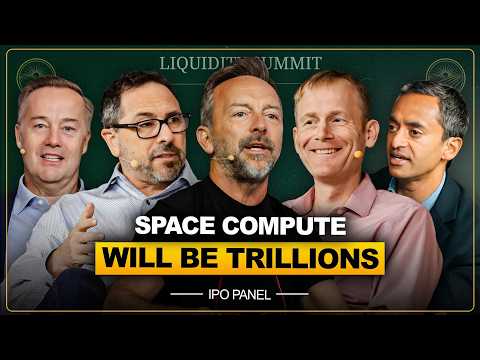
The IPO Comeback: Why Tech Giants Are Finally Going Public | All-In Liquidity IPO Panel
Andrew FeldmanWill MarshallBrad GerstnerChamath PalihapitiyaJason CalacanisDavid SacksDavid Friedberg
The IPO pendulum is shifting toward companies listing at $1 billion to $5 billion, with Planet creating roughly 90% of its post-SPAC value in years three and four.Cerebras’s $18.50 IPO followed a difficult 9.5 years, while its chip targets 15–18-times faster OpenAI workloads; orbital data centers offer a potential two-to-three-year cost catalyst, but distributed clustering remains unresolved.