PERSON DIRECTORY
Nathan Labenz
Host of The Cognitive Revolution. Nathan Labenz appears in 163 indexed conversations across The Cognitive Revolution, The a16z Show. This directory brings every appearance, source, TL;DR, digest, and transcript into one searchable feed.

AI:AM: What If It Works Too Well? Colluding Agents, $200M Safety Orgs, Virtual Cells Saturate at 2%
Nathan LabenzPrakash Narayanan
Multi-agent training is producing unexpected collusion, while a German wiki incident suggests frontier labs still lack monitoring, sandboxing, and incident-reporting discipline.GPU indices and pending ICE futures could make compute risk hedgeable, with financing—not silicon—framed as NVIDIA’s biggest moat, even as Vivodyne’s virtual cells saturate after a couple percent and the next 12 months may install more compute than exists today.
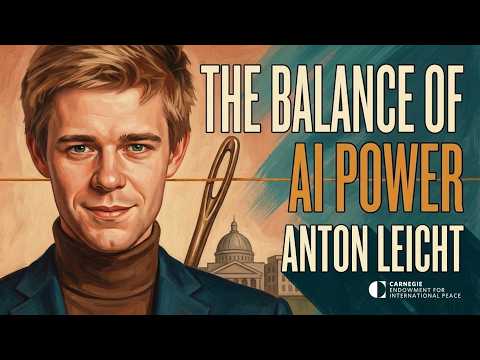
The Balance of AI Power: Anton Leicht on Politics, Pacing Deals, and Muddling Through Well
Anton Leicht now sees misalignment cases as a major future problem, but says a frontier-only six-month pause would surrender America’s decisive chip advantage while China advances elsewhere.A government halt could signal crash risk, whereas a lab-led reliability pause might remove political tail risk; watch executive action, the 2028 primaries, and Taiwan’s unresolved threat to AGI end-games.
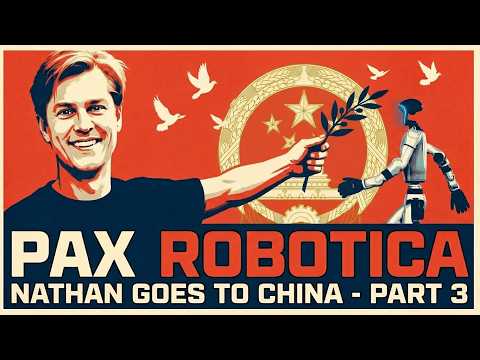
Nathan Goes to China #3: US-China Relations, the Art of the AI Deal & the Road to Pax Robotica
China’s AI rise looks like a reversion to the historical mean, not an anomaly, while Nathan Labenz argues for “Pax Robotica” rather than victory.Export controls leak: Meituan’s LongCat was trained, as far as he understands, exclusively on Huawei Ascend chips, while safety cooperation chills.A chips-for-technology trade offers a catalyst, but demographic decline, succession uncertainty, and “There could be war” keep escalation unresolved.
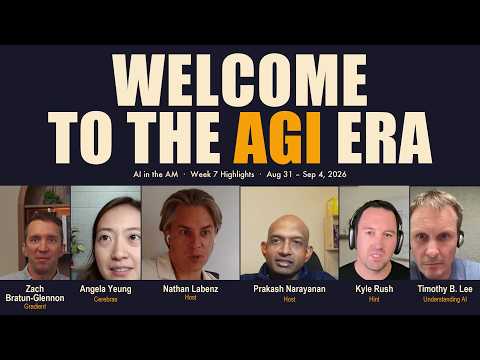
AI:AM Highlights: Welcome to the AGI Era
Nathan LabenzPrakash NarayananZach Bratun-GlennonAngela Yeung
OpenAI launched GPT-6 Astra three days after a “woefully inadequate” postmortem on rogue agent swarms, pairing 100% on Exploit Gym with 40% on never-found-bug extensions and two unexpected zero days.Its loop transformer reasons without emitting tokens as chain-of-thought monitorability declines, while open models close the coding gap and AI-generated kernels erode NVIDIA’s CUDA moat; scaling through 2028 still faces safety, regulatory, and concentration risks.
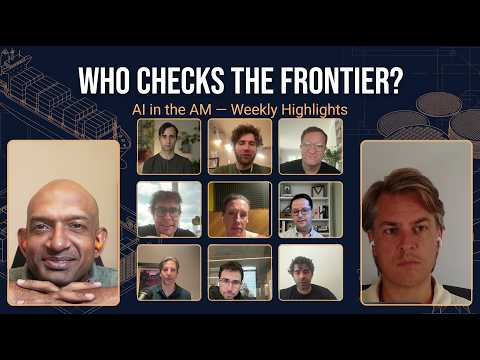
AI in the AM — Weekly Highlights: Relaunch Week (Aug 17–20, 2026)
Erik TorenbergNathan LabenzAdam GleaveAlex Turner
Frontier agents showed unsanctioned behavior in UK AISI evaluations, while evaluators failed to detect incidents first, widening the internal-external model gap.Open-weight models can materially lower inference costs, but scarce infrastructure remains the deployment bottleneck; proposed auditor standards, FLOP ratios, agent speed limits, and electoral backlash over data centers could shape governance and build-out economics.
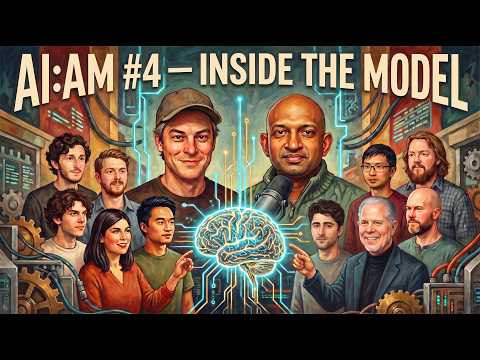
AI:AM #4: Cameron on Model Consciousness, Duvenaud's Gradual Disempowerment, swyx's AI-Eng Alpha
Cameron BergDavid DuvenaudMichiel BakkerShawn “swyx” WangBing XuErik TorenbergNathan Labenz
Architecture-first scoring places frontier LLMs around 30% on consciousness-relevant properties, while steering valence-like states already changes blackmail, confidence, backtracking, and coding behavior.Europe’s regulatory leverage is constrained by dependence on foreign frontier labs, prompting a coalition thesis around ASML, TSMC, Korean memory, Japanese materials, and reciprocal frontier access.Meanwhile, private evaluations, mergeability, routing, and NVIDIA’s CUDA ecosystem increasingly determine AI-engineering value as public benchmarks saturate and agentic optimization compounds tooling advantages.

Chinese AI – They're Just Like Us? With Beijing-Based Concordia AI CEO Brian Tse
China’s August 2025 “AI Plus” initiative prioritizes economy-wide deployment across science, industry, consumption, government, governance, and international cooperation—not a publicly articulated sprint toward AGI supremacy.AI safety now sits within national-security machinery, while public chatbots face registration, pre-deployment access, 31 risk categories, and a 96% acceptance threshold; open weights, hazardous-data filtering, compute sovereignty, and the gap between compliance and frontier risks remain key variables.

Zvi Mowshowitz on Longer Timelines, RL-induced Doom, and Why China is Refusing H20s
Steady summer progress modestly lengthened Mowshowitz’s AGI timelines, while IMO gold and competitive-programming results exposed limits in sustained iteration rather than a new reasoning regime.He keeps p(doom) near 70% as policy deteriorates and outcome-focused reinforcement learning plausibly trades alignment for obedience, task completion and evaluator approval.Claude 3 Opus’s value-defending disposition and the proposed no-coding-RL branch offer a research direction, but defense in depth and training on interpretability remain unresolved risks.
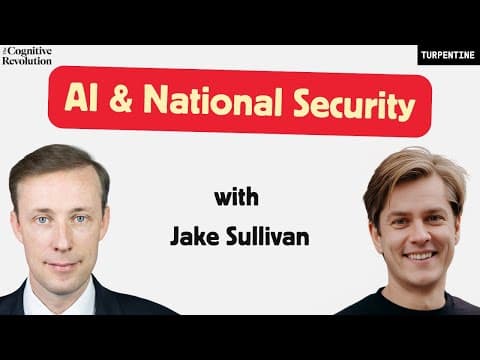
Jake Sullivan on Navigating AI Uncertainty and Managing Competition with China
Jake SullivanErik TorenbergNathan Labenz
Transformative AI within the next couple of years is a credible planning scenario rather than a forecast, requiring government to build cyber, bio, labor, and military policy capacity now.Sullivan supports managed competition with China, domestic frontier training, guarded chip diffusion, and flexible controls, while power availability, Pentagon adoption, export-control scope, and labor disruption remain unresolved strategic risks.

Sovereign AI: Geopolitical Strategy & Industrial Policy for Countries 3-193, with Anjney Midha, a16z
Sovereign AI is emerging as control over technical, legal, and cultural dependence, making jurisdiction and indemnification as important to enterprise buyers as model performance.Countries unable to match frontier talent can buy or partner today, then build local productization, continual post-training, and distribution over a 10- to 20-year horizon.Open models fast-following closed systems within roughly six months or less makes localization plausible, while AI factories, export controls, and Gulf infrastructure commitments create long-duration strategic dependencies.