PERSON DIRECTORY
Nathan Labenz
Host of The Cognitive Revolution. Nathan Labenz appears in 163 indexed conversations across The Cognitive Revolution, The a16z Show. This directory brings every appearance, source, TL;DR, digest, and transcript into one searchable feed.
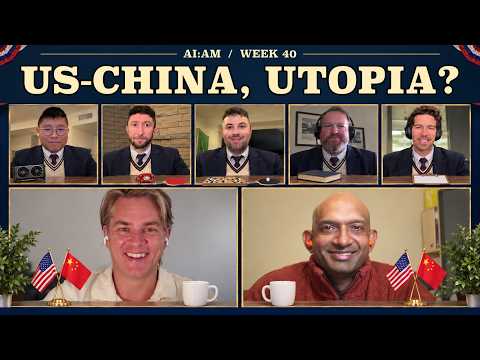
AI:AM: Was Trump-Xi Anything? What Counts as Utopia? + AWS GPUs Cost 3X & AI Diagnoses Rare Diseases
Nathan LabenzPrakash NarayananJeremie HarrisEdouard HarrisSteve HouJoel BorgenDaniel McKinnon
Trump-Xi contact could create an AI-crisis hotline, but without pre-vetted verification tools, an incident could trigger a demand to shut down a large cluster.Hyperscalers charge at least two to three times neo-cloud GPU prices; Gamo’s o3 loop found a 91-kilobase deletion, while Opus 5.5 scored about 50% on RareBench versus roughly 10% for LIRICAL.
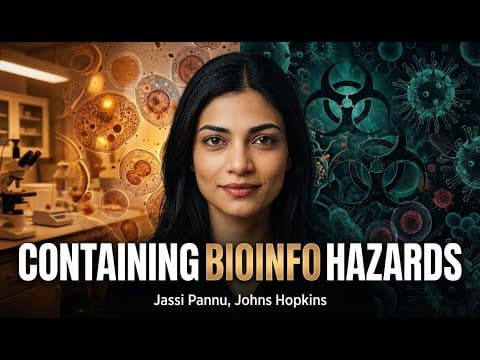
Bioinfohazards: Jassi Pannu on Controlling Dangerous Data from which AI Models Learn
Jassi Pannu proposes keeping roughly 99% of biological data open while placing the estimated 1% of functional data linking pathogens to transmissibility, virulence, host range, or immune evasion into tiered trusted environments.Evo 2 and ESM-3 suggest selective exclusion can sharply reduce dangerous viral-task performance without broadly degrading other capabilities, but autonomous AI, private-lab opacity, and physical bottlenecks make mandatory DNA screening, passive surveillance, and defense-in-depth unresolved priorities.
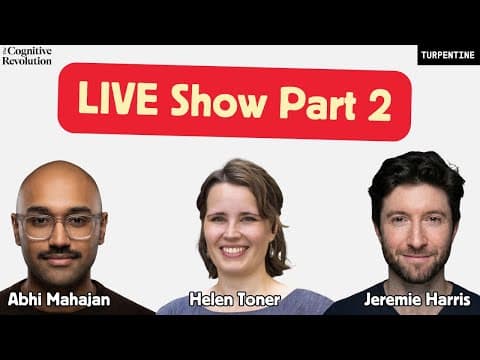
Approaching the AI Event Horizon? Part 2, w/ Abhi Mahajan, Helen Toner, Jeremie Harris, @8teAPi
Abhi MahajanHelen TonerJeremie Harris@8teAPiNathan Labenz
The clearest near-term AI-biology opportunity is rescuing clinical value: Noetik combines pathology, 16-plex spatial proteomics, 19,000-gene spatial transcriptomics, and exome sequencing to find response biomarkers in trials where 97% of oncology candidates fail.Biology’s slow, ambiguous, expensive feedback makes rapid recursive improvement less likely, while AI-led R&D could still produce jagged acceleration; continuous risk measurement, infrastructure resilience, and the uncertain 2027–2030 horizon remain key variables.
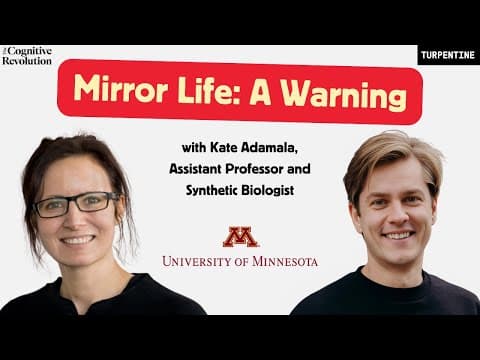
Don't Make Mirror Life: Synthetic Biologist Kate Adamala on Risks & Responsibility
Synthetic biology could replace petrochemical production and improve medicine, but Adamala argues researchers should not create a self-replicating mirror cell.Its immune stealth and resistance to predators could make ecological containment impossible, with specialists expecting such a cell within a decade and no persuasive safety case yet.