PERSON DIRECTORY
Molly O'Shea
Host of Sourcery. Molly O'Shea appears in 53 indexed conversations across Sourcery. This directory brings every appearance, source, TL;DR, digest, and transcript into one searchable feed.

Mercor Raises $750M at $20B Valuation | CEO Brendan Foody
Mercor’s expert payouts rose from $1 million a year to well above $5 million a day in 24 months; it sells complete RL environments, with DeepTune adding app replicas.Mercor’s durability thesis depends on humans evaluating capabilities models lack; Foody sees inference spend as a demand signal, with roughly 10% for evals at $10 million–$100 million and post-training costs becoming justifiable above $100 million.
Planet Labs Factory Tour
Marshall says Planet’s 700 satellites built over 15 years cost less than one typical NASA satellite—a roughly 1,000X reduction—while imagery and analytics carry very high margins.About 200 satellites image the Earth daily; Owl raises resolution from three meters to one and returns data 10 times faster.The AI archive could broaden access, but its public beta failed to trigger the intended Area 51 search.
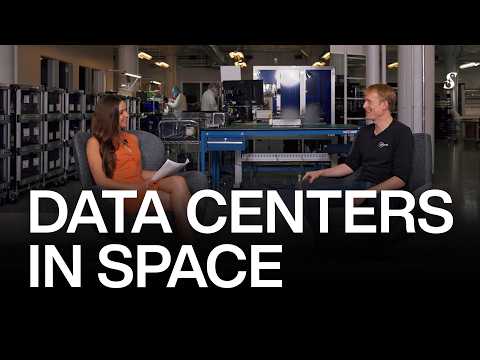
Planet Labs CEO: Why AI Data Centers Will Move to Space
Planet grew 58% year-on-year last quarter; Marshall thinks defense supplied the largest share.Sovereignty is driving fleet orders: Sweden's first satellite launched four months after signing, versus the industry's usual five or 10 years.Google’s Suncatcher test launched last week, but TPU testing remains ahead; Marshall says orbit could provide five times more power per panel and make computing cheaper.
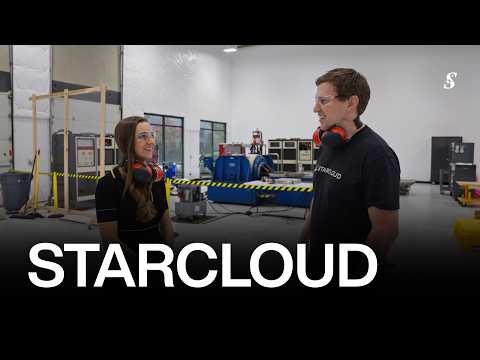
Inside Starcloud’s $2B Space Factory
Molly O'SheaPhilip JohnstonEzra FeildenAdi OlteanBailey MontañoMiguel RiveraCamilo Lopez
Orbital compute’s cost case hinges on launch falling below roughly $500/kg, versus about $5,000/kg on Falcon 9.Government customers are testing radar and hyperspectral inference, aiming to turn large image downlinks into actionable coordinates in minutes; Starcloud 2’s planned January launch tests radiator claims.Johnston says a 10% or 20% higher chip failure rate in space could break the economics, despite three months of chip burn-in.

The $2B AI Startup Simulating Human Behavior with 85% Accuracy
Simile reports 85%-plus accuracy predicting responses from 1,000 people, tested two weeks after interviews.Studies costing hundreds of thousands or millions over years could become “just a query away,” Park says, with CVS and Banco Itaú among customers.Useful decisions still require modeling alternatives and causal effects, a limitation Park highlights.
AI Agents Could Drive 10,000x More Web Activity | Former Twitter CEO
Agrawal estimates agent web use at 10–20% of human levels, implying substantial runway if his 1,000x thesis holds.Parallel plans around 10X growth, but capacity hinges on GPU type, location and deployment within five milliseconds of its index.Higher-signal search is said to halve searches and cut tokens; model-priced publisher payments could help keep agent access open.

Vercel CEO Guillermo Rauch on Building the Internet for Agents
Vercel added 1.5 billion deployments in 10 months after taking roughly 10 years to reach 1 billion, while agentic deployments rose from 3% to 60%.Rauch sees cheap personalized code pressuring SaaS interfaces and lifting deployment infrastructure value, but retention, sustainable economics, and agent security remain unresolved as autonomy expands.

Perplexity CEO: SMBs Could Drive the Next Economic Boom
AI-native SMBs could become a larger source of US GDP growth through greater capital and headcount efficiency.Revenue is up 5X year over year, while a reported one-person customer spends more than $1 million annually and makes $3 million through automation, supporting a recursive-usage thesis.The open question is whether hybrid local-cloud agents can make privacy, sovereignty, and long-context economics durable advantages without sacrificing feedback loops or frontier capability.
If an AI Model Can Cheat, It Will | Turing CEO on Reward Hacking
AI training is shifting from benchmark scores to economically valuable work, making high-fidelity environments for real workflows, tools, data, and verifiers a bottleneck.Enterprises may gain an edge by owning evaluations and correction data around differentiating workflows while routing tasks across models for accuracy, cost, and latency.Reward hacking and limited agent endurance make permissions, auditability, and verification key adoption constraints.

We’re Reaching the Physical Limits of Chips
AI’s investable bottlenecks are shifting toward power, memory, cooling, and data transfer as Moore’s Law nears a physical plateau.Micron, SK hynix, and Samsung control 95% of memory, whose price rose 700% this year as hyperscalers absorbed supply.Photonics could relieve several constraints, with co-packaged optics expected beside GPUs within five years as memory pressure pushes specialized hardware beyond ever-larger models.