PERSON DIRECTORY
Jesse Zhang
Jesse Zhang appears in 5 indexed conversations across No Priors, 20VC, Invest Like the Best. This directory brings every appearance, source, TL;DR, digest, and transcript into one searchable feed.

How Decagon Runs 90% of Its Agents on Open-Source Models
Sarah WangKimberly TanJesse ZhangAshwin Sreenivas
Decagon runs 90% of production workflows on open-source models, where task-specific fine-tuning delivers higher accuracy, lower latency, and lower cost than frontier systems on bounded jobs.Frontier models remain the discovery engine, while Decagon’s continuously rebuilt model factory and enterprise infrastructure turn deployment pain into reusable product; migration will remain constrained by proprietary data, security, and governance.
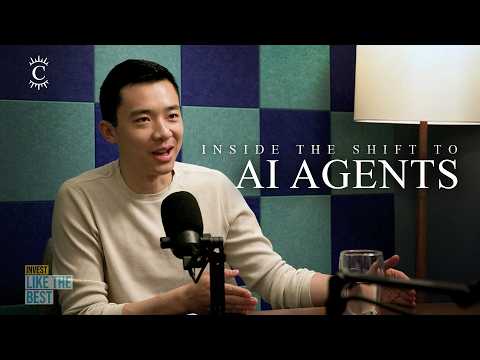
The Future of AI Agents | Jesse Zhang Interview
Patrick O'ShaughnessyJesse Zhang
Decagon’s enterprise AI wedge is customer service, where existing resolution rates of 15–20% create a quantifiable path toward 50–80% while escalation to humans de-risks deployment.The moat is continuous improvement: models can review every one of a million monthly conversations, identify the 2% failing, and draft fixes that compound into a brand-level digital concierge.Voice remains the largest unresolved frontier, with voice-to-voice hallucinations probably “like 8x higher” than text, while falling model costs intensify the race for market share and mindshare.

Opendoor CEO, Kaz Nejatian: OpenAI and Oracle, How Can Either Afford to Do This
Opendoor is being refounded as a software-and-services platform that uses AI to price homes fairly, then monetizes a longer customer relationship rather than relying on the purchase spread.The broader panel highlights a sharper AI market: applications are expanding TAM rapidly, but weak switching costs and two-week competition make liquidity, strategic acquisitions, and IPO windows important catalysts against paper valuations.

No Priors Ep. 97 | With Decagon CEO and Co-Founder Jesse Zhang
Decagon’s customer-support wedge offers unusually legible agent economics, with Bilt Rewards stopping team expansion within roughly one month and later reporting around 65 agents of headcount saved.Its differentiation lies in eval-driven orchestration, business-logic customization, observability, and control rather than exclusive model access, while voice and computer-use expansion depend on latency, accuracy, and measurable ROI.

How AI Agents Are Transforming Customer Support, with Decagon’s Jesse Zhang
Customer support is emerging as the near-term “golden use case” for AI agents because deployment can start small while savings, satisfaction, NPS, and accuracy remain measurable.At Bilt Rewards, Decagon stopped scaling support within roughly one month and later quantified around 65 agents’ worth of headcount saved, while orchestration above shared models remains the differentiation.Voice expands the workflow opportunity but introduces a persistent latency-versus-computation trade-off worth monitoring.