PERSON DIRECTORY
Jason Calacanis
Host of All-In. Jason Calacanis appears in 111 indexed conversations across All-In. This directory brings every appearance, source, TL;DR, digest, and transcript into one searchable feed.

Elon Musk & Gwynne Shotwell on AI Risks and Peer Review, Starship, Terafab, SpaceX/Tesla Merger
Chamath PalihapitiyaJason CalacanisDavid SacksDavid FriedbergGwynne ShotwellElon Musk
Cross-lab AI peer review would give competitors pre-release API access to run logged safety harnesses, making distillation visible and raising reputational and product-liability stakes.Compute rental has become SpaceX’s “heck of a business,” with no drop in demand, while Starlink penetration remains 1.5–2%.Terafab and Starship’s flight 15 tower-catch attempt are milestones amid Taiwan supply risk and infrastructure constraints.

Google’s AI Brain Drain, SpaceX's Huge Quarter, Airtable’s 90% Collapse, US Data Fuels China AI
Jason CalacanisDavid SacksDavid FriedbergBrad Gerstner
Google’s infrastructure-first capital shift is coinciding with senior AI departures, while Sacks sees Anthropic and OpenAI forming a premium frontier duopoly as cheaper models pressure weights toward commodity pricing.SpaceX reported $7.8B revenue, up 92% YoY, and Starlink’s cash generation could fund expansion, but the proposed $300B-scale AI buildout leaves financing, spot pricing, and demand sensitivity as key risks.

Former Intel CEO on What Went Wrong, What's Next + Lovable CEO on the Real Promise of Vibe Coding
Jason CalacanisPat GelsingerAnton Osika
Pat Gelsinger attributes Intel’s decline to replacing technical leadership with spreadsheet-driven capital allocation, while Apple, Nvidia and TSMC compounded patient capability-building into durable platforms.The semiconductor recovery remains exposed to Taiwan’s energy dependence, even as AI’s long runway is constrained by electricity; Lovable meanwhile reports production-scale adoption, with defensibility shifting toward orchestration, security, operational data and user feedback.
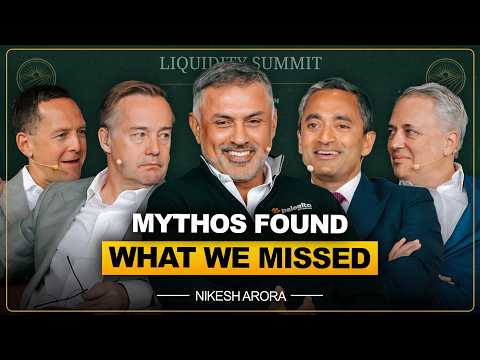
Palo Alto Networks CEO: "AI Found 5 Years of Bugs in 6 Weeks"
Chamath PalihapitiyaJason CalacanisDavid SacksDavid FriedbergNikesh Arora
Mythos found PANW vulnerabilities in six weeks that normally take five to seven years, for low millions, with comparable capability possibly three months away.Analytical SaaS faces direct substitution as customers query data through LLMs, while infrastructure, model-arbitrage applications, and hyperscaler distribution may capture value; false positives and hardware constraints remain risks.

OpenAI's Identity Crisis, Datacenter Wars, Market Up on Iran News, Mamdani's First Tax, Swalwell Out
Travis KalanickChamath PalihapitiyaJason CalacanisDavid SacksDavid Friedberg
OpenAI's enterprise growth is described at 3–4X annually versus Anthropic's roughly 10X, while metered coding tokens scale faster than consumer plans limited by perhaps 3–4% premium conversion.Frontier compute is becoming an infrastructure war—Colossus targets 555,000 GPUs—while power and permits threaten roughly 100 contested data centers worth $162 billion; near-record valuation measures and unproven enterprise profits remain key risks.
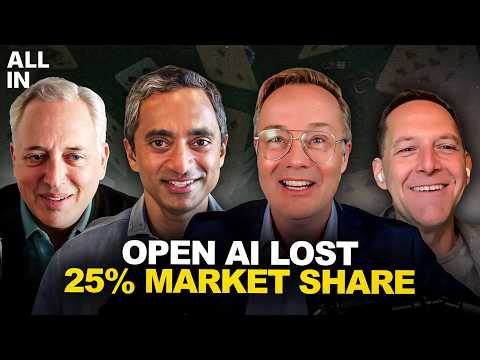
Anthropic's Generational Run, OpenAI Panics, AI Moats, Meta Loses Major Lawsuits
Chamath PalihapitiyaJason CalacanisDavid SacksDavid Friedberg
Anthropic's coding-first strategy has become an enterprise distribution engine, with Jason citing $6 billion of annual run rate added in February alone and Chamath calling its technical output “head and shoulders above anything else.”OpenAI remains the “overwhelming revenue generator” after normalization, but falling ChatGPT share, Google’s trust and cash-flow advantages, and Meta’s $375 million verdict leave monetization, market structure, and liability as key risks.
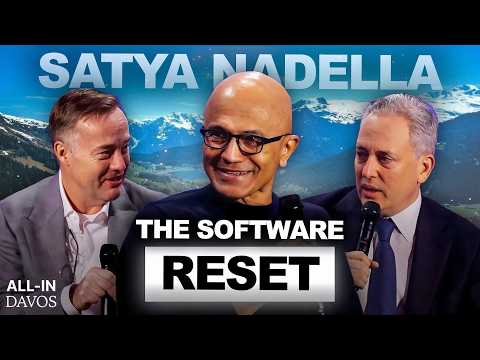
Satya Nadella on AI’s Business Revolution: What Happens to SaaS, OpenAI, and Microsoft?
Jason CalacanisDavid SacksSatya Nadella
Satya Nadella sees knowledge workers becoming managers of agents through “macro delegate and micro steer,” with Agent 365 addressing identity, permissions, and provenance.Microsoft is positioning Azure as a token factory and Foundry as an app server for multi-model orchestration, while AI adoption depends on diffusion across industries and governments.The economic test is organizational redesign and intense usage, not invention alone, with Microsoft’s ecosystem capturing value through local jobs, ISVs, and channel partners.
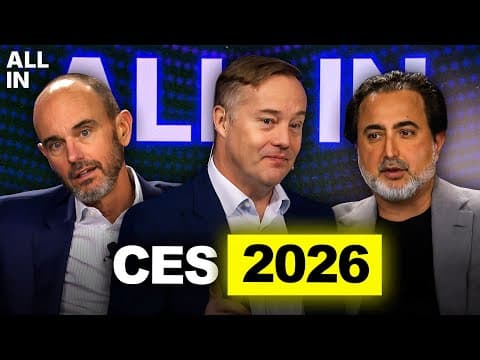
Why AI will dwarf every tech revolution before it: robots, manufacturing, AR glasses from CES 2026
Jason CalacanisBob SternfelsHemant Taneja
AI is compressing product cycles and organizational change, with Anthropic moving from roughly $880 million after one 10x year toward another announced 10x-or-more year and McKinsey pairing 25% client-facing growth with a 25% non-client-facing reduction.Enterprise value depends on data infrastructure, redesigned human-agent workflows, and distribution through incumbent assets, while robotics faces slower hardware diffusion; falling entry-level demand, manufacturing constraints, and the race toward verticalized applications are the catalysts to watch.
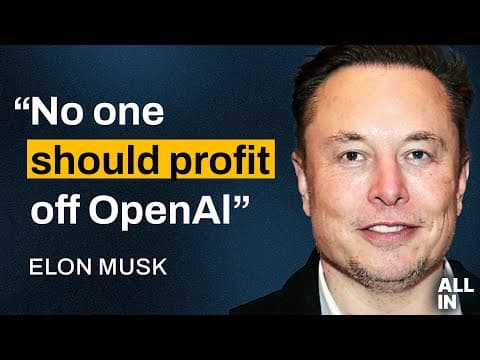
Elon Musk: OpenAI Betrayal, His Future at Tesla, and the Next Big Thing — Grokipedia
Elon MuskChamath PalihapitiyaJason CalacanisDavid SacksDavid Friedberg
Grok is moving X toward semantic ranking and search across text, images, and video, initially processing the top 10 million of roughly 100 million daily posts.Grokipedia’s broader, maximally truth-seeking corpus remains unproven amid factual errors, while Tesla’s Cybercab, Optimus, and inference ambitions depend on safety gates and Musk retaining roughly 25% voting influence.
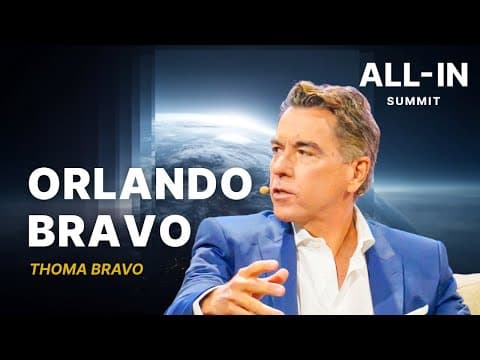
Inside Orlando Bravo’s Private Equity Playbook: How to Build a Top Firm
Chamath PalihapitiyaJason CalacanisDavid SacksDavid FriedbergOrlando Bravo
Thoma Bravo manages $179 billion to just under $200 billion with about 230 employees, concentrating each fund on 10–12 companies and returning more than $13 billion last year.Modern software private equity depends on terminal-value appreciation rather than leverage, with roughly 30% debt and 70% equity at 7–8x revenue, making profitable growth essential.AI disruption could materially shrink the investable software universe, while $10 billion deals requiring roughly $25 billion exits make concentration, operating evidence, and decisive cost cuts increasingly important.