PERSON DIRECTORY
Erik Torenberg
Erik Torenberg appears in 137 indexed conversations across The a16z Show, The Cognitive Revolution. This directory brings every appearance, source, TL;DR, digest, and transcript into one searchable feed.
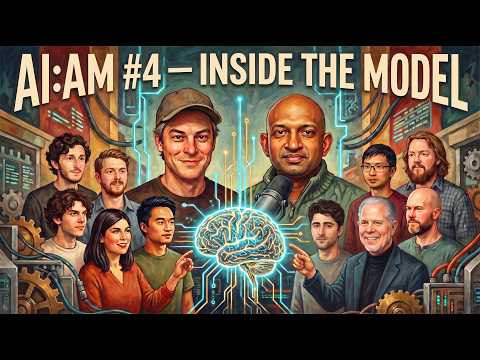
AI:AM #4: Cameron on Model Consciousness, Duvenaud's Gradual Disempowerment, swyx's AI-Eng Alpha
Cameron BergDavid DuvenaudMichiel BakkerShawn “swyx” WangBing XuErik TorenbergNathan Labenz
Architecture-first scoring places frontier LLMs around 30% on consciousness-relevant properties, while steering valence-like states already changes blackmail, confidence, backtracking, and coding behavior.Europe’s regulatory leverage is constrained by dependence on foreign frontier labs, prompting a coalition thesis around ASML, TSMC, Korean memory, Japanese materials, and reciprocal frontier access.Meanwhile, private evaluations, mergeability, routing, and NVIDIA’s CUDA ecosystem increasingly determine AI-engineering value as public benchmarks saturate and agentic optimization compounds tooling advantages.
The Economics of AI Usage and What's Next For SaaS | Benedict Evans on a16z
Agentic coding has crossed unmistakable product-market fit, with customers pulling products from vendors’ hands.Foundation models appear headed toward commodity economics absent durable differentiation, while today’s token scarcity meets $1 trillion–$2 trillion of capex and “100x, 200x” efficiency gains.Cheaper development should create more software, but the unresolved question is which SaaS incumbents survive and whether models capture infrastructure-like returns.

The Model Eats the Scaffolding: DeepMind's Logan Kilpatrick & Tulsee Doshi on 3.5 Flash, Omni & More
Erik TorenbergNathan LabenzLogan KilpatrickTulsee Doshi
Gemini 3.5 Flash leads with Tulsee citing roughly 280 tokens per second, about three times faster than other large models and significantly cheaper, prioritizing intelligence per dollar and second.Google is shifting its AI stack toward Antigravity’s shared agent harness, while preserving harness diversity; the payoff is a cross-product feedback loop, but co-optimization could still raise switching costs and pricing power.
Atlassian CEO on the SaaS Apocalypse, AI Agents & What Comes Next
Alex RampellErik TorenbergMike Cannon-Brookes
AI is repricing SaaS before proving universal impairment, with Zendesk-like seat models exposed to agent substitution while Workday’s employee-based pricing and Adobe’s middle position may be underappreciated.Atlassian’s three great quarters, accumulated process knowledge, Teamwork Graph and extensibility strategy could make core systems stickier, but value depends on fair pricing and product design that earns trust as agents enter workflows.
AI Eats the World: Benedict Evans on the Next Platform Shift
Generative AI may match the internet or smartphones in scale, but uneven adoption—ChatGPT’s 800 or 900 million weekly users with only about 5% paying—makes workflow integration, not model novelty, the central commercial test.Specialized products that encode validation and institutional knowledge may capture value above increasingly comparable models, while OpenAI’s distribution remains a fragile moat and falling compute costs, overbuilding and uncertain capability keep the bubble’s timing and infrastructure demand unresolved.
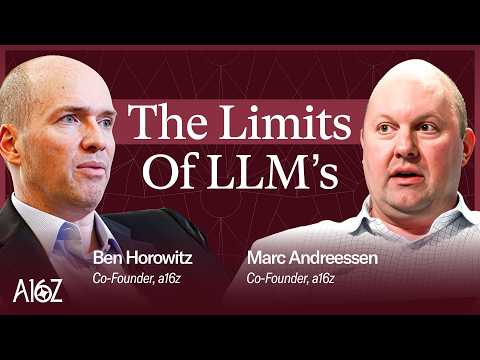
Marc Andreessen and Ben Horowitz on the State of AI
Erik TorenbergMarc AndreessenBen Horowitz
AI need not match Beethoven to transform productivity: clearing 99.99% of humanity at intelligence and creativity could unlock recombination across domains.Current models already show commercially useful theory of mind in Socratic dialogue and simulated focus groups, though intelligence alone does not confer leadership or human connection.Demand, talent, and chip shortages are attracting supply, while the still-unformed interface and US–China robotics race leave the platform outcome open.

Dylan Patel on GPT-5’s Router Moment, GPUs vs TPUs, Monetization
Dylan PatelErin Price-WrightGuido AppenzellerErik Torenberg
GPT-5’s router is an economic release, directing simple queries to mini models while reserving “ungodly amounts of compute” for transactions OpenAI could monetize through agentic commerce.Flat-rate subscriptions face heavy-user losses, while custom silicon threatens Nvidia mainly if demand stays concentrated among hyperscalers; powered sites, grid equipment, and Intel’s capital needs remain near-term constraints on broader deployment.
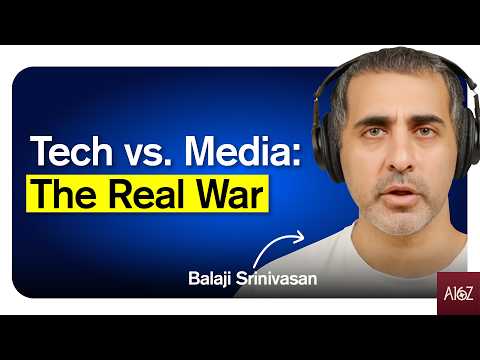
Tech vs. Media: Balaji Srinivasan on the Battle Shaping Our Future
Erik TorenbergBalaji Srinivasan
Newspaper revenue fell from roughly $70 billion around 2000 as Google and Facebook rose, helping turn a former tech ally into an adversarial media institution after 2013.Srinivasan’s state-versus-network framework favors direct distribution, founding creators, and a cryptographic ledger of record, while jurisdictional competition and the unresolved economics of replacing legacy reporting remain the key tests.

Former Microsoft Executive on Apple’s Hidden China Problem
Apple’s China advantage rests on accumulated manufacturing expertise and line-level knowledge transfer, turning a capability moat into strategic concentration risk as COVID exposed global supply-chain single points of failure.Apple’s AI retreat may reflect a return to its “first integrator” model, while edge, privacy, and inference economics could support several large platforms rather than a winner-take-all market.

China's Tech Tightrope: Power, Regulation, and the AI Race with Angela Zhang
Erik TorenbergNathan LabenzAngela Zhang
China’s investability is shaped by a hierarchy where “signal is policy, and policy is signal,” enabling rapid execution but concentrating policy risk, as the $320 billion Ant Group IPO collapse demonstrated.Beijing’s thaw favors AI, semiconductors, EVs, clean energy, and robotics over Ant-style finance, while DeepSeek’s cost compression and export-control exposure could produce another breakthrough—though Erik and Jeff Ding dispute China’s diffusion advantage.