PERSON DIRECTORY
David Friedberg
Host of All-In. David Friedberg appears in 119 indexed conversations across All-In. This directory brings every appearance, source, TL;DR, digest, and transcript into one searchable feed.
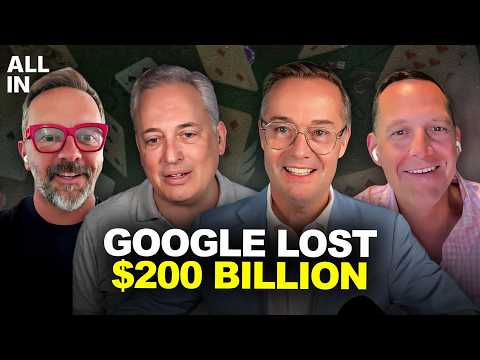
Google’s AI Brain Drain, SpaceX's Huge Quarter, Airtable’s 90% Collapse, US Data Fuels China AI
Jason CalacanisDavid SacksDavid FriedbergBrad Gerstner
Google’s infrastructure-first capital shift is coinciding with senior AI departures, while Sacks sees Anthropic and OpenAI forming a premium frontier duopoly as cheaper models pressure weights toward commodity pricing.SpaceX reported $7.8B revenue, up 92% YoY, and Starlink’s cash generation could fund expansion, but the proposed $300B-scale AI buildout leaves financing, spot pricing, and demand sensitivity as key risks.

OpenAI's Identity Crisis, Datacenter Wars, Market Up on Iran News, Mamdani's First Tax, Swalwell Out
Travis KalanickChamath PalihapitiyaJason CalacanisDavid SacksDavid Friedberg
OpenAI's enterprise growth is described at 3–4X annually versus Anthropic's roughly 10X, while metered coding tokens scale faster than consumer plans limited by perhaps 3–4% premium conversion.Frontier compute is becoming an infrastructure war—Colossus targets 555,000 GPUs—while power and permits threaten roughly 100 contested data centers worth $162 billion; near-record valuation measures and unproven enterprise profits remain key risks.
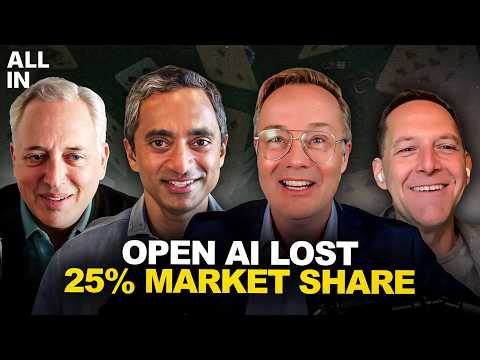
Anthropic's Generational Run, OpenAI Panics, AI Moats, Meta Loses Major Lawsuits
Chamath PalihapitiyaJason CalacanisDavid SacksDavid Friedberg
Anthropic's coding-first strategy has become an enterprise distribution engine, with Jason citing $6 billion of annual run rate added in February alone and Chamath calling its technical output “head and shoulders above anything else.”OpenAI remains the “overwhelming revenue generator” after normalization, but falling ChatGPT share, Google’s trust and cash-flow advantages, and Meta’s $375 million verdict leave monetization, market structure, and liability as key risks.
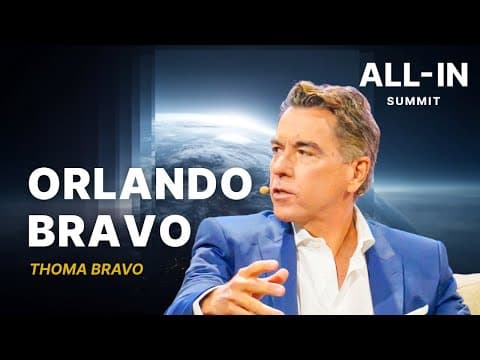
Inside Orlando Bravo’s Private Equity Playbook: How to Build a Top Firm
Chamath PalihapitiyaJason CalacanisDavid SacksDavid FriedbergOrlando Bravo
Thoma Bravo manages $179 billion to just under $200 billion with about 230 employees, concentrating each fund on 10–12 companies and returning more than $13 billion last year.Modern software private equity depends on terminal-value appreciation rather than leverage, with roughly 30% debt and 70% equity at 7–8x revenue, making profitable growth essential.AI disruption could materially shrink the investable software universe, while $10 billion deals requiring roughly $25 billion exits make concentration, operating evidence, and decisive cost cuts increasingly important.