
Ep. 033 - 300 Data Center Bans, 3 Projects Delayed: Moratoriums Explained (Datacenter, Energy)
Maya BarkinReyk KnühtsenJordan NanosJeremie Eliahou Ontiveros
Mapping 400+ local instruments against 3,500 projects finds 300+ moratoriums but only three projects actively affected: AWS, NorthPoint, and CoreSite.Roughly 80% of live restrictions have no capacity behind them, leaving the forecast unchanged and making behind-the-meter power more attractive; New York delays roughly 800MW by 6–10 months, while an off-grid-blocking Texas-scale ban is key risk.

Building a Power Company for the Next 50 Years | Zach Dell, Base Power
US electricity demand could rise from roughly 2% to around 10% annual growth, with AI accelerating an already broad electrification trend.Base sells electricity rather than $20,000 batteries, owning distributed assets that monetize wholesale markets while avoiding interconnection and transmission constraints; scaling Base Core and long-term utility contracts remain key milestones.

Ep. 026 - PJM's $12B Modeling Mistake Is Hitting Ratepayers Again (Datacenter, Energy)
PJM’s capacity-auction modeling—not data-center demand alone—is estimated to have made $12B of the $63B spent across its last four auctions avoidable.Constrained supply, “endless summer” demand assumptions, and pay-as-clear pricing amplify marginal scarcity across 66 million people, while a September or October emergency auction could commit up to $21B through 2042–43 if data-center load fails to arrive.
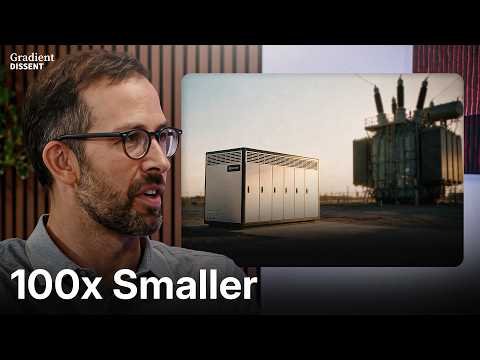
Elon's Former Battery Chief on Making Transformers 100x Smaller | Drew Baglino, Heron Power
Baglino argues properly designed AI data centers can lower electricity rates by raising grid utilization: 800MW average demand versus 1-2kW for a home, with storage absorbing training ripple.Heron Link’s 5MW solid-state transformer halves grid-to-chip losses, adding about 35MW of useful compute per gigawatt; the thesis depends on data centers funding interconnection and utilities avoiding overbuild.
200GW Hiding in Grid, Sodium Batteries 10x Cheaper, Wave-Powered Datacenters w/ Ramez Naam | EP #280
Peter DiamandisSalim IsmailDave BlundinAlexander Wissner-GrossRamez Naam
AI’s binding constraint is grid interconnection, not generation economics: roughly 100 hours of annual load flexibility could unlock about 100GW of existing capacity, representing roughly $5T of data-center capex.Texas’s interruptible-load fast track and FERC’s broader push could catalyze near-term capacity, while solar-plus-batteries offer a roughly 12-month build path; winter seasonality, transmission bottlenecks, and uncertain further cost declines remain key risks.
$DNOW: the boring distributor that could double on 2029 numbers | Firebird Management
DNOW’s MRC Global merger creates a full-chain distributor with $75M targeted synergies and water, utilities, and data-center exposure.Buybacks at $10–12 and debt paydown support a cash-flow case, while the conservative-looking 2027 $350M EBITDA guide compares with roughly $400M on 2024 numbers.Reaching $30–32 by 2028–2029 from $16 depends on $300M 2027 FCF and re-rating, leaving ERP execution, macro recovery, and multiple expansion to monitor.
Why Natural Gas Will Be AI’s Next Great Shortage
Patrick O'ShaughnessyMatthew Smith
Matthew Smith’s model points to US natural-gas storage falling below all historical levels by 2029 as contracted LNG and AI compute outstrip deliverability, with electricity prices bearing the impact in 2028-2030.The market remains priced near $3.50-3.60, while Expand Energy and Range offer leverage to a potential physical-gas scramble; processing, pipelines, nuclear timelines, and consumer costs remain key risks.

Stop Saying Half of 2026 US Datacenter Capacity Is Canceled
Jeremie Eliahou OntiverosReyk KnuhtsenEllie HolbrookJordan Nanos
The claim that half of 2026 US data-center capacity was canceled fails a denominator check: SemiAnalysis says early-stage options were mistaken for committed builds, while its forecasts moved less than 5%.The sharper bottleneck is execution at financed projects such as Oracle’s Project Jupiter, supporting more than 40 GW of behind-the-meter additions by 2028 but leaving gas, permits, equipment, and schedules as catalysts and risks.

How Nuclear Will Unlock Energy Abundance with Valar Atomics Founder Isaiah Taylor
Valar Atomics treats nuclear as a manufacturing problem, targeting a simple, intrinsically safe “Toyota Camry” rather than a bespoke paper reactor.DOE testing authority enabled its 100 kW W-250 to reach criticality, while passive heat removal and a seven-month milestone interval provide operating evidence.Equity-funded deployment could precede project finance, with AI as an initial catalyst and cheaper energy as the longer-term demand thesis.
Bloom Energy CEO: Why We Aren’t in an AI Capex Bubble | Energy Sovereignty & The Future of Power
AI factories make electricity the binding input, and KR Sridhar frames Bloom Energy’s opportunity against a $5.5 trillion power market versus $2 billion of revenue last year.Oracle’s 50+ MW contract in 90 days and delivery in 55 days support the architecture case, while scaling from 1 GW to over 2 gigawatts by year-end leaves permits, gas supply, and customer buildouts as constraints.