SHOW DIRECTORY
Gradient Dissent
Lukas Biewald speaks with AI leaders about cutting-edge machine learning and the practical intricacies of bringing models into production.
SOURCE DESCRIPTION · RSS
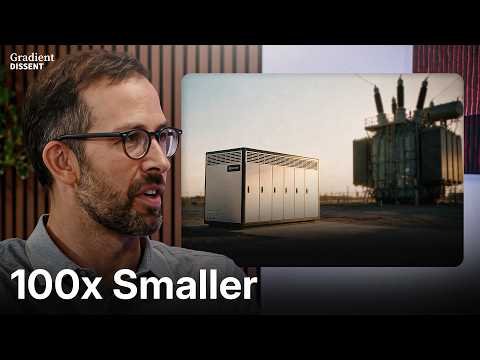
Elon's Former Battery Chief on Making Transformers 100x Smaller | Drew Baglino, Heron Power
Baglino argues properly designed AI data centers can lower electricity rates by raising grid utilization: 800MW average demand versus 1-2kW for a home, with storage absorbing training ripple.Heron Link’s 5MW solid-state transformer halves grid-to-chip losses, adding about 35MW of useful compute per gigawatt; the thesis depends on data centers funding interconnection and utilities avoiding overbuild.
Most AI Startups Are Scaling Into Bankruptcy | Lin Qiao, CEO of Fireworks
Fireworks says it processes over 40 trillion daily prompt-and-generation tokens, with 95% from customized models, alongside a $1.5 billion Series D at a $17.5 billion post-money valuation.Its co-designed training-and-serving stack searches more than 100,000 inference options per workload, but “scaling to bankruptcy” makes value-per-task economics and proprietary data the durability tests.
He's Building an AI That Can't Lie | Dan Klein, Scaled Cognition
AI’s bottleneck is shifting from capability to reliability as data walls, compute limits, and diminishing returns bend scaling toward an S-curve, leaving consequential workflows exposed.Scale Cognition’s AP-1 makes provenance, authorization, and verifiable actions architectural objects, while correlated checkers and constrained agents show the cost and unresolved risk of transaction-grade correctness.

Curing Every Disease With Al by 2050 | Sam Rodriques, Edison Scientific
Robin generated a dry age-related macular degeneration treatment hypothesis that reached animal validation before publication in Nature in May 2025.Cosmos has since produced an estimated 20,000-30,000 proposed findings, expanding throughput while human trials remain the physical bottleneck.Phase 3 success or FDA approval is the credibility catalyst, while Edison’s specialized, multi-model moat could weaken if general models reach task saturation.
The $8.6B Self-Driving AI Backed by Nvidia and Uber | Alex Kendall, Wayve
Wayve’s decade-long contrarian bet is that autonomous driving scales through one general-purpose AI driver, not fleets dependent on HD maps, retrofit sensors, and infrastructure.Kendall began with $1.5 million while the industry pursued an “AV 1.0” paradigm he says required $100 billion-plus; Wayve’s resulting model is now “capable of driving any vehicle anywhere,” though it…
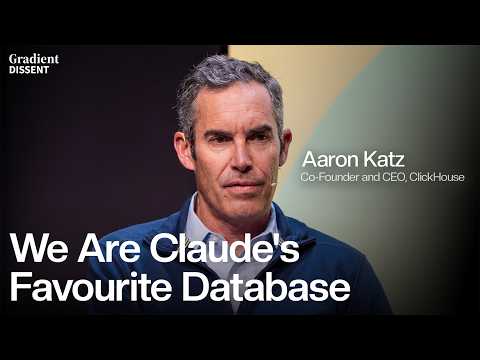
Why Anthropic, Meta, and Tesla All Chose the Same Database | Aaron Katz, ClickHouse
ClickHouse reached product-market evidence before its 2021 formation, then built a serverless, engineer-led cloud business reporting more than 3,000 customers and hundreds added monthly.AI agents could provision ClickHouse alongside Postgres, supporting infrastructure demand even as software multiples reset, while Datadog and warehouse incumbents remain formidable and database-grade reliability, geopolitical exposure, and execution stay central risks.
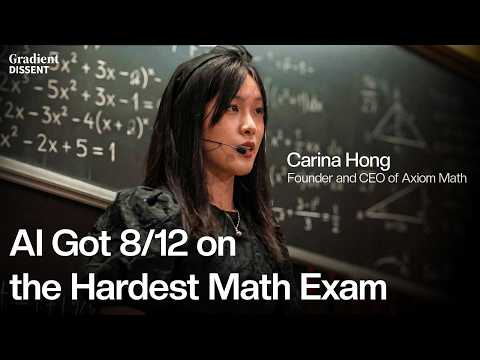
She Raised $64M to Build an AI Math Prodigy | Carina Hong, CEO of Axiom
Axiom’s $64 million wager combines probabilistic generation with deterministic Lean verification through a prover, conjecturer, shared knowledge base, and auto-formalization layer.Its provisional Putnam 2026 result of eight problems within exam time and a reported ninth signals capability, while chip verification, safety-critical code, and legacy-code equivalence offer commercial wedges whose harder constraint may be specifying what “correct” means.
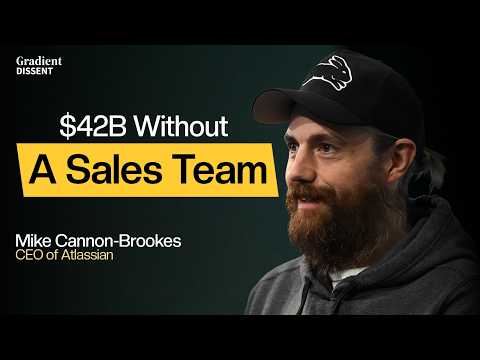
Atlassian’s Most Controversial Growth Decision | Mike Cannon-Brookes
Mike Cannon-BrookesLukas Biewald
Atlassian’s market extends beyond developers, with Jira and Rovo connecting technical and business workflows through a permission-aware teamwork graph exceeding 100 billion objects and connections.Cannon-Brookes expects agents to remove workflow steps rather than eliminate workflows, while faster code generation still requires human review, accountability, and evidence of realized productivity.Atlassian’s “grow longer, not grow faster” doctrine prioritizes durable demand and future investment alongside roughly 21% revenue growth, 26% cloud growth, and 40% RPO growth.
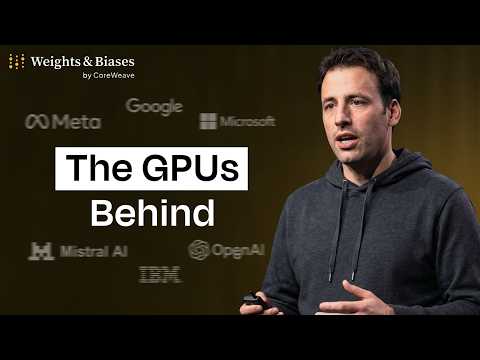
Why Big Tech Buys GPUs From CoreWeave | Corey Sanders
CoreWeave specializes its architecture around continuously feeding GPUs, using caching, orchestration, observability, and liquid cooling for AI workloads rather than general-purpose cloud requirements.Its opportunity depends on scarce accelerator capacity and direct customer support, while inference could eventually make geographic placement more flexible and specialization harder to commoditize.
Are Humanoid Robots Actually Coming to Your Home? | Nikolaus, Rerun
Robotic manipulation is moving from “impossible” to “boring,” with vendors deploying tens to 100 robots for learning-based pick-and-place in manufacturing, though scale remains limited.Rerun treats physical data as multimodal, multirate, and episodic, distributing an open-source viewer while monetizing cloud infrastructure for the record-curate-train loop.Consumer reliability, weak benchmarks, and imperfect simulation leave robustness, self-correction, and scalable data economics as key watchpoints.