
CoreWeave Crash, AI Trade Cracks, Anthropic IPO Red Flags, Bill Gates Doomer
CoreWeave’s 953-basis-point CDS implies 16% annual default risk; fixed-price contracts and $35 billion more to raise leave Chamath’s team estimating a $5 billion break-even gap.Sacks sees demand holding, but financing costs remain a risk; Chamath urges Anthropic to raise at least $200 billion for compute, with SemiAnalysis estimating it and OpenAI will take 60% of next year’s global additions.

Ep. 021 - The AI Project Trinity: Capital, Offtake, Data Center (Datacenter, Energy)
Dan NishballZane FongKang Wen CheangJordan Nanos
AI infrastructure’s bottleneck is shifting to balance-sheet capacity: $11 trillion of 2024-2029 capex could require roughly $7.1 trillion of funding, while five-year hyperscaler offtake excludes short-duration demand.NVIDIA’s GB300 backstop makes neocloud capacity lendable by flooring cash flow, but selects repeat buyers and ties NCP access to its stack; rapid GPU depreciation and utilization gaps remain the underwriting risk.
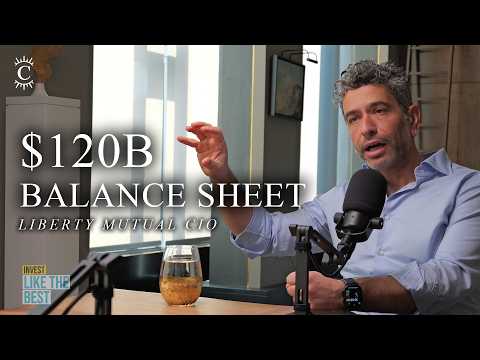
Investing a $120 Billion Balance Sheet with No Outside Investors
Patrick O'ShaughnessyVlad Barbalat
Liberty Mutual’s $120B balance sheet combines roughly $70–75B of reserves with growth credit and equity, while permanent mutual capital avoids shareholder pressure and supports 7–10% portfolio targets.Barbalat now questions whether AI makes future cash flows—and therefore multiples—structurally less visible, with four-year software credit appearing safer than 30-year Salesforce or Oracle debt and potentially steeper credit curves ahead.
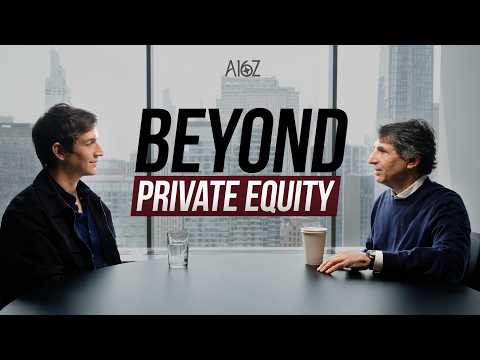
The $1 Trillion Firm That Refuses The Private Equity Label | a16z
Apollo’s slightly-over-$1 trillion platform is 80% investment-grade credit, making origination capacity—not available capital—the binding constraint on growth.Daily estimated valuations for private investment-grade products by June 30 and all credit by the end of September could widen access as $800 billion of 2026 capex from four public companies tests financing capacity.
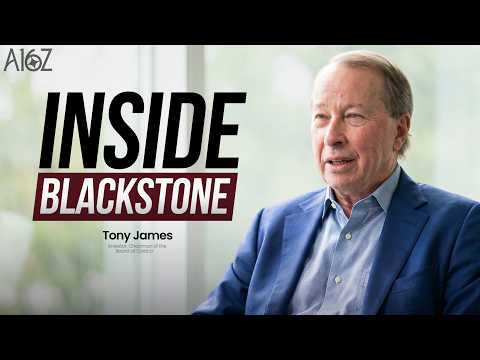
Building Blackstone, Backing Costco, and Working with Munger | Tony James on The a16z Show
Tony James’s compounding playbook paired early S-curve positioning with operating discipline, from DLJ using leveraged buyouts to “buy clients we couldn’t actually win competitively” to Blackstone increasing market value about 170-fold while fund IRRs improved.Costco shows the customer moat in practice—if sourcing saves a nickel, “100% of that nickel gets lower prices”—while James sees a private-credit correction ahead and favors seasoned assets through co-investments and continuation vehicles.

Michael Saylor's BTC-Backed STRC Is Coming For A $300T Market
Strategy’s Nasdaq-listed STRC targets a stable $100 price with an 11.5% annual yield paid monthly and tax-deferred, backed by 4-5x more Bitcoin than issued plus $2.25B in cash.Its differentiated buyer base could keep funding Bitcoin accumulation through bear markets: Strategy raised $1.6B in two weeks, but the model depends on Bitcoin appreciation, disciplined management, and eventual demand for a proposed digital-money layer.

Paxos CEO on Crypto Today & Why Stablecoins Are Exploding | Charles Cascarilla
Jason YanowitzCharles Cascarilla
Stablecoins are moving from crypto speculation toward regulated financial infrastructure, while Paxos’s white-label volume grew from about $1 billion to $6 billion and USDG reached around $1.8 billion across about 130 institutions.If GENIUS removes ambiguity, competition centers on liquidity, utility and regulation, while Paxos’s “very likely” IPO has no firm timing.

From Goldman to DeFi: Building Institutional Yields for Stablecoins and BTC
sUSN has outperformed Ethena, Resolv, Cap, USDai, and Sky through an allocator spanning DeFi, CeFi, and TradFi.With funding-rate arbitrage at a standstill, capital is shifting toward credit and CLOs; Accountable proof-of-solvency differentiates Noon, while First Brands fraud and tentative institutions remain key risks.

Alternative Investing: Alts For All - [Business Breakdowns, EP.234]
Retail alternatives could add roughly $4T of AUM for large managers as individual allocations move from 2–5% toward 15–20%, versus 20–30%+ for institutions.Clarkson argues First Brands and Tricolor were liquid-market failures, while direct lending’s diligence and contractual cash flows offer a safer route to sub-investment-grade yields; BREIT versus Third Avenue shows liquidity architecture matters.Trump’s ERISA order makes target-date funds the realistic 401(k) vehicle, favoring scaled brands and credit platforms, but higher fees and redemption design remain key variables.

The U.S. Can’t Build AI Without These Materials
Erik TorenbergTurner CaldwellErin Price-WrightRyan McEntush
Critical minerals are physical inputs to AI, grids, batteries, data-center infrastructure, vehicles, and defense systems.Turner Caldwell’s mass-flow call is emphatic: “We need a lot of aluminum.We need an insane amount of copper.We need more iron.We need more zinc,” while lithium production capacity must roughly 4× over the next 10 years if…