168X 战情室:对话 Herman Jin,AI 空头可以闭嘴了!
Herman Jin从六月“应该是第一批看空”转向相对看多;Anthropic抛出高额ARR后,去杠杆、强平、波动率和CDX均未显著扩散。开源模型可让CSP通过post-training或蒸馏变现并支撑CapEx,但存储高毛利依赖涨价,现金流转折、估值与AI终局仍需监测。
Herman Jin:缺货利好追赶者,最看好光模块、长鑫与长江存储
Herman Jin认为,AI正让半导体首次直接形成生产力,而台积电自2023年以来未敢扩产,使产能至少落后三年。大缺货将把机会推向Intel、AMD、AOI、长鑫和长江存储,光模块受益于需求翻倍与800G向1.6T升级,但年底或明年初的IPO、现金流和就业共振回调仍需监测。
Davos 2026: The US-China AI Race, GPU Diplomacy, and Robots Walking the Streets | #225
Peter DiamandisSalim IsmailDave BlundinAlexander Wissner-Gross
AI has become Davos’ dominant economic story, with roughly $50 trillion in annual human labor, only a few hundred billion dollars spent on infrastructure, and opportunity spanning chips, power, AI factories, and applications.The US retains better frontier models and chips, but China’s power buildout, deployment speed, and 83% versus 39% AI optimism could outweigh benchmarks, while energy timelines and agent rails remain deployment risks.
Coinbase CEO's Top 3 Crypto Trends for 2026 + More from Davos!
Brian ArmstrongAndrew FeldmanJake Loosararian
Coinbase says U.S. crypto has shifted from regulatory defense to institutional deployment, with five of the top 20 global banks using its infrastructure.Under the GENIUS Act, regulated stablecoins hold 100% reserves in short-term Treasuries, while Coinbase can pass customers “about 100% of the economics” through rewards.B2B cross-border settlement is already driving strong Coinbase Business demand, while trade groups Armstrong believes are trying to revisit the law remain a risk to monitor.
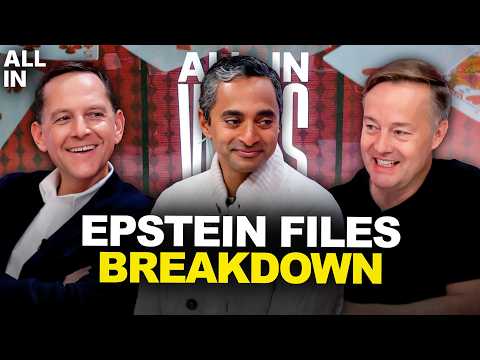
Epstein Files Fallout, Nvidia Risks, Burry's Bad Bet, Google's Breakthrough, Tether's Boom
Chamath PalihapitiyaJason CalacanisDavid SacksDavid FriedbergAlan Keating
Tether’s stablecoin model converts dollar demand into a high-margin Treasury-yield engine, with scale and distribution supporting extraordinary economics while falling rates, regulation and competition from Circle, Stripe, Visa and others threaten its margins.Google’s Gemini 3 gains share as custom silicon broadens the long-run challenge to Nvidia, while Huawei remains a conditional catalyst whose potential lithography progress could matter around 2027.
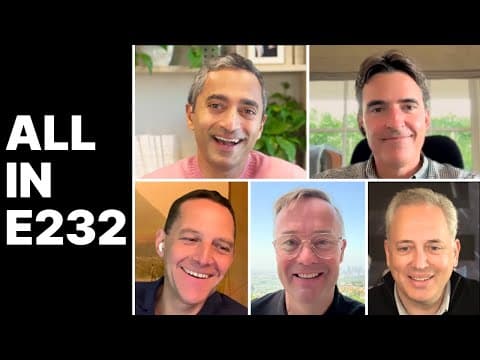
IPOs and SPACs are Back, Mag 7 Showdown, Zuck on Tilt, Apple's Fumble, GENIUS Act passes Senate
Chamath PalihapitiyaJason CalacanisDavid FriedbergThomas LaffontDavid Sacks
Meta is treating AI as a threat to perhaps half of its $1.7 trillion value, pairing reported $100 million talent offers with a $14 billion-plus Scale AI stake.That insurance addresses labeling and agent knowledge, but Chamath says Meta still lacks tightly coupled compute and silicon, making infrastructure integration the key risk as the Mag 7 separates into distinct AI wagers.

OpenAI's $6.5B iPhone & Google Ending Hollywood w/ Blundin & Ismail
Peter DiamandisDave BlundinSalim Ismail
OpenAI’s $6.5 billion Jony Ive deal is a distribution bet to control an AI-first consumer endpoint rather than merely improve its model.Google’s benchmark gains, hardware control through TPU v7, and AI Mode challenge Search while Anthropic continues to leapfrog it.Efficiency could expand chip and data-center demand through Jevons Paradox, while agentic back offices and Veo 3 create near-term enterprise and media catalysts.

The Trillion Dollar AI Reset: Advertising & Gaming is Next w/ Salim Ismail & Dave Blundin | EP #170
Salim IsmailPeter DiamandisDave Blundin
AI’s constraint is shifting from ideas to compute, with a cited millionfold increase needed within four to five years and 5 million–10 million GPUs projected.Trusted agents could replace search-and-select purchasing, while reported revenue per AI-dialogue session is one-tenth to one-hundredth of Google search against its cited $300 billion advertising business.AI-written software makes product judgment scarcer, while power, fabs, and permitting remain constraints worth monitoring.
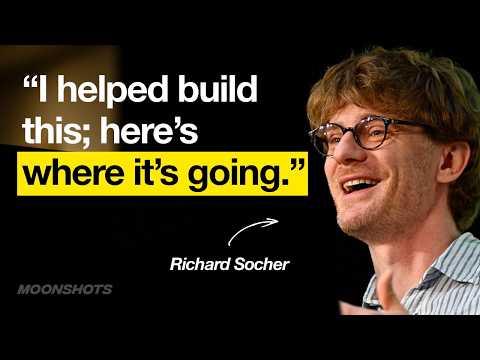
The Man Who Invented Prompt Engineering on AI, AGI & Humanoids w/ Richard Socher & Salim Ismail
Richard SocherSalim IsmailPeter Diamandis
AI is shifting toward telecom-like infrastructure, pushing durable value toward customer access, proprietary data loops, and model-agnostic trust layers.Socher sees digital superintelligence potentially arriving within “a year and a half to two years,” while AI-for-science and agent adoption expand opportunity alongside valuation, energy, privacy, and autonomy risks.
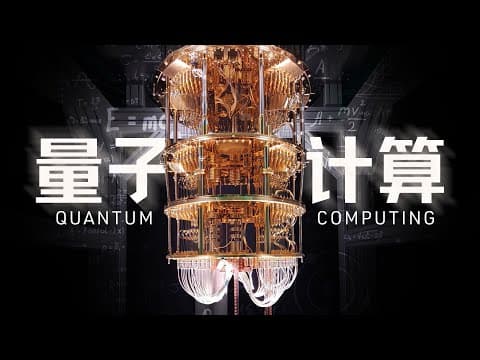
E180|量子计算的Transformer时刻与科技巨头的路径之争
Google Willow证明量子纠错可以随规模改善,被视为量子计算的“Transformer moment”,但不到五分钟的基准测试尚非实用任务。未来10—15年更可能是QPU与GPU共同扩张,量子安全迁移已推动银行和通信资本开支;芯片路线、容错时间表与数据中心商业化仍需用实际演示验证。