SHOW DIRECTORY
Sourcery
Molly O'Shea interviews leading investors, CEOs, and founders about technology companies, markets, and company building.
SOURCE DESCRIPTION · RSS
Dylan Patel, SemiAnalysis
Permits have pushed gigawatts of capacity from 2027 into 2028, while Patel sees no space-based relief for three or four years.Persistent agents now take 45% of his company’s $15 million annual AI spend, mostly via Perplexity Computer using Claude and OpenAI.Better harnesses can redirect usage, but Harvey’s fluctuating margins and uncertain Perplexity take leave durable economics unresolved.
Dylan Patel's SemiAnalysis Empire: $500M Fund, Citrini & NVIDIA?
SemiAnalysis shifted multiple gigawatts of data-center capacity from 2027 into 2028 as permits remain unavailable, while Patel expects space to add little capacity before “maybe 2030.”Patel says new very high-end chips will not be approved for China, and scrutiny could extend to GPU rentals; rental access may preserve demand while shifting business toward approved providers or AMD.Persistent agents rose to 45% of SemiAnalysis’s $50 million annual AI spend, mostly through Perplexity Computer using Claude and OpenAI, but margins and customer retention remain unresolved.
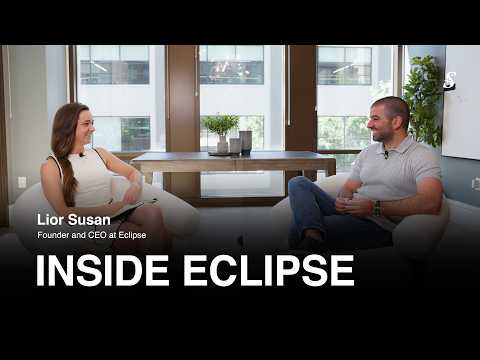
Eclipse's Lior Susan on $12.5B AUM and the Bet on Physical Industries
Eclipse is targeting the physical economy—about 85% of global GDP, or $100 trillion—where deglobalization, supply-chain vulnerability, government support, and customer demand are reopening neglected opportunities.With about $12.5 billion in AUM, roughly 90 portfolio companies, and 30 it helped build, its operators-with-capital model links CapEx, manufacturing, policy, and systems execution, while its free-cash-flow focus and non-formulaic incubation leave execution, timing, and repeatability as key variables.

Benchmark's AI Bets: Cerebras, Sierra, Legora, Fireworks, Starcloud, Gumloop..
AI is breaking the spreadsheet playbook: billion-dollar businesses can still lack unit economics or durable differentiation, and scale may increase impairment risk.Inference monetization can drive revenue from 1 to 30 to 300, while agents shift purchases toward intelligence or economic output.Frontier labs retain pricing power if recursive self-improvement works, but face a 95%-as-good open-source squeeze if capabilities plateau.