SHOW DIRECTORY
No Priors
Elad Gil and Sarah Guo speak with leading AI engineers, researchers, and founders about model progress, markets at risk of disruption, and how commerce, culture, and society may change.
SOURCE DESCRIPTION · RSS

Building an Autonomous Delivery Experience with DoorDash Co-Founders Andy Fang and Stanley Tang
Sarah GuoAndy FangStanley Tang
Ask DoorDash is shifting demand, with 50% of restaurant-order trajectories reaching new-to-customer venues and grocery baskets roughly 40% larger.DoorDash’s 10 billion delivery history supplies pickup and handoff ground truth for routing DOT, drones and Dashers, but scaling now depends on hardware, operations and supply chains rather than autonomy alone.
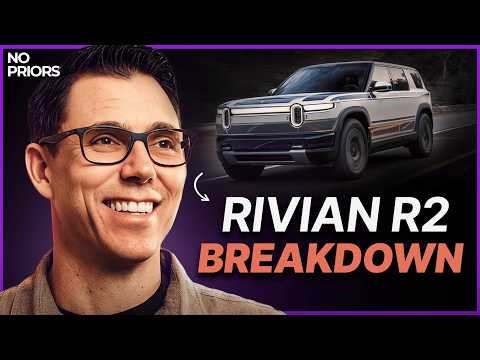
AI, R2 and the Future of Everyday Driving | Rivian CEO RJ Scaringe
Rivian’s 2021–22 clean-sheet reset replaced its rules-based autonomy stack with neural networks, making fleet data central to progress through 2029–30.Scaringe puts viable competitors outside China at more than one, less than five, while Rivian’s in-house inference chip targets economical autonomy in every car.R2 starts at $45,000 for the $45,000–$55,000 market, with adoption and rare safety cases still the key tests.
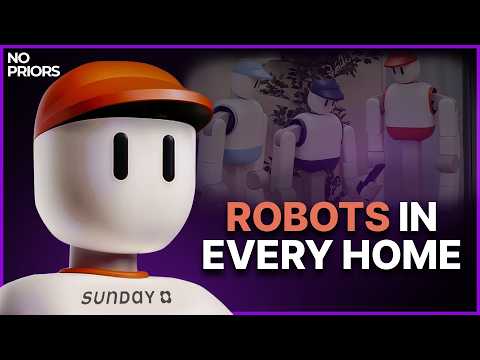
No Priors Ep. 141 | With Sunday Robotics Co-Founders Tony Zhao and Cheng Chi
Sunday’s differentiated asset is an in-the-wild robotics data engine with almost 10 million long-horizon trajectories from more than 500 people, paired with full-stack hardware and learning iteration.A simplified three-finger robot targets a 2026 in-home beta and possible 2027 or 2028 mass shipping, while reliability, safety, price, manipulation generalization, and the gap between demos and autonomy remain key risks.

Applied Intuition: The Operating System for Self-Driving Vehicles
Qasar YounisPeter LudwigElad Gil
Applied Intuition has reached a $15 billion valuation, more than 1,000 employees, hundreds of millions in revenue, and sustained profitability by extending engineering tools into a vehicle operating system and autonomy applications.Its compatibility layer could remove thousands of dollars in hardware as autonomy approaches mainstream US vehicles within five years, but potential commoditization by 2030-2035 creates a critical risk to recouping $12 billion-$15 billion development costs.
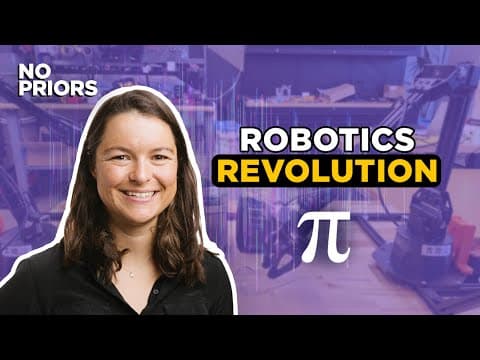
No Priors Ep. 107 | With Physical Intelligence Co-Founder Chelsea Finn
Physical Intelligence is building a cross-embodiment robotics model whose shared data can transfer across hardware, with RT-X often outperforming models tuned to individual robots.The bottleneck is diverse real-world interaction rather than generic video, while hierarchical control and simpler hardware may enable narrower commercial deployments before universal autonomy; Finn still concedes, “we might still be too early.”
Building Hard Tech in Hard Markets: Kyle Vogt on Cruise, Twitch, and The Bot Company
Cruise found a path into autonomy by starting with a narrow retrofit, then pivoting to robotaxis when Uber and Lyft exposed driver labor as the core economic gap, leading to GM’s $1 billion acquisition.Vogt argues Tesla’s profits, remote assistance, and commodity-camera advances can make deployment viable before human-free autonomy, while automotive-grade compute, connectivity, regulation, China’s cost advantage, and robotics’ coming funding wipeout remain risks to monitor.