SHOW DIRECTORY
Invest Like the Best
Deep conversations with investors, founders, and operators about business quality, capital allocation, strategy, and enduring competitive advantage.
BIDCLUB DESCRIPTION

Ramtin Naimi on the State of Venture Investing - [Invest Like the Best, EP.499]
Ramtin NaimiPatrick O'Shaughnessy
Naimi rates venture’s opportunity set 10/10 and froth 6.5–7/10, citing faster adoption despite familiar financing excesses.AI’s 10–20× growth can mask concentrated, usage-based or low-margin revenue; vertical-AI valuations still hinge on labor replacement he has not seen.Meanwhile, mega-funds are deploying three times faster than expected, delaying funding as compute builders may need debt exceeding 5–10× equity.
What Happens When the AI Boom Slows Down
Patrick O'ShaughnessyMartin Casado
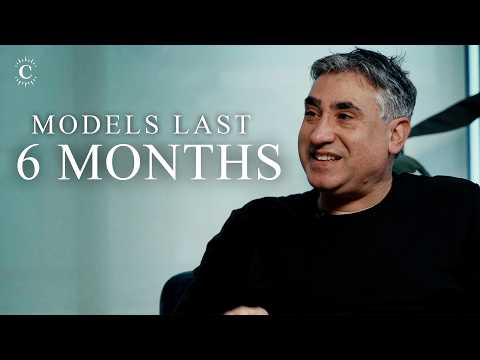
Frontier models captured 80%+ of dollar-weighted demand over three years, yet Casado estimates an individual model’s commercial lifespan at just three to six months.Startups may still pay 10 times more for the smartest model, sustaining pricing power even as coding workflows saturate.If demand saturates, value could shift to open source, a transition Casado says “nobody knows” how it would unfold.

Cliff Sosin - Owning the Complements to Intelligence - [Invest Like the Best, EP.497]
Patrick O'ShaughnessyCliff Sosin
Cheap intelligence shifts value to complements: data, attention, scale, proximity, and attachment.Meta illustrates the upside: Sosin pairs $250 billion in revenue with equal annual spending treated as intelligence, whose price could fall “by a factor of 100 or something over the next five years.”His “diamond-shaped demand frontier” leaves lab profits uncertain as good-enough intelligence commoditizes.

David Vélez - Building Nubank and the Future of Global Banking - [Invest Like the Best, EP.495]
Patrick O'ShaughnessyDavid Vélez
Vélez sees fintech disruption in its first inning: roughly 90% of the $10 trillion consumer-finance market still runs through branches.Nubank serves 140 million customers with 10,000 employees, at about 3% of traditional incumbents' cost to serve.Its US launch and stablecoin-backed accounts in upwards of 35 countries test whether that efficiency can travel, with organic brand-building the key hurdle.

Sarah Guo - What the 250 People Building AI Believe - [Invest Like the Best, EP.489]
Patrick O'ShaughnessySarah Guo
Sarah Guo says competitive open-source AI is already widespread, so US restrictions could handicap law-abiding American businesses while adversaries ignore them.Her roughly 250-person network sees recursive self-improvement and “some sort of exponential intelligence” as a one-to-two-year possibility, while Sunday Robotics targets home-robot beta by year-end.Compute independence, regulation, and physical supply chains remain constraints, while Chai Discovery’s $10 million contract and customer adoption test AI’s ability to capture value in biology.

Ben Thompson on Big Tech, China, and the AI Boom Running Out of Money - [Invest Like the Best, EP.487]
Patrick O'ShaughnessyBen Thompson
AI’s near-term bottleneck may be capital rather than compute or power, as funding shifts from free cash flow and debt toward Google equity and NVIDIA’s $500 billion vehicle.Thompson’s Berkshire analogy makes Search a possible funding engine for AI’s “basically all white-collar work” TAM, while payback periods, hyperscaler chips, and an air-gap risk remain watchpoints as 2028-29 capacity arrives.
Everyone Is Still Undersizing the AI Market | Eric Vishria
Patrick O'ShaughnessyEric Vishria
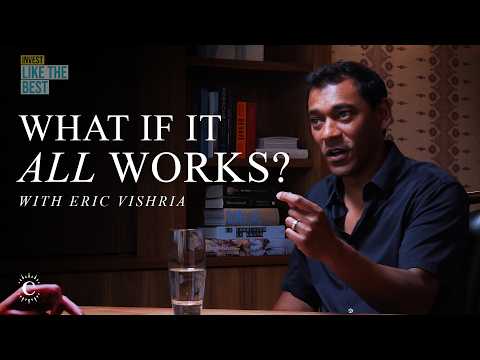
AI is likely to produce an oligopoly plus $100B specialists, not a single winner-take-all lab, while Fireworks shows inference’s hidden moat: roughly 5X speed and multiple-X throughput on the same models and NVIDIA hardware.SaaS incumbents now face “Get to AI or be worth three times revenue,” as migration becomes easier and cost, iteration speed, and transportability matter more, with energy—especially China’s roughly tenfold buildout next year—the key constraint.
The AI Selloff Doesn't Match the Data | Top AI Investor Explains
Patrick O'ShaughnessyGavin Baker
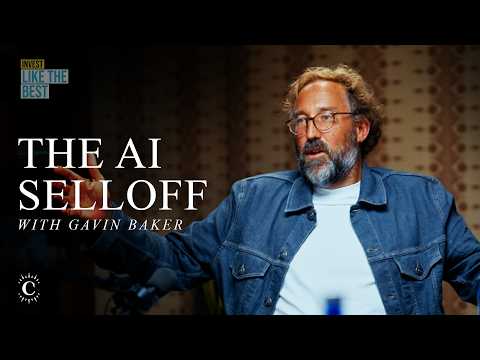
Gavin Baker argues that the AI selloff lacks a clear demand break: GPU rental prices, DRAM, tokens, and inference usage are accelerating, while open source shifts margins toward infrastructure rather than eliminating compute demand.Credit and regulation are the real catalysts to monitor, but expiring contracts could reprice installed GPUs sharply higher; Baker also sees SpaceX as an underappreciated compute platform, contingent on power, financing, and political acceptance.

Everything in Capital Markets is Downstream of Algorithms
Patrick O'ShaughnessyJeremy Giffon
Giffon argues that capital follows the “billion-dollar PDF”: in long-dated private markets, narrative is the great filter, while X’s unifeed increasingly selects the stories that move marginal security prices.AI shifts software economics from near-zero-cost strings to recurring compute, implying lower margins and greater scale; Giffon has largely sat out the jump ball, while LPs should underwrite manager incentives and the increasingly extractive SPV structure.
Investing a $120 Billion Balance Sheet with No Outside Investors
Patrick O'ShaughnessyVlad Barbalat
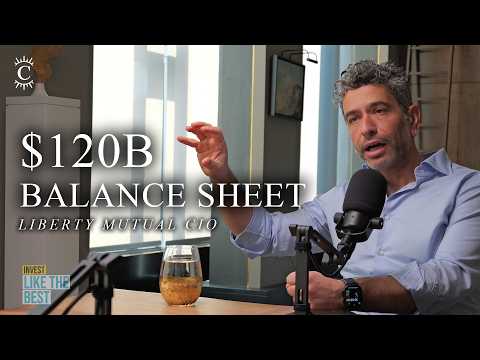
Liberty Mutual’s $120B balance sheet combines roughly $70–75B of reserves with growth credit and equity, while permanent mutual capital avoids shareholder pressure and supports 7–10% portfolio targets.Barbalat now questions whether AI makes future cash flows—and therefore multiples—structurally less visible, with four-year software credit appearing safer than 30-year Salesforce or Oracle debt and potentially steeper credit curves ahead.