SHOW DIRECTORY
David Senra
Conversations with the greatest living founders.
SOURCE DESCRIPTION · YouTube
A Deep Dive Into Palmer Luckey’s Bank | Jacob Hirshman, Erebor
Erebor applied for a charter in June 2025 and opened in February 2026, testing whether a new regulatory window can shorten the prior two-to-three-year process.Its 50% loan-to-deposit cap, versus 70% at the average bank, supports safety; specialized underwriting and faster commitments counter JPMorgan’s potential 25–50-basis-point price edge.Scaling while preserving that safety discipline remains the proof point.
Why Founders Like Jensen Huang Are Irreplaceable | Tobi Lütke, Shopify
Lütke argues that a founder’s departure creates a different company, and that succession planning cannot preserve the same creative engine.NVIDIA’s decade of investment in misunderstood CUDA illustrates Huang’s pursuit of excellence before the applications were obvious; Lütke credits Tim Cook’s stewardship at Apple but sees low odds of preserving a founder’s vision.Shopify’s pull requests now merge 10–100 times faster, making projects once requiring a yearlong specialist team worth considering for “$2,000 of tokens,” while code verification emerges as the next constraint.
Why Now Is The Golden Age of Building | Brian Armstrong, Coinbase
Coinbase has seen material AI productivity gains, but Armstrong says they have not yet lifted revenue; he guesses the effect may lag by perhaps six months.His growth thesis links AI agents to financial accounts, with stablecoins as their envisioned real-time payment rail, while licenses, funded accounts, liquidity, and network effects may be harder to replicate than software.
What It Means to Be a “Real” Entrepreneur | Michael Rubin, Fanatics
Fanatics expects $14 billion in revenue and at least 40% organic growth this year, with 140 million customers after the 2020 platform shift.Collectibles revenue rose from $500 million in its first year to $5.5 billion, with scarce products and rights deals supporting growth.Betting remains a distant third; prediction-market competition and possible state regulation or taxation could reshape category economics.
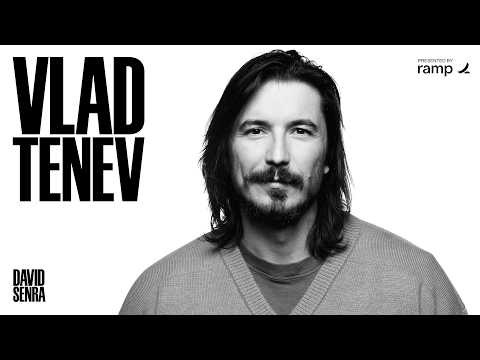
Building Robinhood, Surviving GameStop & A $500 Million Phone Call | Vlad Tenev
Robinhood’s GameStop crisis showed how trading growth could outrun a broker’s available capital, forcing a “position closure only” restriction that let customers sell but not buy.Mickey Malka’s immediate funding commitment in January 2021 helped reassure later investors, with demand on the initial terms eventually reaching probably $10 billion.Tenev focused on reliability after the 2020 outage while crypto revenue surged, a blind spot linked to a capital crunch that could also have shaken bank confidence.
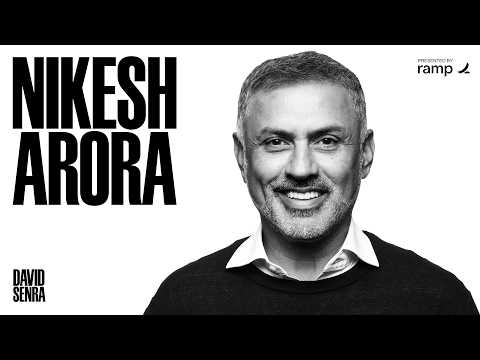
How to Win Deals & Grow a $250B Business | Nikesh Arora, Palo Alto Networks
Palo Alto Networks expanded from firewalls to 70-plus products, spreading customer-acquisition costs across a broader portfolio.Arora targets a 40% operating margin as sales, marketing, and support decline from roughly 60% of costs toward 20%.Acquisitions can buy years of development time, but targets cost three or four times more than two years ago, making strategic fit and roadmap alignment central.
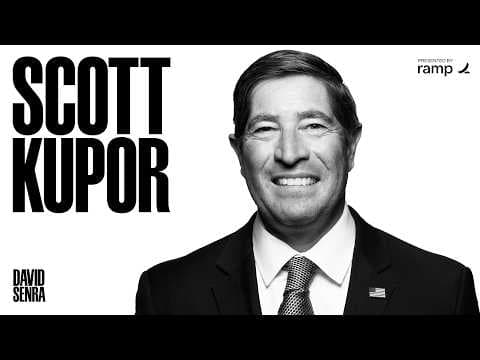
a16z's First Employee on the History of a16z, Venture Capital & Fixing the Government | Scott Kupor
a16z turned investors’ personal networks into firmwide services, growing from three employees to nearly 100 in its first year.Skype’s sale to Microsoft 18 months after its buyout at four times the purchase price returned half the fund to LPs, accelerating fundraising and hiring.At OPM, digitizing retirement files and consolidating 120 HR systems now test whether modernization can overcome risk-averse incentives.
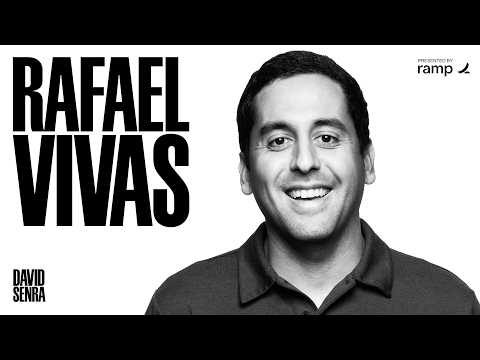
High School Dropout to Multi-Billionaire: The Relentless Drive of Rafael Vivas
AppLovin challenged better-funded rivals with stronger targeting, sometimes monetizing inventory at “double the clip” and guaranteeing publishers more in writing.At roughly $150 billion in market value and 400 employees, AppLovin is on pace for $20 billion in ad spending versus roughly half a trillion across two biggest platforms, but better returns don’t automatically shift budgets.
From a $27,500 Charter Company to a $4 Billion Private Jet Giant | Kenn Ricci, Flexjet
Fractional ownership raises utilization, but Flexjet still holds roughly 70 of its 365 aircraft as unsold core fleet.Buffett’s June 1998 $750 million NetJets acquisition helped unlock nearly $300 million in debt; Flight Options’ sales reached $400 million the next year, teaching Ricci that free cash flow and balance-sheet strength, not EBITDA, govern growth.
Competition, Intensity & Building a $115 Billion Global Bank | Nik Storonsky, Revolut
Revolut aims to lead in 100 countries with one configurable platform and ledger, adding 10–15 markets every one to two years.Storonsky says the shared system lowers operating costs, while applying for a UK banking license with seven or eight million customers led to an almost five-year process, making licensing central to mass adoption.