SHOW DIRECTORY
All-In
Industry veterans Chamath Palihapitiya, Jason Calacanis, David Sacks, and David Friedberg cover economics, technology, politics, society, and poker.
SOURCE DESCRIPTION · RSS

Jake Paul & The Chainsmokers: Turning Fame into Funds, Jake Enters Politics? & Venture Bubble Signs
Chamath PalihapitiyaJason CalacanisDavid SacksDavid FriedbergJake PaulDrew TaggartAlex Pall
Jake Paul is turning owned attention into distribution and talent infrastructure, citing 138 million Netflix viewers for the Mike Tyson event and 400 MVP fighters.His $100 million Anti Fund and The Chainsmokers’ fund target venture economics, but later tranches priced at two or three times earlier valuations without operating improvement leave realized DPI—not TVPI—as the test of Chamath’s bubble warning.

Luca Ferrari, Bending Spoons CEO: The $40K Start, Buying Product-Market Fit & Beating Private Equity
Bending Spoons converts acquired product-market fit into a repeatable model, using 50+ proprietary tools and an approximately 800-person shared talent base to replace technology foundations.Historically consistent unlevered returns above 25% and debt costing about 9%, fully hedged and maturing in 2031, support the model, while limited customer synergies, competition and replication risk remain watchpoints.

Google’s AI Brain Drain, SpaceX's Huge Quarter, Airtable’s 90% Collapse, US Data Fuels China AI
Jason CalacanisDavid SacksDavid FriedbergBrad Gerstner
Google’s infrastructure-first capital shift is coinciding with senior AI departures, while Sacks sees Anthropic and OpenAI forming a premium frontier duopoly as cheaper models pressure weights toward commodity pricing.SpaceX reported $7.8B revenue, up 92% YoY, and Starlink’s cash generation could fund expansion, but the proposed $300B-scale AI buildout leaves financing, spot pricing, and demand sensitivity as key risks.

Why Secondary Markets Are Eating the IPO | All-In Liquidity Secondary Markets Panel
Brad GerstnerGavin BakerKelly RodriquesChamath PalihapitiyaJason CalacanisDavid SacksDavid Friedberg
Private-company secondaries have become a third exit market, with 2025 volume roughly twice the 2021 peak and activity equal to 31% of primary venture activity.Forge’s Schwab partnership could distribute private equity to millions of investors through regulated products, while longer private lifecycles, double-fee SPVs and valuation compression make governance, pricing and liquidity worth monitoring.
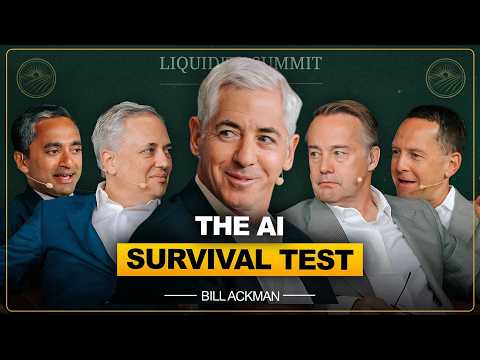
Bill Ackman: Here's What the Market is MISSING
Ackman now prioritizes long-term, durable, protected, non-disruptable growth as AI makes disruption the first underwriting question.He sees Microsoft, Meta, and Amazon as undervalued amid enthusiasm for chips and energy, while SaaS requires company-by-company analysis of pricing power and platform value.Howard Hughes is his 50-year compounding project, combining below-liquidation-value real estate with insurance float and a potential path toward “a trillion-dollar thing over time.”
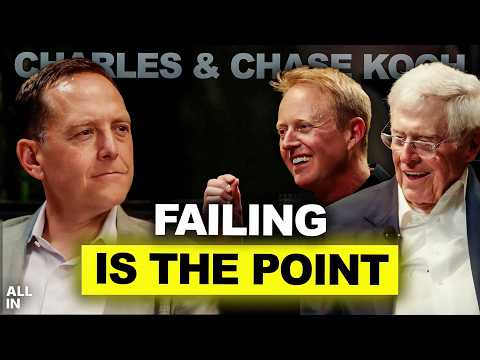
How We Grew Koch Inc. to $150 Billion Without Going Public: Charles & Chase Koch
David FriedbergCharles KochChase Koch
Koch created a 9,000-fold increase in value by compounding capabilities across adjacent markets rather than industries, expanding from roughly 300 employees in 1961 to more than 130,000 across 60 countries.Private ownership enabled $20 billion acquisitions and long technology horizons, while culture transfer, comparative-advantage hiring, and disciplined experimentation determine whether failures create learning or destroy earnings.

OpenAI's Identity Crisis, Datacenter Wars, Market Up on Iran News, Mamdani's First Tax, Swalwell Out
Travis KalanickChamath PalihapitiyaJason CalacanisDavid SacksDavid Friedberg
OpenAI's enterprise growth is described at 3–4X annually versus Anthropic's roughly 10X, while metered coding tokens scale faster than consumer plans limited by perhaps 3–4% premium conversion.Frontier compute is becoming an infrastructure war—Colossus targets 555,000 GPUs—while power and permits threaten roughly 100 contested data centers worth $162 billion; near-record valuation measures and unproven enterprise profits remain key risks.

The State of Modern War: Palantir & Anduril Execs on Drones, AI, and the End of Traditional Warfare
David FriedbergShyam SankarTrae Stephens
US military power is increasingly constrained by factory capacity, with Ukraine consuming “10 years of production in 10 weeks,” a 10,000-to-one drone gap, and a 223x shipbuilding disadvantage versus China.Anduril’s five-million-square-foot Arsenal-1 is designed as a modular manufacturing platform for attritable systems, addressing the economics of replacing $2 million interceptors with $20,000 drones.The high-low mix may shift massively over five to 10 years, but Stephens estimates roughly 18 months even with unlimited cash to establish a sustainable industrial base.

Anthropic's Generational Run, OpenAI Panics, AI Moats, Meta Loses Major Lawsuits
Chamath PalihapitiyaJason CalacanisDavid SacksDavid Friedberg
Anthropic's coding-first strategy has become an enterprise distribution engine, with Jason citing $6 billion of annual run rate added in February alone and Chamath calling its technical output “head and shoulders above anything else.”OpenAI remains the “overwhelming revenue generator” after normalization, but falling ChatGPT share, Google’s trust and cash-flow advantages, and Meta’s $375 million verdict leave monetization, market structure, and liability as key risks.

Binance CEO: 4 Months in Prison, $4 Billion Fine, and What Comes Next
CZChamath PalihapitiyaJason CalacanisDavid SacksDavid Friedberg
Binance emerged after China’s March 2017 shutdown erased roughly 30 software clients, with an ICO selling 60% of BNB for about $15 million to fund the crypto-to-crypto exchange.Faster execution and a 50% fee discount drove adoption, but weak KYC/AML and unregistered US service led to CZ’s four-month sentence, while AI-agent payments remain a possibility and privacy unresolved.