SHOW DIRECTORY
Acquired
Deep company histories that reconstruct strategy, ownership, competition, unit economics, and the decisions behind enduring businesses.
BIDCLUB DESCRIPTION
Rolex (Audio)
Rolex combines roughly 1.1–1.24 million watches with about $11 billion in annual revenue, industrial margins and engineered scarcity that supports long waits and resale premiums.Hans Wilsdorf’s advantage was assembling technical breakthroughs into a coherent product architecture, then attaching it to identities through Everest, diving, aviation, racing and enduring testimonees.Foundation ownership protects pricing and long-term brand stewardship, but opaque allocations and an undisclosed balance sheet remain important unresolved questions.
Google Part III: The AI Company. Google is amazingly well-positioned... will they win in AI? (Audio)
Google combines Gemini, an estimated 2–3 million TPUs, a $50 billion-plus cloud business, global consumer distribution, and a search monopoly funding roughly $370 billion of annual revenue and $140 billion of earnings—the only end-to-end AI stack the hosts can identify.That advantage could make Google the lowest-cost producer of tokens, but the central risk remains whether AI can monetize without cannibalizing search’s economics and roughly 90% share, with Waymo offering a precedent for patience while timelines remain uncertain.
Google Part II: Alphabet (Audio)
Google’s search windfall funded Gmail, Maps, Docs, YouTube, Chrome, and Android, transforming apparent distraction into a defense against Microsoft, Apple, and rival platforms.YouTube’s $1.65 billion acquisition became an A+ asset generating over $50 billion in 2024 revenue, while Chrome and Android protected distribution; Alphabet still depends heavily on search and must convert its assembled AI talent into durable growth.
Google Part I: Origins of Search. How the Best Business in Human History Happened (Audio)
Google compounded a roughly 90% search share, an estimated 87% gross margin, and a giant market into what the hosts call “the single greatest business of all time.”PageRank, commodity-hardware infrastructure, and Ad Rank aligned relevance, distribution, advertiser liquidity, and revenue, turning technical constraints and increasing returns into a durable moat.AI is the first serious challenge to an apparently unassailable franchise, while Alphabet’s roughly 20-times earnings multiple suggests markets see its future as materially less secure.
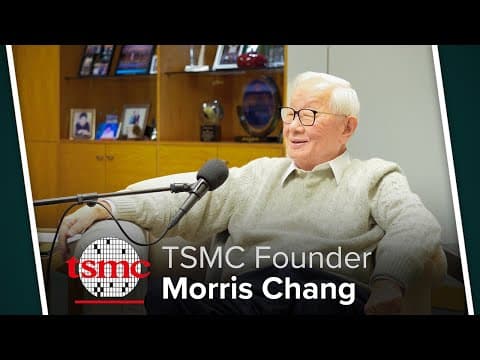
TSMC founder Morris Chang
Ben GilbertDavid RosenthalMorris Chang
TSMC’s structural moat is neutrality: it manufactures customers’ chips without competing in product design, while Taiwan’s dense ecosystem compounds scale, trust, and learning-curve advantages.Chang’s 28nm bet lifted annual capex to nearly $6 billion, and Apple’s 20nm detour briefly gave Samsung a 16nm lead, highlighting the capital-allocation trade-offs behind leading-edge dominance.