PERSON DIRECTORY
Patrick O'Shaughnessy
Host of Invest Like the Best. Patrick O'Shaughnessy appears in 92 indexed conversations across Invest Like the Best, David Senra, Sohn Conference Foundation. This directory brings every appearance, source, TL;DR, digest, and transcript into one searchable feed.

Michael Moritz - Lessons From 40 Years of Investing and Writing - [Invest Like the Best, EP.491]
Patrick O'ShaughnessyMichael Moritz
The structural edge that enabled Moritz’s venture career—pre-internet imperfect information, close founder relationships, and few competitors—dissipated “maybe 15, 16 years ago,” leaving today’s ecosystem healthy “if you’re a founder.”His Sequoia discipline tied compensation to performance, while he sees AI creating more jobs than it loses and tool-armed founders expanding what small companies can accomplish, with disruption across particular sectors still certain.

Sarah Guo - What the 250 People Building AI Believe - [Invest Like the Best, EP.489]
Patrick O'ShaughnessySarah Guo
Sarah Guo says competitive open-source AI is already widespread, so US restrictions could handicap law-abiding American businesses while adversaries ignore them.Her roughly 250-person network sees recursive self-improvement and “some sort of exponential intelligence” as a one-to-two-year possibility, while Sunday Robotics targets home-robot beta by year-end.Compute independence, regulation, and physical supply chains remain constraints, while Chai Discovery’s $10 million contract and customer adoption test AI’s ability to capture value in biology.

Ben Thompson on Big Tech, China, and the AI Boom Running Out of Money - [Invest Like the Best, EP.487]
Patrick O'ShaughnessyBen Thompson
AI’s near-term bottleneck may be capital rather than compute or power, as funding shifts from free cash flow and debt toward Google equity and NVIDIA’s $500 billion vehicle.Thompson’s Berkshire analogy makes Search a possible funding engine for AI’s “basically all white-collar work” TAM, while payback periods, hyperscaler chips, and an air-gap risk remain watchpoints as 2028-29 capacity arrives.
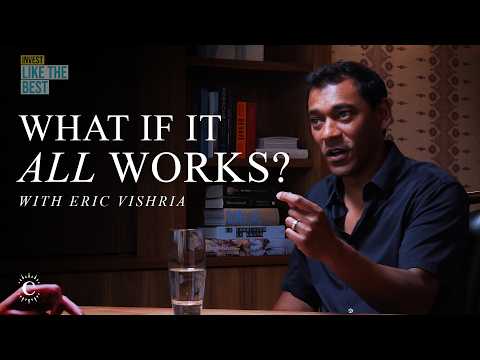
Everyone Is Still Undersizing the AI Market | Eric Vishria
Patrick O'ShaughnessyEric Vishria
AI is likely to produce an oligopoly plus $100B specialists, not a single winner-take-all lab, while Fireworks shows inference’s hidden moat: roughly 5X speed and multiple-X throughput on the same models and NVIDIA hardware.SaaS incumbents now face “Get to AI or be worth three times revenue,” as migration becomes easier and cost, iteration speed, and transportability matter more, with energy—especially China’s roughly tenfold buildout next year—the key constraint.
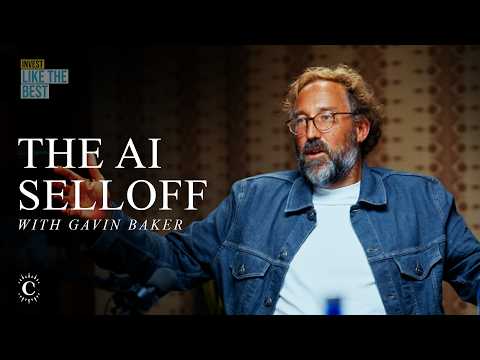
The AI Selloff Doesn't Match the Data | Top AI Investor Explains
Patrick O'ShaughnessyGavin Baker
Gavin Baker argues that the AI selloff lacks a clear demand break: GPU rental prices, DRAM, tokens, and inference usage are accelerating, while open source shifts margins toward infrastructure rather than eliminating compute demand.Credit and regulation are the real catalysts to monitor, but expiring contracts could reprice installed GPUs sharply higher; Baker also sees SpaceX as an underappreciated compute platform, contingent on power, financing, and political acceptance.
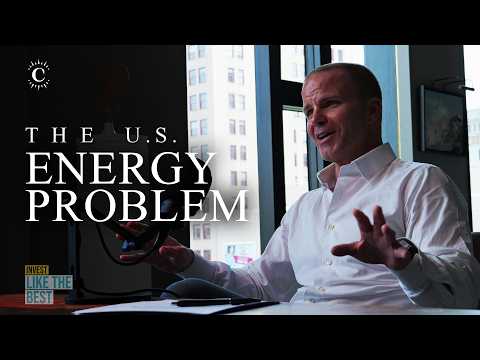
Why Natural Gas Will Be AI’s Next Great Shortage
Patrick O'ShaughnessyMatthew Smith
Matthew Smith’s model points to US natural-gas storage falling below all historical levels by 2029 as contracted LNG and AI compute outstrip deliverability, with electricity prices bearing the impact in 2028-2030.The market remains priced near $3.50-3.60, while Expand Energy and Range offer leverage to a potential physical-gas scramble; processing, pipelines, nuclear timelines, and consumer costs remain key risks.
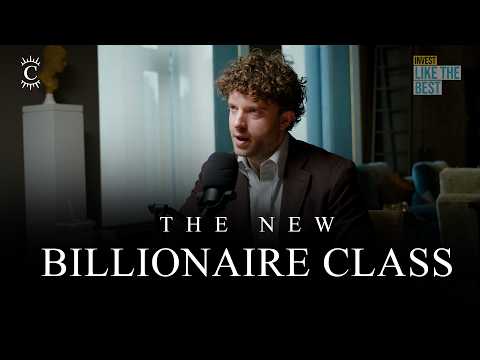
Everything in Capital Markets is Downstream of Algorithms
Patrick O'ShaughnessyJeremy Giffon
Giffon argues that capital follows the “billion-dollar PDF”: in long-dated private markets, narrative is the great filter, while X’s unifeed increasingly selects the stories that move marginal security prices.AI shifts software economics from near-zero-cost strings to recurring compute, implying lower margins and greater scale; Giffon has largely sat out the jump ball, while LPs should underwrite manager incentives and the increasingly extractive SPV structure.
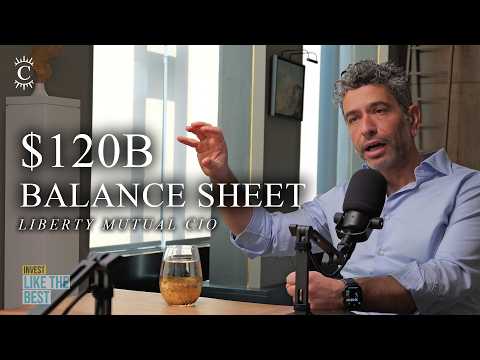
Investing a $120 Billion Balance Sheet with No Outside Investors
Patrick O'ShaughnessyVlad Barbalat
Liberty Mutual’s $120B balance sheet combines roughly $70–75B of reserves with growth credit and equity, while permanent mutual capital avoids shareholder pressure and supports 7–10% portfolio targets.Barbalat now questions whether AI makes future cash flows—and therefore multiples—structurally less visible, with four-year software credit appearing safer than 30-year Salesforce or Oracle debt and potentially steeper credit curves ahead.
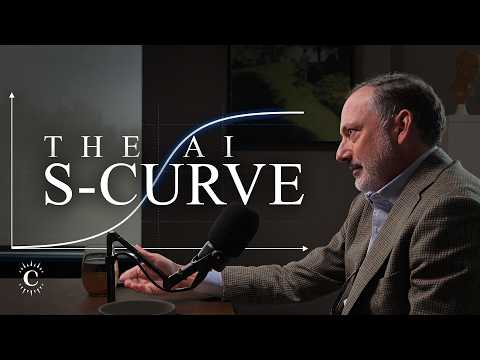
Why the AI Boom Is Just Getting Started
Patrick O'ShaughnessyAlex Sacerdote
Anthropic’s agentic coding release helped reverse Whale Rock’s view, supporting its August 2025 investment at the $180 valuation after it passed on the $60B round.Enterprise AI is less than 1% penetrated, yet Anthropic has only half the compute it needs, while a three-horse model oligopoly and infrastructure bottlenecks support monitoring adoption, supply, and the risk that open source catches up.
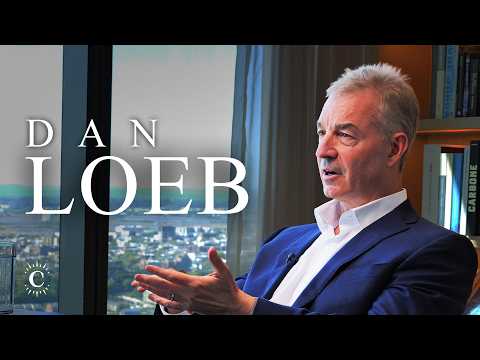
Legendary Investor Dan Loeb on AI, Credit, & Third Point’s $25B Strategy
Dan Loeb has reduced macro to oil and AI, making technology fluency essential as Jensen's stack reshapes power, chips, models, and applications.Third Point sees leading AI companies as the most attractive sector, while its fulcrum-security framework targets mispriced credit such as Twitter debt and xAI obligations.AI is also destabilizing traditional quality investing and forcing structural sellers, leaving governance, due diligence, and the durability of pricing power as key risks to monitor.