PERSON DIRECTORY
Nathan Labenz
Host of The Cognitive Revolution. Nathan Labenz appears in 163 indexed conversations across The Cognitive Revolution, The a16z Show. This directory brings every appearance, source, TL;DR, digest, and transcript into one searchable feed.
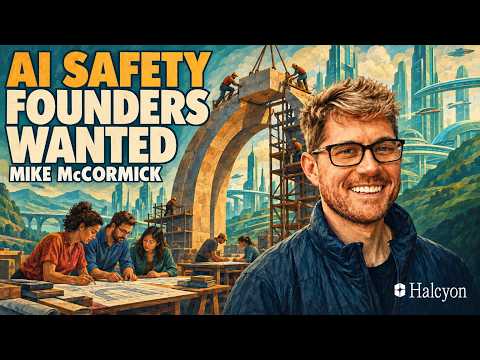
Zero to One in AI Safety: Halcyon's Mike McCormick on Launching 30 New Orgs & the Founder Bottleneck
Halcyon’s signal is that founders—not ideas or money—are AI safety’s binding constraint; its nonprofit-plus-VC model has launched roughly 30 organizations raising roughly half a billion dollars.Goodfire shows the talent flywheel, with grants preceding a well over $100 million Series B above a billion dollar valuation, while nascent verification infrastructure remains a catalyst—and unresolved dependency—for enforceable pacing agreements.
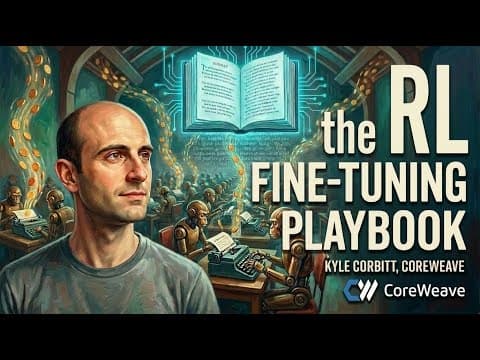
The RL Fine-Tuning Playbook: CoreWeave's Kyle Corbitt on GRPO, Rubrics, Environments, Reward Hacking
Erik TorenbergNathan LabenzKyle Corbitt
RL can push capable open-weight models higher by reinforcing rare outcome-changing decisions while preserving pretrained “grooves,” unlike SFT’s broader risk of catastrophic forgetting.For enterprise agents, the clearest wedge is latency: RL can bring small models to roughly 30% of frontier latency and improve cost per token by at least an order of magnitude, though slower iteration and reward hacking remain risks.

AMA Part 1: Is Claude Code AGI? Are we in a bubble? Plus Live Player Analysis
Frontier AI is already clinically transformative and can outperform professionals on a significant majority of software tasks, yet Claude Opus 4.5 remains spiky, requiring full-context review after accidentally creating two databases.Google DeepMind combines the strongest financial cushion, distribution, TPUs, and research breadth, while OpenAI’s interlocking obligations and infrastructure ambitions create default risk; Anthropic’s model leadership, Chinese-model gaps, xAI’s safety failures, and another MRD result remain key signals to monitor.
AMA Part 1: Is Claude Code AGI? Are we in a bubble? Plus Live Player Analysis
Erik TorenbergNathan LabenzZvi MoshowitzGregEugenia KuydaAli BehrouzLogan KirkpatrickJungwon Hwang
AI’s strongest proof point is its performance alongside Nathan Labenz’s son’s oncologists, with minimal residual disease below one cell per million after remission before round two.Claude Opus 4.5 may be software AGI, but jagged failures and holiday hype leave full AGI unresolved, while context management, multi-model judgment, and infrastructure financing remain key risks.
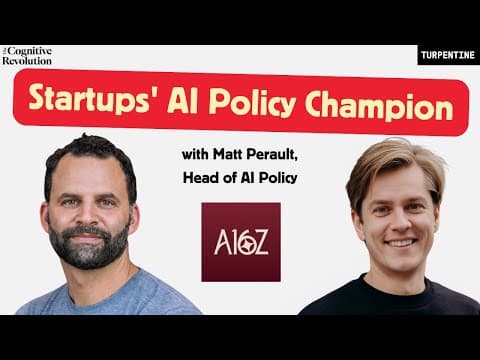
a16z on Protecting Little Tech: The Techno-Optimist AI Policy Agenda with Matt Perault
Erik TorenbergNathan LabenzMatt Perault
a16z favors policing harmful AI uses while keeping research broadly open, arguing that compute or training-cost thresholds could reinforce concentration among only three to 10 companies.The unresolved risk is whether ex-post enforcement can address irreversible harms, while temporary rules, liability regimes, and the Trump administration’s national AI action plan in June or July shape market access.
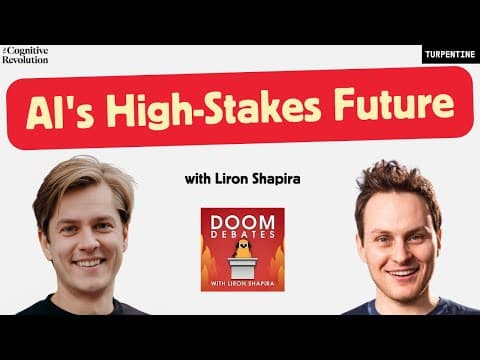
AI News Crossover: A Candid Chat with Liron Shapira of Doom Debates
Nathan Labenz puts P(doom) at 10%-90%, weighted low, while Liron Shapira sits near 50%; both distinguish irreducible development risk from the avoidable superpower race that could multiply danger 10x.GPT-4o is already deflationary for image advertising and creative marketplaces, while Cursor, Shortwave, and Replit suggest dramatically more software may be built by fewer engineers; OpenAI’s $300 billion valuation and patchwork safety measures remain high-stakes uncertainties.